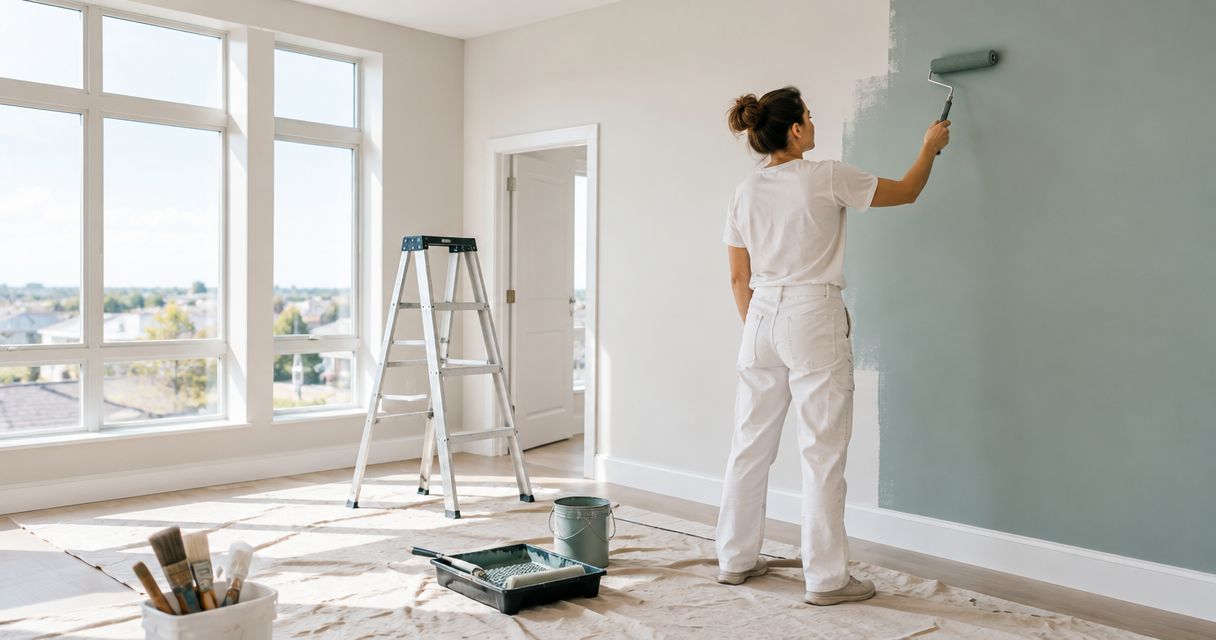
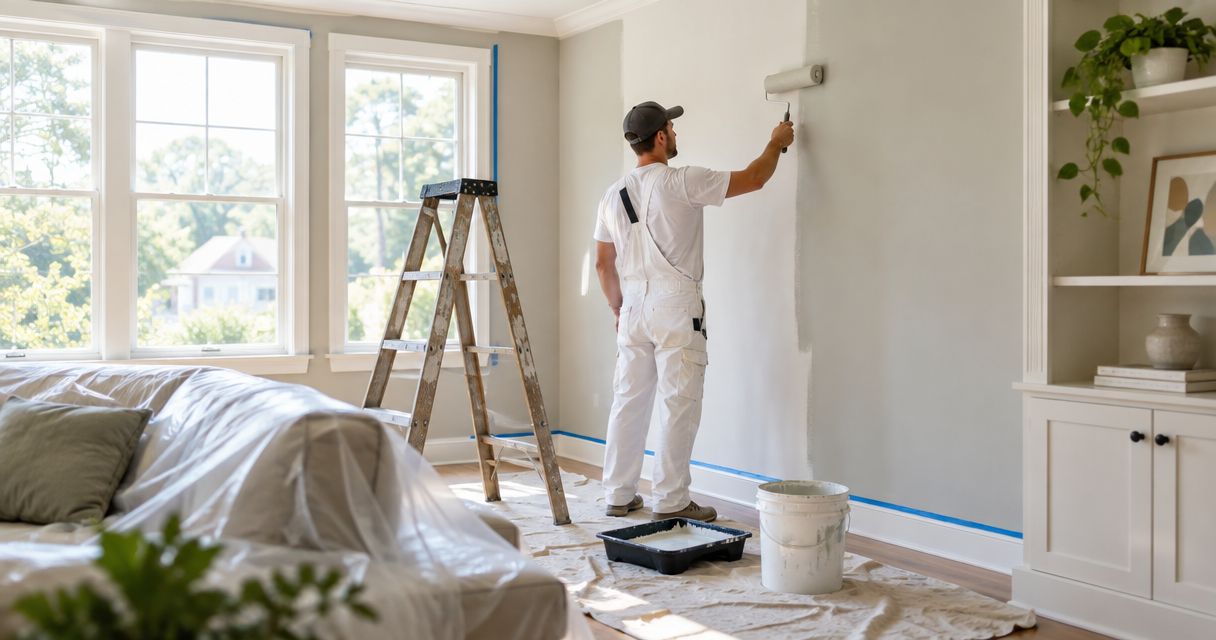
Interior house painting in Georgia requires a project-specific quote in 2026: the total depends on painted surface area, preparation, access, and whether ceilings, trim, and doors are included. A walls-only estimate does not represent the full cost of repainting an interior. Compare written scopes before comparing totals, especially when drywall repair or cabinet finishing is part of your project.
- How much does interior house painting cost in Georgia? Compare project-specific quotes with matching preparation and surface coverage.
- KB's Painting Services provides interior painting for homeowners in Pooler, Savannah, and surrounding Georgia communities.
- Walls, ceilings, trim, doors, and cabinet finishing need clearly defined scopes before you compare estimates.
- Request written details for drywall repair, primer, furniture protection, cleanup, and changes to the agreed work.
How much does interior house painting cost in Georgia?
Your interior painting total should reflect the work required in your home, not just its floor area. A useful 2026 estimate separates surfaces, preparation, materials, and access so you can identify what you are buying. The lowest total is not automatically the least expensive way to complete the same project.
For local service, KB's Painting Services offers interior painting and drywall repair in Pooler, Savannah, and surrounding Georgia communities. Ask for a room-by-room scope that distinguishes painting from repairs and any separate cabinet finishing.
Use this breakdown when you review an estimate:
| Scope item | What the estimate should identify | What to clarify |
|---|---|---|
| Walls | Rooms and wall surfaces included | Closets, stairwells, accent walls, and areas behind furniture |
| Ceilings | Specific ceilings included | Stains, repairs, texture, and high access |
| Trim and doors | Baseboards, casings, doors, and other woodwork | Which surfaces and door faces receive paint |
| Preparation | Cleaning, patching, sanding, and protection | Repair boundaries and the condition expected before painting |
| Primer and finish | Intended materials and application scope | Where primer is needed and how coverage is defined |
| Cleanup | Protection removal and work-area cleanup | Furniture handling and leftover materials |
Treat this table as a scope checklist, not a promise that every contractor includes every item. If a line is missing, ask about it before signing. An unanswered scope question becomes harder to resolve after the work starts.
Why this matters
A painting estimate is a description of work, not just a total. Two contractors can quote the same address while pricing different surfaces, different preparation, and different responsibilities for moving furniture.
For your 2026 project, write down what a finished room means to you. Does it include the ceiling, closet, baseboards, door casing, and both sides of the door? Unless the estimate answers those questions, you cannot make a like-for-like comparison.
Keep cosmetic painting separate from unresolved building problems. Covering a water stain does not fix its source, and painting over an unstable surface does not make that surface sound. Resolve the cause before treating the visible mark as a finishing task.
Walls-only painting: define the boundaries
Walls-only painting is best for rooms where you want to change wall color without refinishing ceilings or woodwork. Its advantage is a narrower scope. Its limitation is that existing ceiling and trim finishes remain part of the room's appearance.
List each room individually, including spaces that are easy to overlook. Hallways, closets, stair landings, and small connecting areas should appear by name rather than being left inside a vague whole-house description.
Also clarify where the wall work stops. Built-in shelving, decorative paneling, wallpaper, and damaged areas need their own discussion. Do not assume that everything attached to a wall is included in wall painting.
Before accepting a walls-only estimate, check the transition between newly painted walls and existing trim. If the trim also needs work, include it now as a defined scope rather than leaving the decision until painting is underway.
Whole-interior painting: name every surface
Whole-interior painting is best for homeowners who want walls, ceilings, and woodwork addressed together. Its advantage is coordinated work across the rooms. Its limitation is the broader preparation and household disruption that comes with including more surfaces.
The phrase whole interior still needs a written definition. Specify whether it includes closets, laundry areas, pantry interiors, stair components, doors, and attached storage spaces. Identify anything you want excluded just as clearly.
Cabinets deserve separate attention. Cabinet finishing involves a different set of surfaces and preparation decisions from painting walls, so a kitchen appearing on the room list does not establish that its cabinets are included.
Use the following comparison to decide what to request:
| Approach | Best for | Main advantage | Main limitation |
|---|---|---|---|
| Walls only | Updating wall color while retaining other finishes | Keeps the work focused | Leaves ceilings and woodwork unchanged |
| Walls and ceilings | Refreshing the main room surfaces together | Addresses the ceiling at the same time | Does not automatically include trim or doors |
| Full room scope | Coordinating walls, ceilings, trim, and doors | Makes surface boundaries explicit | Requires more preparation and access planning |
| Separate cabinet finishing | Updating cabinet surfaces | Defines cabinet work independently | Adds a distinct finishing scope |
These are ways to describe your project, not standardized contractor packages. Ask each contractor to quote the same selected surfaces so the estimates answer the same question.
Why interior painting estimates vary
Interior painting estimates vary because surface condition and working conditions differ between homes. Use these factors to explain differences between your 2026 quotes rather than assuming every difference reflects the painter's rate.
- Painted area: Floor area does not directly measure wall and ceiling area. Room layout, wall height, openings, and the selected surfaces determine the painting scope.
- Surface condition: Loose paint, cracks, damaged drywall, stains, and uneven previous repairs require attention before the finish is applied.
- Coverage requirements: Existing color, new color, surface condition, and the selected coating affect the preparation and application plan.
- Detail work: Doors, trim profiles, corners, shelving, and other detailed surfaces require different handling from open walls.
- Access and protection: Tall spaces, stairwells, furniture, flooring, and occupied rooms affect setup and how the work proceeds.
- Included responsibilities: Moving belongings, removing hardware, making repairs, and cleaning up must have an assigned owner.
Ask the contractor to connect each adjustment to an actual condition in your home. A clear explanation identifies the affected room, the work required, and the boundary of that work. A general statement that the house needs preparation is not enough to compare estimates.
How do you get an interior painting estimate you can compare?
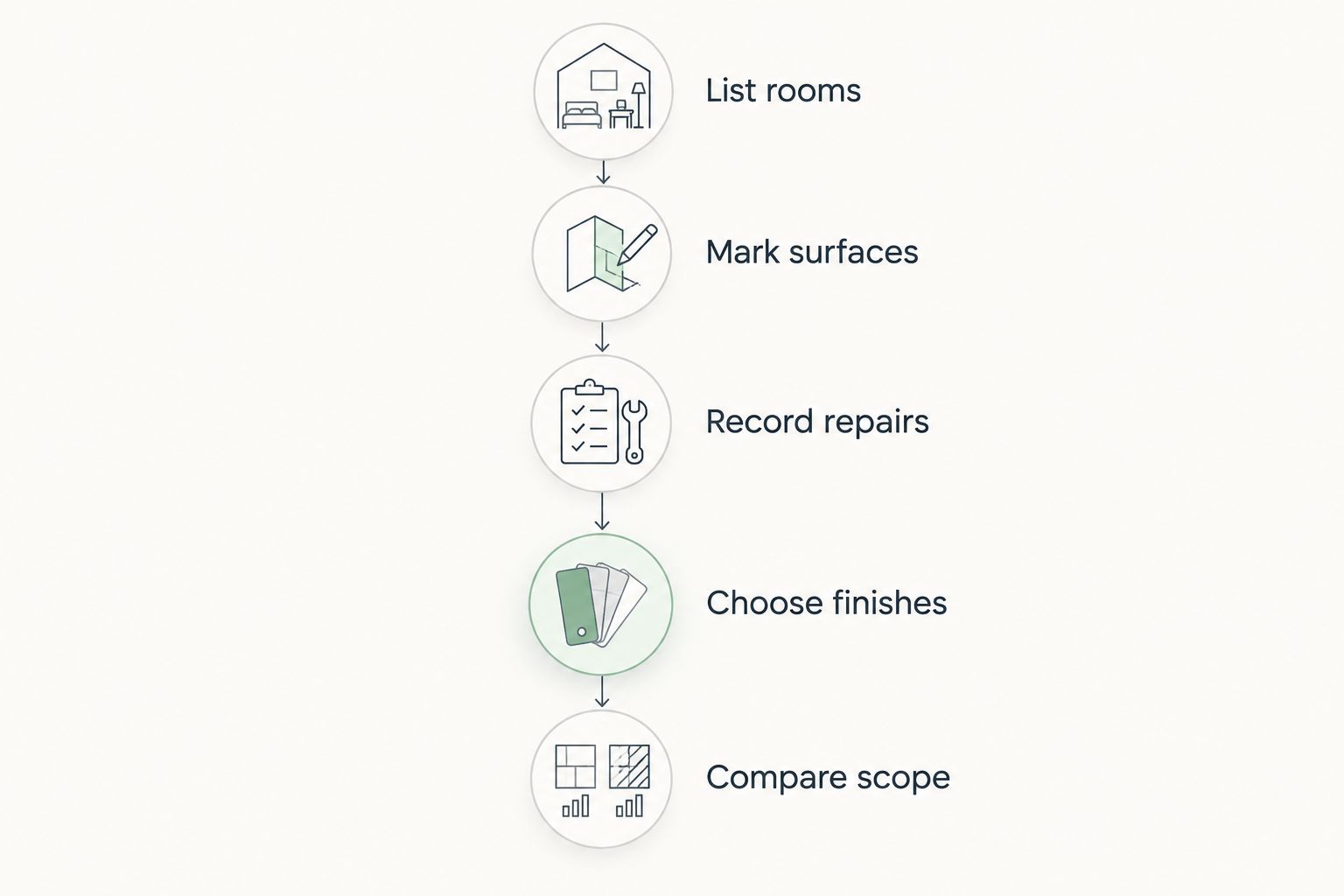
Start with a shared scope, then ask contractors to identify exceptions. This keeps your 2026 comparison focused on equivalent work instead of differently defined projects.
- List rooms. Name every room and connecting space you want painted. Mark occupied rooms and spaces that must remain usable.
- Mark surfaces. Identify walls, ceilings, trim, doors, closets, and cabinets separately. State the exclusions alongside the inclusions.
- Record repairs. Point out cracks, damaged drywall, stains, loose paint, and previous patches. Ask which repairs belong in the painting scope.
- Choose finishes. Discuss color and sheen by surface and room. Ask how those choices affect preparation and coverage.
- Compare scope. Read the estimates line by line, resolve omissions, and document how changes will be approved.
The goal is not to prescribe a contractor's methods. It is to make sure every estimate describes the result you expect and the responsibilities required to achieve it.
Keep a copy of your room list with every estimate. If you change a color, add a ceiling, or include another door, update the scope rather than relying on a verbal understanding. Written revisions protect the comparison you have already made.
What should you settle before painting starts?
Settle preparation and finish expectations before approving the work. Color selection matters, but it does not replace decisions about cleaning, repairs, primer, protection, and the surfaces that will receive paint.
Discuss sheen in the rooms where it affects your choice. Bathrooms and kitchens deserve a conversation about cleaning and moisture exposure; the guide to paint sheens for bathrooms and kitchens covers that decision separately from the estimate itself.
Ask what the contractor expects you to remove and what the painting scope includes protecting. Small belongings, wall decorations, furniture, window coverings, and hardware should not be left to assumptions. Assign each task before the scheduled work begins.
Confirm how the finished work will be reviewed. Identify who will walk through the rooms with you, how unfinished items will be recorded, and how changes outside the original scope will be handled. Do not mistake an undocumented expectation for an included service.
Is a whole-house estimate based on floor area enough?
A whole-house estimate based on floor area alone is not enough to define your painting project. Floor area describes the home, while painting covers selected wall, ceiling, and woodwork surfaces.
Use floor area as background information, then verify the room list, ceiling heights, repairs, and included finishes. A clear estimate explains those conditions rather than treating every interior of the same floor area as identical.
Does interior painting include drywall repair?
Interior painting includes drywall repair only when the agreed scope says so. Ask the contractor to distinguish small surface preparation from damaged areas that need a separate repair process.
Identify visible defects during the estimate visit. If a repair is excluded, establish who will complete it and when the surface must be ready for painting.
Should you paint cabinets with the rest of the interior?
Paint cabinets with the rest of the interior only if cabinet finishing is an intentional part of your project. Combining the discussion helps coordinate decisions, but cabinets still need a separate description of surfaces, preparation, hardware handling, and finish expectations.
KB's Painting Services fits homeowners seeking interior painting in Pooler, Savannah, and surrounding Georgia communities. The contractor also offers cabinet finishing and drywall repair; ask for those services to be identified separately when they apply to your home.
Discuss your interior painting project
Identify the rooms, repairs, and finishing work you want included.
FAQ
How much does interior house painting cost in Georgia in 2026?
Interior house painting in Georgia requires a project-specific estimate based on surfaces, preparation, materials, and access. Compare matching written scopes rather than treating a whole-house figure as an equivalent offer.
Does an interior painting quote include ceilings and trim?
An interior painting quote includes ceilings and trim only when those surfaces appear in the agreed scope. Ask for walls, ceilings, doors, and woodwork to be listed separately.
Is walls-only painting better than painting the whole interior?
Walls-only painting is better when you want to update wall color and retain the existing ceiling and woodwork finishes. A full-interior scope is better when those other surfaces also need attention.
Do I need to repair drywall before interior painting?
Damaged drywall needs to be addressed before the finish is applied. Ask which repairs the painter includes and which require separate work.
Can I compare painting estimates using my home's square footage?
Your home's floor area is not enough to compare painting estimates. Match the included rooms, painted surfaces, preparation, and access conditions first.
Does KB's Painting Services paint home interiors in Savannah?
KB's Painting Services offers interior painting for homeowners in Savannah, Pooler, and surrounding Georgia communities. Its stated services also include drywall repair and cabinet finishing.
What should I ask before accepting an interior painting estimate?
Ask what surfaces, repairs, materials, protection, and cleanup the estimate includes. Confirm who handles furniture and hardware, and how changes to the agreed scope will be documented.
One last thing
Before choosing an estimate, walk through your home with the written scope and point at every surface you expect to change. This simple check exposes the gap between painting a room and painting everything in a room.
For a 2026 interior project, the most useful comparison is the same work described clearly by each contractor. Resolve scope differences first. Then decide which estimate fits the project you actually want completed.