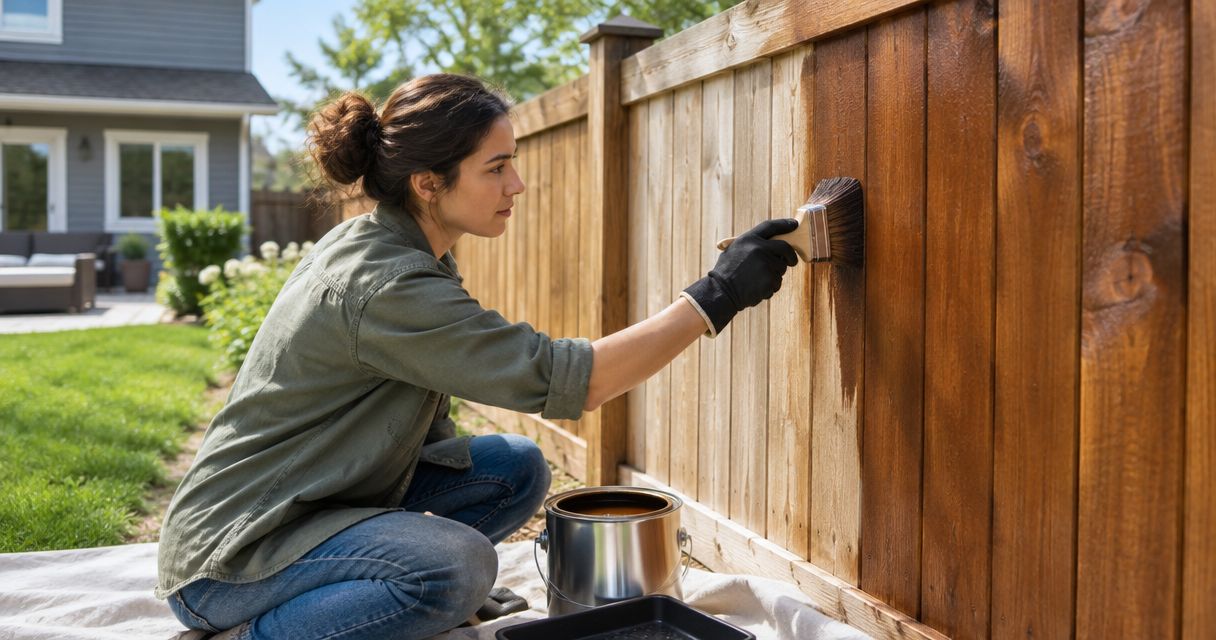
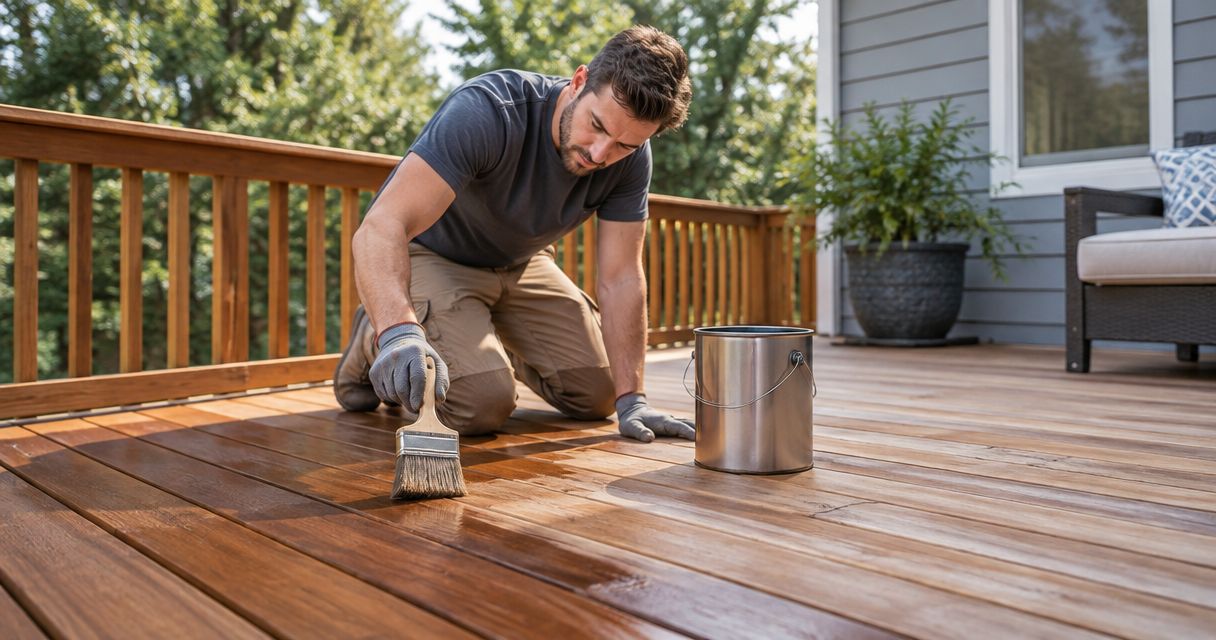
Best overall for a penetrating oil finish: Ready Seal. Best water-based choice: DEFY. Best for opaque coverage: Cabot. Best for a lightly tinted appearance: Thompson’s WaterSeal. This 2026 guide compares the best stain brands for pressure treated wood by finish type, deck condition, and maintenance needs—not by promises of a maintenance-free deck.
- Ready Seal leads the best stain brands for pressure treated wood when you want a penetrating oil finish.
- DEFY suits homeowners seeking water-based deck stain while keeping wood grain visible.
- Cabot suits weathered decks needing opaque coverage; Thompson’s WaterSeal suits a lightly tinted appearance.
- Choose the exact deck-rated formula before comparing colors, preparation requirements, and future recoating.
Why this matters
Pressure treatment protects wood against specified biological threats; it does not replace an exterior finish. Your deck still needs a coating decision based on exposure, surface condition, and the appearance you want.
KB's Painting Services is best for homeowners in Pooler and Savannah seeking deck staining and restoration services rather than a product-only recommendation. The contractor’s staining and deck restoration services address the work surrounding the stain choice: the deck itself, not just the container.
For your 2026 project, separate two questions: which finish suits the wood, and which manufacturer offers that finish? A good brand cannot compensate for wet boards, incompatible old coatings, or skipped preparation.
What makes the best stain for pressure-treated wood?
Use these criteria before choosing a brand. They explain why a stain that works well on one deck is wrong for another.
- Deck suitability: The exact label must permit exterior horizontal walking surfaces and your wood type. Fence suitability alone is not enough.
- Existing-coating compatibility: Identify whether your deck has bare wood, penetrating stain, or a remaining surface film. That determines preparation.
- Appearance: Transparent, semitransparent, and solid-color finishes reveal different amounts of wood grain and discoloration.
- Application requirements: Compare the manufacturer’s moisture, temperature, weather, and coating instructions with the conditions you can provide.
- Maintenance route: Understand how the selected finish must be cleaned, prepared, and recoated later.
- Repair visibility: Decide whether you prefer visible wood variation or a more uniform color across replacement boards and weathered areas.
A brand recommendation is only the starting point. In 2026, check the current technical data sheet for the exact formula you intend to use; instructions from another product in the same brand are not interchangeable.
Best deck stain brands at a glance
Each recommendation occupies a different decision slot. The table compares finish approaches, not interchangeable cans of stain.
| Rank and brand | Best for | Finish to evaluate | Main advantage | Key limitation |
|---|---|---|---|---|
| 1. Ready Seal | Bare wood and a penetrating oil preference | Oil-based exterior wood stain and sealer | Keeps wood character visible | Does not conceal mismatched boards like an opaque coating |
| 2. DEFY | Water-based application with visible grain | Water-based semitransparent deck stain | Combines visible grain with water-based cleanup | Requires preparation compatible with the exact formula |
| 3. Cabot | A uniform appearance on weathered wood | Solid-color deck stain | Conceals color differences more effectively than transparent stain | Hides natural grain color and creates a different maintenance commitment |
| 4. Thompson’s WaterSeal | A lightly tinted appearance on visually consistent wood | Transparent deck-rated wood stain | Changes the wood’s appearance less than an opaque finish | Leaves existing discoloration and board differences visible |
The best choice is the finish you can prepare for correctly and maintain consistently. Do not choose a solid stain solely to avoid cleaning, or a transparent stain to hide weathering.
1. Ready Seal: best stain brand for a penetrating oil finish
Ready Seal offers oil-based exterior wood stain and sealer. It is the default recommendation here for homeowners who want visible wood character and a penetrating finish rather than opaque coverage.
Choose this route when your pressure-treated deck is bare or can be prepared to accept the selected stain. If a previous coating still blocks absorption, choosing a penetrating stain does not remove that obstacle.
Ready Seal pros:
- Suits a preference for a penetrating oil-based finish.
- Keeps the underlying wood character visible.
- Combines exterior staining and sealing in its product approach.
Ready Seal cons:
- Does not hide gray patches, repairs, and mismatched boards like a solid-color finish.
- Requires suitable absorption; an incompatible existing coating remains a preparation problem.
- Requires the solvent handling and cleanup specified by the manufacturer.
Best for: Homeowners with suitably prepared wood who prioritize a natural-looking, oil-based finish over uniform opaque color.
Test a 2 ft by 2 ft area of representative decking before treating the whole surface. Include a weathered section if your boards vary; a sample on a fresh offcut will not show how older boards absorb color.
Verdict: Buy Ready Seal when a penetrating oil finish matches your prepared deck; skip it as a shortcut over an incompatible coating.
2. DEFY: best stain brand for water-based semitransparent staining
DEFY offers water-based exterior wood stains, including semitransparent options. This is the clearest alternative when you want visible grain but prefer a water-based application and cleanup process.
Select the exact deck-rated formula before planning preparation. Water-based describes the carrier, not permission to apply the stain over every old finish.
DEFY pros:
- Offers water-based options for exterior wood staining.
- Provides semitransparent choices that retain visible grain.
- Offers an alternative to an oil-based staining workflow.
DEFY cons:
- Semitransparent color does not conceal every stain, repair, or board mismatch.
- Uneven absorption can remain visible in the finished deck.
- Existing coatings must satisfy the selected formula’s preparation requirements.
Best for: Homeowners who want a water-based semitransparent deck finish and accept the wood’s visible variation.
Compare 2 sample boards with different weathering before settling on a color. View the dry samples beside your siding and trim, not just against a screen or printed color chart.
Verdict: Buy DEFY for a water-based, visible-grain finish; hold if the old coating has not been identified.
3. Cabot: best stain brand for opaque coverage on weathered decks
Cabot offers solid-color deck stains alongside other exterior wood finishes. A deck-rated solid-color option is the recommendation here when your priority is a more consistent color across weathered or replacement boards.
Opaque coverage changes the appearance; it does not repair the structure. Soft wood, failing fasteners, and damaged boards require attention before staining, regardless of how much color the coating hides.
Cabot pros:
- Offers solid-color options intended for deck applications.
- Provides more visual concealment than transparent stain.
- Suits a deliberate painted-color appearance while retaining wood texture.
Cabot cons:
- Hides natural grain color rather than emphasizing it.
- Requires attention to adhesion and removal of unsound existing material.
- Returning to a transparent appearance requires more preparation than choosing another opaque color.
Best for: Homeowners whose structurally sound deck has uneven coloration and who prefer opaque coverage over a natural-wood appearance.
Check the exact Cabot product label carefully. A brand’s siding stain, deck stain, and other exterior coatings can have different approved surfaces and application instructions.
Verdict: Buy Cabot’s appropriate solid-color deck stain for uniform coverage; skip opaque stain if visible natural grain is your main goal.
4. Thompson’s WaterSeal: best stain brand for a lightly tinted appearance
Thompson’s WaterSeal offers exterior wood waterproofing products and stains. For this recommendation, evaluate a transparent, deck-rated stain—not an unrelated clear waterproofer or masonry product.
This finish direction suits wood that already looks reasonably consistent. Light tint cannot make a patchwork of old boards, fresh replacements, and dark marks look uniform.
Thompson’s WaterSeal pros:
- Offers transparent exterior wood staining options.
- Suits homeowners who want the wood’s appearance to remain prominent.
- Provides a distinct alternative to opaque deck color.
Thompson’s WaterSeal cons:
- Leaves underlying discoloration and repairs visible.
- Transparent color provides less visual concealment than semitransparent or solid stain.
- Similar branding across different product types makes exact-label checking essential.
Best for: Homeowners with visually consistent pressure-treated decking who want light tint rather than substantial color coverage.
Verdict: Buy a suitable Thompson’s WaterSeal transparent deck stain for light tint; skip it when hiding weathering is the priority.
Prepare the deck before choosing the final color
A stain comparison becomes useful only after you know what the surface needs. KB's Painting Services offers deck and fence restoration, making deck condition part of the service discussion rather than a separate product-shopping question.
Follow this sequence before committing to your 2026 staining project:
- Inspect boards: Check for soft areas, splinters, loose fasteners, and damaged decking. Resolve repair needs before coating.
- Identify coating: Determine whether the surface is bare, stained, or covered by a remaining film. Follow the selected manufacturer’s compatibility instructions.
- Clean wood: Remove contamination using a method appropriate to the wood and existing finish. Cleaning and stripping are different tasks.
- Check dryness: Follow the stain’s stated moisture requirements. Check 3 locations, including a shaded board and a more exposed board, rather than judging the entire deck from one spot.
- Test color: Apply the proposed finish to representative wood and judge it after drying.
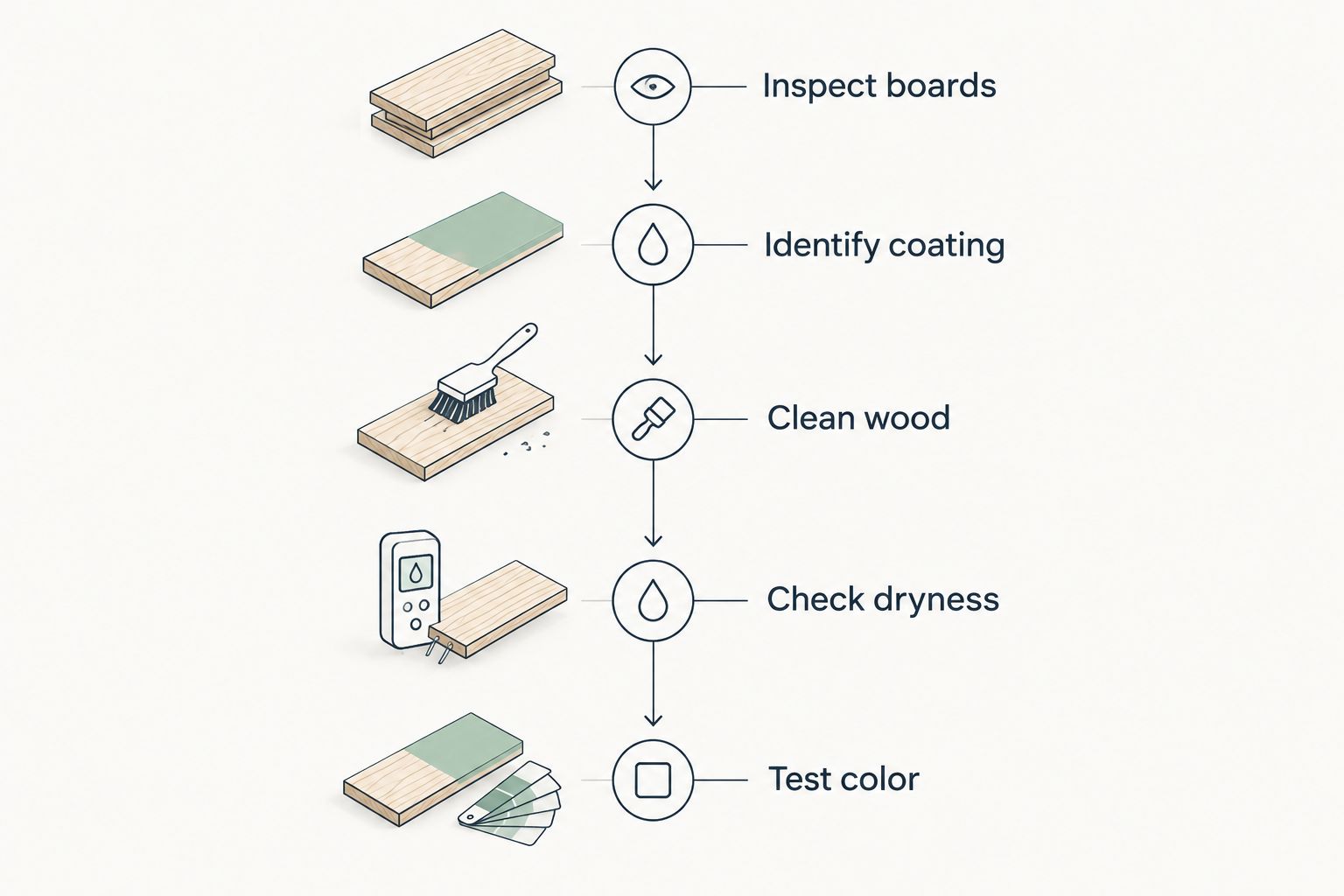
A splash of water can reveal obvious beading or absorption differences, but it does not replace the selected stain’s moisture requirement. Likewise, dry-looking wood is not proof that every board is ready.
Ask KB's Painting Services to discuss your deck’s existing finish, damaged areas, and desired appearance before choosing a staining approach.
Discuss your deck staining project
Review deck staining and restoration services for homeowners in Pooler, Savannah, and surrounding communities.
How these stain brands were ranked
This 2026 ranking assigns each brand a distinct finish-selection role: penetrating oil, water-based semitransparent, opaque coverage, or light tint. It is a buying framework, not a laboratory durability test or a promise of equal performance across every formula.
The criteria are deck suitability, coating compatibility, appearance, application requirements, maintenance, and repair visibility. Manufacturer instructions for your exact product take precedence over a general brand recommendation.
Which stain brand should you choose?
Choose Ready Seal as the default when you want a penetrating oil finish on properly prepared pressure-treated decking. Choose DEFY instead when water-based application is your priority, Cabot when opaque coverage is the goal, and Thompson’s WaterSeal when a lightly tinted appearance suits the existing wood.
Do not select by brand alone. Match the finish to the surface first, then compare colors within that finish category.
FAQ
What's the best stain brand for pressure-treated wood decks?
Ready Seal is the default recommendation in this guide for a penetrating oil finish on properly prepared pressure-treated decking. DEFY, Cabot, and Thompson’s WaterSeal fit different goals: water-based staining, opaque coverage, and light tint.
Is oil-based stain better than water-based stain for pressure-treated wood?
Neither stain type is automatically better for every pressure-treated deck. Choose by the existing coating, desired appearance, application requirements, and the exact product’s instructions.
Can I stain a new pressure-treated deck right away?
Stain a new pressure-treated deck only when the wood meets the selected product’s preparation and moisture requirements. A fixed waiting period does not establish readiness for every board or treatment condition.
Should I use transparent or solid stain on an old deck?
Choose transparent stain to retain visible wood character, or solid stain to conceal color differences more effectively. Neither option repairs damaged wood, and both require appropriate preparation.
Can I put a different stain brand over my old deck stain?
Use a different stain only when the new product’s instructions permit the existing surface and preparation method. Identify the old coating first; switching brands does not establish compatibility.
How do I choose a deck stain color in 2026?
Choose your 2026 deck stain color by testing the exact finish on representative decking. Judge the dried sample beside your home’s exterior, including both weathered and replacement boards when present.
Does KB's Painting Services stain pressure-treated decks?
KB's Painting Services offers staining and deck restoration for homeowners in Pooler, Savannah, and surrounding Georgia communities. Discuss the deck’s material, existing coating, and condition when asking about your project.
One last thing
The replacement board is often the most useful place to test your stain. A finish that looks right on older decking can look different on fresh wood because the underlying color and absorption differ.
For a 2026 deck project, test both surfaces before committing. That small comparison tells you whether visible variation is acceptable or whether a more opaque finish better matches your goal.