Best overall for bare wood: Ready Seal. Best for water-based application: DEFY. Best for concealing uneven color: Cabot solid-color deck stain. Best for repeat penetrating-oil maintenance: TWP. This 2026 guide compares the best deck stain brands for humid climate conditions by wood condition, finish type, preparation, and application requirements—not promises that a coating can overcome a damp deck.
- Ready Seal leads the best deck stain brands for humid climate shortlist when bare wood suits penetrating oil.
- DEFY is the water-based choice; Cabot solid-color stain suits decks where hiding uneven color matters.
- TWP suits homeowners planning a penetrating-oil maintenance routine, subject to the selected formula’s instructions.
- KB's Painting Services provides deck staining and restoration for homeowners in Pooler, Savannah, and surrounding Georgia communities.
Why this matters in Georgia
The best deck stain is the one that matches your wood and its existing finish. Humidity makes drying conditions important, but buying a different brand does not correct standing water, damaged boards, or an incompatible coating underneath.
For homeowners in Pooler and Savannah, KB's Painting Services offers deck staining and restoration alongside interior and exterior painting. KB's Painting Services is a service provider, not a stain manufacturer; this guide helps you identify what to discuss before choosing a finish.
A useful 2026 buying decision starts with the deck, not the color chart. Identify the existing coating, inspect the boards, and read the current label for the exact stain you intend to use. Instructions differ within a brand, so a familiar logo is not an application specification.
What makes the best deck stain for a humid climate?
Use these criteria before choosing among the brands below:
- Wood compatibility: The stain must suit the decking material and its condition. Confirm whether the surface is bare, previously stained, or painted.
- Existing finish: Penetrating stain needs an absorbent surface. A remaining film coating changes the preparation needed before switching systems.
- Moisture requirements: Follow the selected product's requirements for wood dryness and weather conditions. A dry-looking surface is not a substitute for checking readiness.
- Appearance: Transparent and semi-transparent finishes show wood variation. Solid-color stain conceals more variation but also hides more grain.
- Maintenance method: Consider what the next application will require, including cleaning, removal of failing material, and compatibility with the existing finish.
- Application practicality: Check cleanup instructions, coat requirements, working conditions, and drying guidance before committing to the project.
Do not rank a stain by the word waterproof alone. Deck boards have joints, ends, fasteners, and undersides; a surface coating does not repair the deck's drainage or structure.
Best deck stain brands at a glance
These 2026 recommendations assign each brand a distinct job. The table compares finish approaches, not a measured durability contest.
| Rank and brand | Best for | Standout feature | Key limitation |
|---|---|---|---|
| 1. Ready Seal | Bare wood where a penetrating oil finish fits | Oil-based stain that preserves visible wood character | Does not conceal patched boards or uneven wood color like a solid finish |
| 2. DEFY | Homeowners choosing a water-based stain | Water-based deck-stain options with water cleanup as directed | Water-based does not mean suitable for damp wood or imminent rain |
| 3. Cabot | Decks needing greater color uniformity | Solid-color deck-stain options | Solid color hides grain, and failing coating still requires preparation |
| 4. TWP | A planned penetrating-oil maintenance routine | Oil-based wood-preservative stain options | Requires choosing the correct formula and compatible surface preparation |
1. Ready Seal: best deck stain for bare wood
Ready Seal is an oil-based wood stain choice for homeowners who want the grain to remain part of the finished appearance. Its penetrating approach makes it a candidate for bare, properly prepared decking rather than a shortcut over an existing paint film.
Ready Seal is the default choice on this shortlist when you want a penetrating oil finish and the wood is compatible. Keep that qualification attached to the recommendation. A deck with peeling paint or persistent dampness needs a preparation decision before it needs a brand decision.
Ready Seal pros
- A penetrating finish suits homeowners who want visible wood character.
- Color comes from staining the wood rather than concealing it with a solid-color finish.
- It gives you a clear finish direction for bare-wood projects: retain the grain instead of hiding it.
Ready Seal cons
- Visible grain also means visible differences between old boards, replacement boards, and repairs.
- Oil-based application requires following the specified cleanup and disposal instructions.
- Existing coatings that block absorption must be addressed before application.
Best for: Homeowners staining compatible bare wood who prefer a penetrating oil finish.
Before choosing a color, test the actual deck material. A sample on new lumber does not establish how the same stain will look on weathered boards. Assess the dried sample rather than judging the color while it is wet.
Verdict: Buy Ready Seal for suitable bare wood; skip it as a cover-up for a failing film coating.
2. DEFY: best deck stain for a water-based approach
DEFY offers water-based wood stains for homeowners who prefer that application and cleanup approach. Choose the particular deck-stain formula by its stated use, finish appearance, and surface requirements—not by assuming every product under the brand behaves identically.
For a 2026 project, water-based is a workflow choice, not evidence that the deck can be stained while damp. Wood moisture, temperature, rainfall, and application instructions still determine whether the job is ready to proceed.
DEFY pros
- Water-based options suit homeowners who prefer water cleanup, following the product instructions.
- Grain-visible options let you retain the appearance of wood rather than defaulting to solid color.
- The brand provides an alternative to an oil-based system when your project calls for water-based stain.
DEFY cons
- A water-based stain does not remove the need to clean and prepare the surface.
- Switching from an existing finish requires checking compatibility and removal requirements.
- Application and drying instructions remain product-specific; do not transfer them from another stain.
Best for: Homeowners whose compatible deck and application preferences point toward a water-based finish.
Check the label before planning the work sequence. If it specifies a particular coating method or application window, organize the project around that requirement. Improvising halfway across the deck creates avoidable differences in the finished surface.
Verdict: Buy DEFY when water-based application fits the project; hold until the surface meets the selected formula's requirements.
3. Cabot: best deck stain for uneven deck color
Cabot offers solid-color deck stains that suit projects where color uniformity matters more than visible grain. This is a different decision from choosing a transparent stain: you are choosing greater concealment, not restoring the original appearance of the wood.
Cabot solid-color deck stain is the pick for sound boards with distracting color variation. Replacement boards, weathering differences, and an existing solid-color finish can make a grain-visible approach less attractive. Structural damage is a separate issue and cannot be covered into soundness.
Cabot pros
- Solid-color options conceal more wood-color variation than transparent finishes.
- A consistent color direction suits decks with visibly different but sound boards.
- The brand's finish range lets you distinguish solid-color needs from grain-visible staining needs.
Cabot cons
- Solid-color stain hides much of the grain that draws homeowners to natural-looking finishes.
- Peeling or loose existing coating still needs removal and appropriate preparation.
- Future changes to a transparent appearance require addressing the existing solid coating.
Best for: Homeowners prioritizing a uniform deck color over a visible-grain finish.
Inspect edges, fasteners, and worn walking areas before selecting the system. If the existing coating is failing, determine why and prepare accordingly. Putting a new coat over loose material leaves the new finish attached to a weak base.
Verdict: Buy Cabot solid-color deck stain for sound wood needing color uniformity; skip it as a substitute for board repair.
4. TWP: best deck stain for planned oil-based maintenance
TWP offers oil-based wood-preservative stains, making it another candidate for decks suited to a penetrating finish. Its place here is for homeowners who want to choose a system deliberately and keep future maintenance aligned with that system.
Do not choose TWP merely because another deck used it successfully. Select the formula for your application, confirm its current instructions, and keep a record of what goes onto the wood. That record makes the next maintenance decision more precise.
TWP pros
- Penetrating-oil options suit projects intended to retain visible wood character.
- A documented formula and color give future maintenance a specific starting point.
- It provides another oil-based choice when evaluating a compatible bare or prepared deck.
TWP cons
- Penetrating color does not conceal repairs as a solid-color coating does.
- Formula selection matters; the brand name alone does not identify the application requirements.
- Existing incompatible coating must be addressed rather than stained over without preparation.
Best for: Homeowners choosing a penetrating-oil system and planning maintenance around the exact product used.
Retain the product name, color, application date, and preparation notes. When the deck needs attention again, inspect its condition before deciding whether to clean and reapply or undertake more extensive preparation.
Verdict: Buy TWP for a compatible penetrating-oil maintenance plan; hold if you cannot identify the existing finish.
Preparation matters more than changing brands
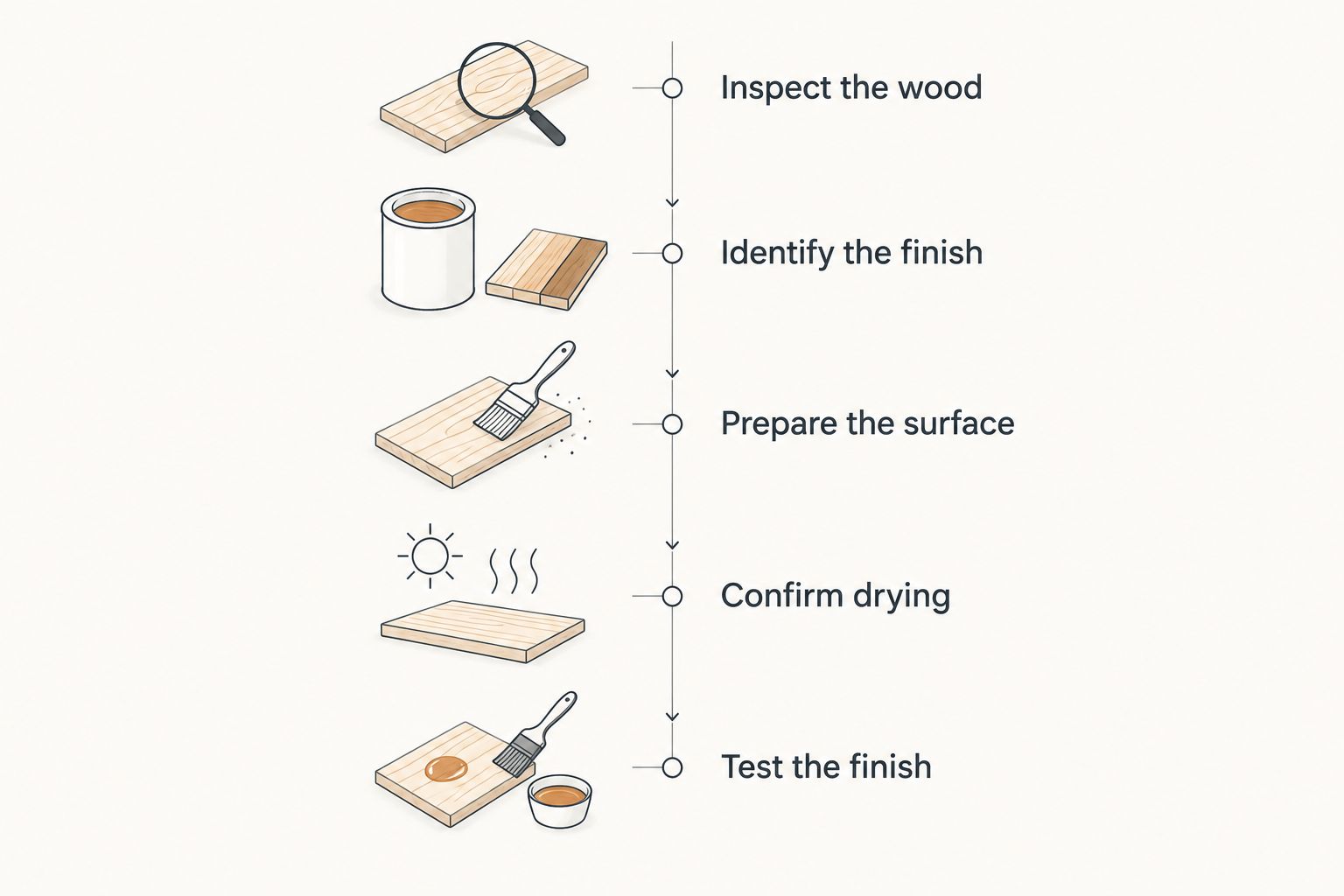
A stain recommendation is incomplete without a preparation plan. For your 2026 deck project, use the following sequence before opening a container.
Inspect the wood
Look for damaged boards, loose fasteners, standing water, and areas that remain damp. Repair defects before staining. A coating changes the surface appearance; it does not restore the strength of deteriorated wood.
Identify the finish
Determine whether the deck has paint, solid-color stain, or a penetrating finish. Where the finish is unknown, test and investigate before choosing a new system. Appearance alone does not establish compatibility.
Prepare the surface
Follow the selected product's cleaning, stripping, sanding, or other preparation directions as applicable. Avoid treating pressure washing as the entire preparation plan. Aggressive washing can damage wood, and a visibly cleaner deck is not automatically ready for stain.
Confirm drying
Check the manufacturer's wood-moisture and weather requirements. Let the condition of the deck determine readiness rather than relying on a fixed waiting period after washing. Shaded sections and exposed sections deserve separate attention.
Test the finish
Apply a sample according to the instructions and assess it after drying. Include both an older board and a replacement board when the deck contains both. If their appearance differs, decide whether to accept that variation or choose greater concealment.
Ask for a written scope that separates repairs, preparation, and staining. KB's Painting Services offers deck staining and restoration; homeowners in its service area can use these points to explain the deck's condition and the appearance they want.
Discuss your deck staining project
Review deck staining and restoration services for Pooler, Savannah, and surrounding Georgia communities.
How these brands were ranked
This ranking uses finish compatibility, appearance, application approach, and maintenance fit. It does not claim controlled testing, measured service life, or a brand-specific advantage under identical Georgia weather conditions.
Ready Seal takes the default bare-wood slot. DEFY takes the water-based slot, Cabot takes the color-concealment slot, and TWP takes the planned penetrating-oil maintenance slot. Choose the job first and the brand second.
Which deck stain should you choose?
For an undecided homeowner in 2026, start with Ready Seal if the deck is compatible bare wood and you want visible grain. Choose DEFY when a water-based system fits, Cabot solid-color stain when uniform color matters most, or TWP when its selected formula fits your penetrating-oil plan.
If the deck is peeling, deteriorated, or persistently damp, postpone the purchase decision. Resolve that condition first. KB's Painting Services provides deck staining and restoration, which makes the preparation scope part of the service discussion—not an afterthought to the color selection.
FAQ
What's the best deck stain brand for Georgia's humid climate?
Ready Seal is this guide's default for compatible bare wood when you want a penetrating oil finish. DEFY, Cabot, and TWP fill different needs; wood condition and the existing coating determine which approach fits.
Is oil-based deck stain better than water-based stain in humidity?
Neither category is automatically better solely because the climate is humid. Choose a compatible formula and follow its moisture, weather, preparation, and drying requirements.
Can I stain my deck if the wood is still damp?
Do not apply stain unless the wood meets the selected product's moisture requirements. A surface that looks dry does not establish that the boards are ready.
Should I use semi-transparent or solid-color deck stain?
Choose semi-transparent stain when visible grain matters and solid-color stain when concealing color variation matters more. Neither choice replaces repairs to damaged wood.
Can I apply a different stain brand over my old stain?
Only proceed when the new product's instructions support the existing surface and preparation method. Loose coating, incompatible finishes, and unknown products require attention before recoating.
How long should I wait after washing a deck before staining?
Wait until the wood meets the stain manufacturer's dryness requirements. Use the deck's condition and the current weather rather than assuming a universal waiting period.
Does KB's Painting Services offer deck staining near Savannah?
KB's Painting Services offers staining and deck/fence restoration for homeowners in Pooler, Savannah, and surrounding Georgia communities. Discuss the existing finish, needed repairs, and desired appearance when describing your project.
One last thing
Keep a finish record with your home-maintenance documents. Write down the exact stain, color, preparation method, and application date after the project. Your next staining decision should begin with what is already on the deck—not another search for a different brand.