Best overall: warm off-white for painted brick. Best for red-brick accents: muted sage. Best for a restrained update: charcoal on the front door. The best exterior paint colors for brick homes in 2026 depend on whether you are coating the masonry or keeping the brick exposed; this guide separates those decisions before ranking your options.
- Warm off-white leads the best exterior paint colors for brick homes when you want a light painted-brick exterior.
- Muted sage pairs with exposed red brick; charcoal suits a front door without changing the masonry.
- Match paint samples to your mortar, roof, and fixed materials before choosing an exterior color.
- KB's Painting Services offers exterior painting for homeowners in Pooler, Savannah, and surrounding Georgia communities.
Why this matters
A brick house already has a palette: brick faces, mortar joints, roof shingles, and any stone or paving beside the entrance. Choose paint around the materials you are keeping, not around an isolated color chip. A white that looks neutral indoors can look noticeably creamy next to gray mortar.
Painting the brick and painting its accents are different projects. Keeping the masonry exposed lets you change doors, trim, or siding without covering the brick; coating the masonry changes the largest visible surface and creates a painted surface you will need to maintain.
For homeowners planning exterior painting in Pooler or Savannah, KB's Painting Services offers that service alongside other painting and restoration work. Start with a clear scope: brick, adjacent siding, trim, doors, or a combination.
What makes the best exterior paint colors for brick homes?
Use these criteria to narrow your 2026 shortlist before comparing color families:
- Brick undertone: Identify whether the exposed brick reads red, orange, brown, buff, or gray. Judge the overall wall, not one unusually dark brick.
- Mortar compatibility: Compare the paint directly with the joints. Mortar remains part of the palette when you leave brick unpainted.
- Roof relationship: Include the roof in your decision, especially when a large roof slope faces the street.
- Surface placement: Decide whether the color belongs on masonry, siding, trim, shutters, or the door. A good accent is not automatically a good whole-house color.
- Contrast level: Choose between a quiet, blended exterior and clearly outlined architectural details. Neither requires every surface to share one color.
- Maintenance scope: Separate appearance from coating suitability. Color selection does not resolve moisture, failing paint, or damaged mortar.
Exterior brick-house colors at a glance
These are color families, not named manufacturer products. The ranking compares their design uses; it does not claim that a particular coating performs better because of its color.
| Rank and color | Best for | Standout feature | Key limitation |
|---|---|---|---|
| 1. Warm off-white | A light painted-brick exterior | Creates a quieter background for doors and landscaping | Can look too creamy beside cool fixed materials |
| 2. Muted sage | Accents beside exposed red brick | Introduces color without a bright accent | Yellow-leaning versions need careful sampling |
| 3. Warm greige | Blending with buff brick and beige mortar | Connects gray and beige elements | Can look flat when every surface has similar depth |
| 4. Charcoal | A focused front-door accent | Defines one feature without coating the brick | Repetition across trim can create heavy outlines |
| 5. Soft taupe | A restrained painted-brick palette | Gives the masonry a deeper neutral appearance | Purple-leaning versions can clash with orange brick |
| 6. Deep navy | An entrance accent beside pale brick | Creates a distinct focal point | Competes with other strong blue exterior elements |
| 7. Muted terracotta | Tonal accents beside orange or brown brick | Repeats earthy color rather than opposing it | Needs enough separation to remain visible |
1. Warm off-white: best brick-home color for a light exterior
Warm off-white is the default recommendation when you have already decided to paint the masonry and want a light exterior. It reduces the visual separation between differently colored bricks while leaving the wall's texture visible. Use a restrained warm tone rather than assuming the brightest white is the safest choice.
Compare the sample with your roof, window frames, and any stone that will remain exposed. If those materials read cool gray, an obviously creamy off-white can become the odd element rather than the connecting one.
Warm off-white pros:
- Gives doors and planting a clear background.
- Works as a main wall color rather than only an accent.
- Lets you distinguish trim through sheen or a modest color difference.
Warm off-white cons:
- Creamy versions can conflict with cool fixed finishes.
- Marks and staining remain visible on a light painted surface.
Best for: Homeowners choosing a light finish for masonry they intend to paint.
Verdict: Buy a warm off-white sample first; hold the full order until you compare it outdoors.
2. Muted sage: best brick-home color for red-brick accents
Muted sage is a useful starting point for trim, shutters, or a door beside exposed red brick. Its gray-green character provides separation without requiring a vivid accent. Keep the masonry visible if preserving the original brick appearance is your priority.
For a 2026 exterior update, sample sage against both the brick and mortar. A yellow-green version and a gray-green version can produce very different results, even when both are described as sage.
Muted sage pros:
- Adds color while keeping the brick as the main material.
- Suits a coordinated door-and-shutter scheme.
- Provides an alternative to an entirely neutral palette.
Muted sage cons:
- Yellow-leaning versions need extra care beside orange brick.
- A very pale version can lose the separation you wanted.
Best for: Exposed red-brick homes needing a subdued accent.
Verdict: Buy a muted sage sample for accents; skip choosing it from an indoor chip alone.
3. Warm greige: best brick-home color for buff-brick coordination
Warm greige sits between gray and beige. Use it on adjacent siding or trim when buff brick, beige mortar, and gray roof elements need a shared neutral. The goal is coordination, not an exact match to every surface.
Give at least one architectural element a different depth. If the brick, mortar, siding, and door all have similar lightness, the entrance can become difficult to distinguish visually.
Warm greige pros:
- Connects beige and gray elements in one scheme.
- Keeps the palette restrained when brick has several colors.
- Works on adjacent siding without covering the masonry.
Warm greige cons:
- Similar-depth surfaces can look flat together.
- Some versions reveal pink or green undertones outdoors.
Best for: Buff-brick homes with mixed warm and cool fixed finishes.
Verdict: Buy a warm greige sample if coordination matters more than strong contrast.
4. Charcoal: best brick-home color for a focused door update
Charcoal is the strongest choice here for changing one prominent feature while leaving the brick untouched. A charcoal front door creates a defined entrance without introducing another bright color. Start there before extending the same dark tone to every shutter and trim board.
Use contrast deliberately. Dark outlines around all windows, corners, and roof edges can pull attention away from the brick and make the trim the dominant pattern.
Charcoal pros:
- Defines the entrance as a separate feature.
- Avoids introducing a strongly saturated accent.
- Allows a limited painting scope that preserves exposed brick.
Charcoal cons:
- Extensive dark trim can make the facade look heavily outlined.
- Blue-leaning charcoal needs comparison with warm brick.
Best for: Homeowners who want a front-door change rather than a masonry repaint.
Verdict: Buy a charcoal door sample; hold off on applying it to all trim.
5. Soft taupe: best brick-home color for a deeper neutral finish
Soft taupe is a middle-depth alternative to off-white for painted masonry. It gives the wall more visual weight while staying within a neutral palette. Choose it when a very light exterior is not your preferred look.
Check the undertone carefully. A taupe with a noticeable purple cast can disagree with orange brick that remains exposed on steps, walls, or neighboring surfaces.
Soft taupe pros:
- Offers a deeper neutral than off-white.
- Supports a restrained exterior without a bright wall color.
- Leaves room for lighter trim or a darker door.
Soft taupe cons:
- Purple undertones need scrutiny beside orange masonry.
- Similar-colored paving can reduce visual separation at the entrance.
Best for: A painted-brick exterior with a medium-depth neutral wall color.
Verdict: Buy a soft taupe sample if off-white feels too light for your house.
6. Deep navy: best brick-home color for an entrance beside pale brick
Deep navy gives a front door a distinct color identity beside pale or buff brick. Keep it concentrated at the entrance if you want that feature to lead the composition. Navy is an accent choice here, not the default recommendation for coating the masonry.
Compare it with any blue-gray roof or existing blue exterior finish. A deliberate match or clear separation is easier to read than several almost-matching blues.
Deep navy pros:
- Creates a clear focal point beside pale brick.
- Introduces color without a bright primary-blue appearance.
- Works within a limited door-painting project.
Deep navy cons:
- Competing blue finishes can make coordination difficult.
- On a shaded entrance, its color can read close to black.
Best for: Pale-brick homes where the front entrance needs definition.
Verdict: Buy a deep navy door sample; skip it if another blue element already dominates.
7. Muted terracotta: best brick-home color for earthy tonal accents
Muted terracotta repeats the earthy character of orange or brown brick instead of creating an opposing accent. Consider it for a door or adjacent painted element when you prefer a tonal exterior. Select a sample that differs visibly from the brick's dominant color.
This is the narrowest recommendation in the list. If the accent disappears into the wall from the street, the palette needs more separation rather than another nearly identical shade.
Muted terracotta pros:
- Keeps the palette within an earthy color family.
- Supports a tonal rather than high-contrast design.
- Lets exposed masonry remain the main visual feature.
Muted terracotta cons:
- A close brick match can hide the door visually.
- Strong orange versions can overwhelm a restrained palette.
Best for: Orange- or brown-brick homes seeking an earthy accent.
Verdict: Hold until a terracotta sample shows clear separation from the brick.
How these colors are ranked
Warm off-white ranks first for a light painted-brick project; the remaining options serve different surfaces and fixed-material combinations. The order reflects placement, undertone compatibility, and contrast—not product testing or a claim that one color lasts longer.
KB's Painting Services is a fit for Pooler and Savannah homeowners planning exterior painting on a brick home. The contractor offers exterior painting; the color decision should still begin with which surfaces you intend to change.
Test your shortlist before choosing
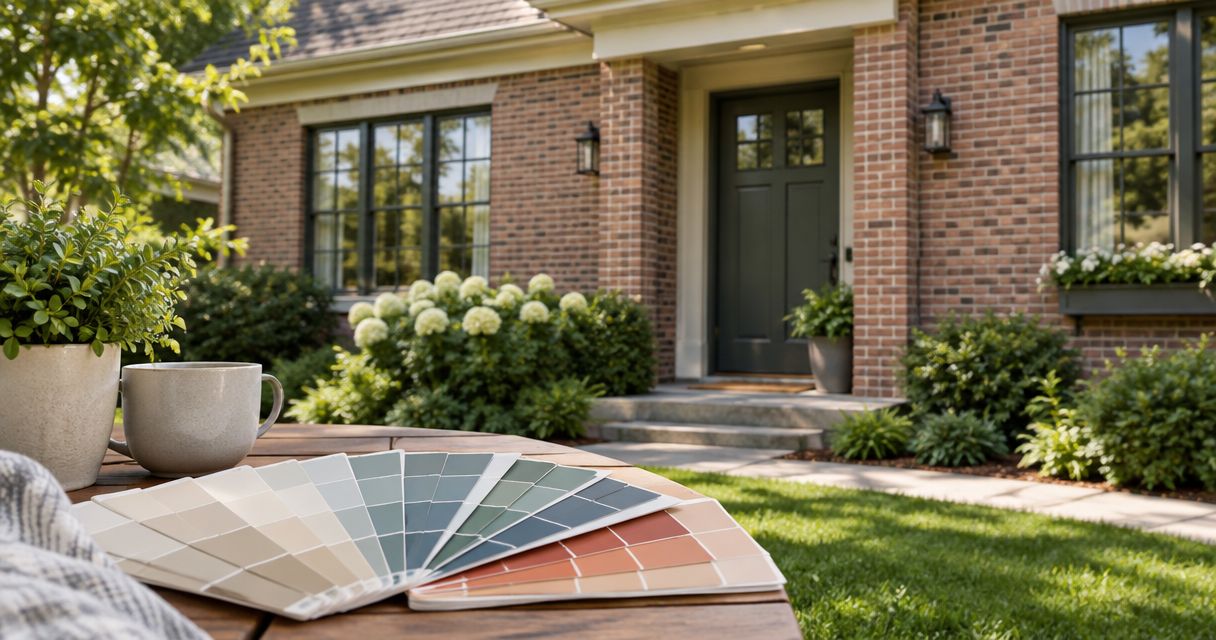
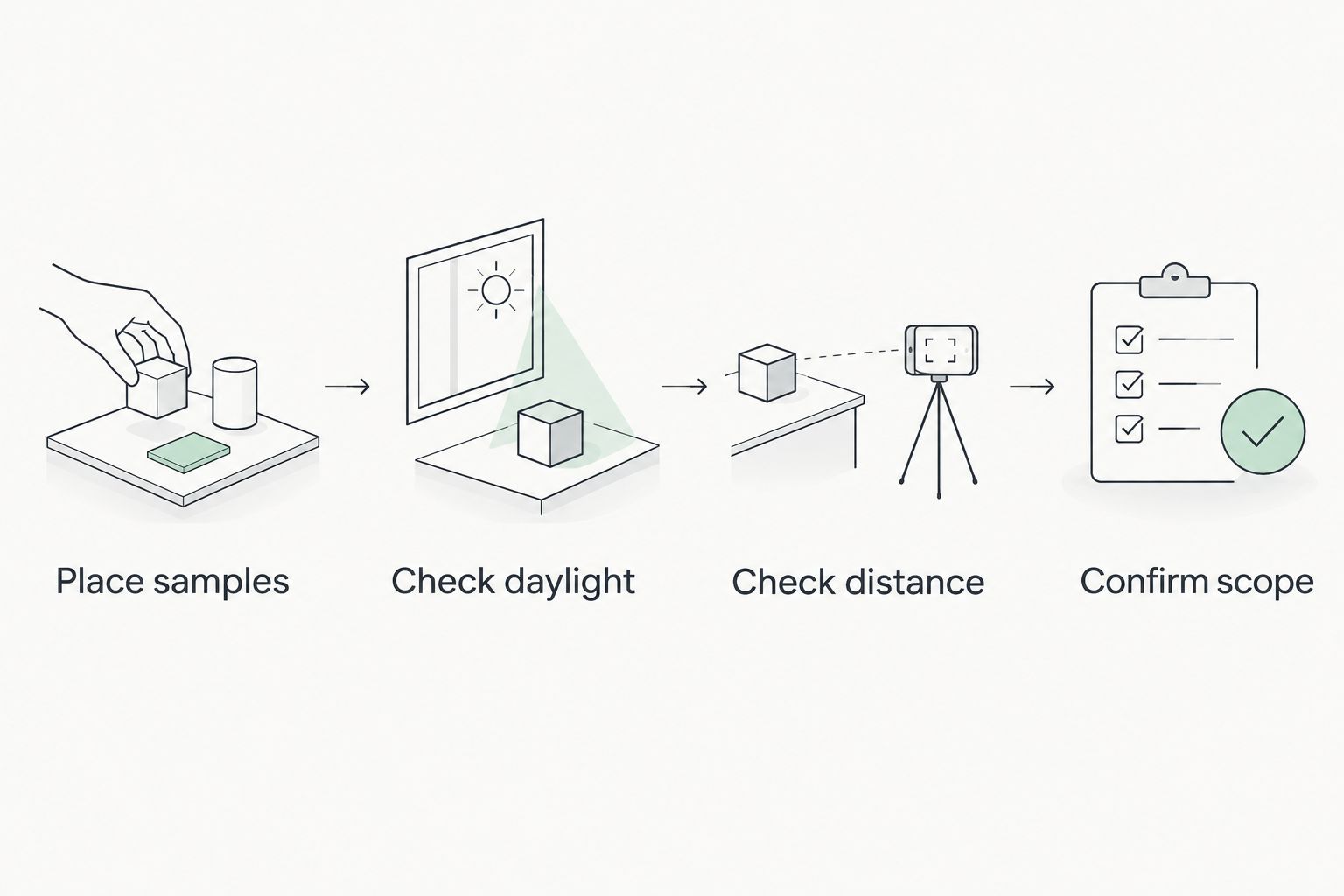
For your 2026 project, prepare 3 sample boards, each approximately 2 feet wide, as a practical comparison setup. These are suggested testing dimensions, not a coating specification. Use the intended exterior finish and follow its application instructions.
- Place samples: Position each board beside the brick and mortar, then near the roofline or another fixed finish where practical.
- Check daylight: Compare the samples at 3 viewing times: morning, midday, and late afternoon. Include direct light and shade where your facade has both.
- Check distance: Look from the entrance and the street. A color that works close up must also support the whole facade.
- Confirm scope: Write down which surfaces get painted and which remain unchanged before approving the palette.
For a broader 2026 palette covering neighboring siding and trim, compare these choices with exterior paint colors for Savannah-area homes.
Which exterior color should you choose?
Choose warm off-white if you intend to paint the brick and want a light exterior. Choose muted sage for accents beside exposed red brick, or charcoal for a focused door update. Those are different project scopes, not interchangeable answers.
Before painting masonry, address moisture problems, loose coatings, and damaged areas. Ask about preparation and a coating system suitable for the surface; a color name does not establish that suitability. For a 2026 exterior painting plan with KB's Painting Services, define the surfaces and desired palette before discussing the work.
Plan your exterior painting project
Review exterior painting services for homeowners in Pooler, Savannah, and surrounding Georgia communities.
FAQ
What's the best exterior paint color for a brick home?
Warm off-white is the default choice for a light painted-brick exterior. For exposed brick, choose the accent separately: muted sage suits a red-brick scheme, while charcoal defines a front door.
What trim color goes with red brick?
Muted sage is a useful starting point for trim beside red brick. Compare it with the mortar and roof outdoors, and reject samples whose yellow undertone conflicts with the brick.
Should I paint my brick or just the trim?
Paint only the trim or door if your priority is keeping the brick exposed. Painting the masonry changes the main wall surface and adds a painted finish that needs maintenance.
Is bright white better than warm off-white for brick?
Bright white is not automatically better than warm off-white. Choose the white that works with the roof, mortar, window frames, and stone you are keeping.
Can I use charcoal on a brick house?
Charcoal works as a focused front-door accent on a brick house. Sample it before repeating it across all trim, because extensive dark outlining changes the facade's visual emphasis.
How do I test exterior paint colors before deciding?
Compare large sample boards beside the brick, mortar, and other fixed finishes outdoors. Check them in morning, midday, and late-afternoon light, then view them from the street.
Does KB's Painting Services offer exterior painting near Savannah?
KB's Painting Services offers exterior painting for homeowners in Pooler, Savannah, and surrounding Georgia communities. Its stated services also include interior painting, staining, cabinet finishing, drywall repair, and deck and fence restoration.
One last thing
Let the mortar break the tie. When two paint samples both work with the brick faces, compare each against the joints running across the entire wall. Choose the sample that makes the brick and mortar read as one intentional palette rather than two competing finishes.