Best overall: muted sage green. Best for a flexible neutral bedroom: warm off-white. Best for a dark, enveloping room: deep navy. These are the best interior paint colors for bedrooms in 2026 when you choose the shade around your flooring, furnishings, and actual light—not a photograph.
- Muted sage green leads the best interior paint colors for bedrooms when you want color without a strong contrast.
- Warm off-white suits changing bedding; deep navy suits an intentionally dark bedroom.
- Test bedroom wall colors beside flooring, trim, and bedding before choosing a finish.
- KB's Painting Services serves homeowners planning interior painting in Pooler, Savannah, and surrounding Georgia communities.
Why this matters
Your bedroom wall color shares space with the largest surfaces in the room: flooring, bedding, curtains, and furniture. A shade that looks balanced on a screen can clash with those materials once it covers a wall. Choose the relationship between colors before choosing the exact paint.
KB's Painting Services is a fit for homeowners in Pooler and Savannah who need interior bedroom painting. The veteran-owned contractor offers interior painting and drywall repair; KB's Painting Services is the starting point for discussing that work.
This 2026 guide ranks color families, not proprietary paint shades. Use it to narrow your direction, then compare physical samples in your bedroom. A color-family recommendation cannot replace that final check.
What makes the best bedroom paint color?
Judge your bedroom paint against these criteria before choosing from the table:
- Fixed finishes: Compare the color with flooring, built-in cabinetry, and furniture you intend to keep. These are harder to change than bedding.
- Actual lighting: Evaluate samples in daylight and under the lamps you use at night. The same surface can look different under different light sources.
- Undertone compatibility: Check whether the color reads yellow, pink, green, blue, or violet beside your trim and furnishings.
- Desired contrast: Decide whether you want walls to recede behind the furnishings or become the room's main visual feature.
- Decor flexibility: A restrained neutral gives you more freedom to change bedding; a distinctive wall color asks for a more deliberate palette.
The best choice passes all five checks. Do not select a bedroom paint color because its name sounds restful. A name tells you nothing about how the actual sample fits your room.
Best bedroom paint colors at a glance
| Rank | Color family | Best for | Standout feature | Key limitation |
|---|---|---|---|---|
| 1 | Muted sage green | A softly colored everyday bedroom | Adds color without a sharp contrast | Can conflict with strong pink or orange undertones |
| 2 | Warm off-white | Frequently changing bedding and decor | Keeps the wall palette restrained | Yellow undertones can become too prominent |
| 3 | Dusty blue | A coordinated blue-and-neutral bedroom | Connects naturally with blue textiles | Can feel visually cool beside cool gray finishes |
| 4 | Light greige | Bridging gray and beige furnishings | Sits between familiar neutral families | Some shades read violet or green in context |
| 5 | Soft taupe | Layered wood and natural textures | Provides a warmer, deeper neutral backdrop | Can look flat without contrasting materials |
| 6 | Muted blush | A warm bedroom with gentle color | Introduces pink without a saturated wall | Can become too sweet with an all-pink scheme |
| 7 | Deep navy | An intentionally dark, enveloping bedroom | Creates strong contrast with light furnishings | Requires commitment to a dark wall palette |
These 2026 picks occupy different use cases. Sage is the default for restrained color, not a universal winner; off-white wins when flexibility matters more than color, and navy wins when darkness is intentional.
1. Muted sage green: best bedroom color for restrained color
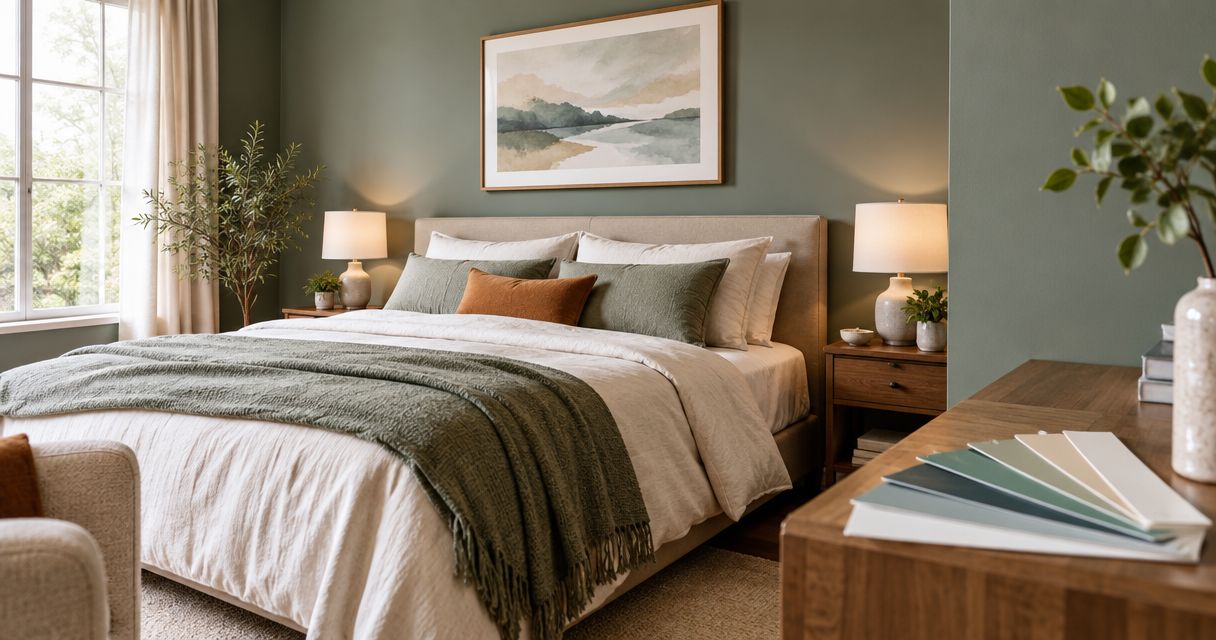
Muted sage green introduces a visible green hue while keeping the overall palette subdued. It suits a bedroom where you want more character than an off-white wall but do not want the paint to dominate every other choice.
Start with your wood finishes and bedding. Compare a gray-leaning sage with a warmer green sample, because the label alone does not establish the undertone. Keep the better match, not the more appealing sample in isolation.
Muted sage green pros:
- Gives neutral bedding a colored backdrop.
- Works as a full-room color rather than requiring an accent wall.
- Leaves room for wood, woven textures, and restrained patterns.
Muted sage green cons:
- Strong pink or orange elements can make the combination harder to balance.
- A gray-heavy version can look dull beside equally subdued furnishings.
Best for: An everyday bedroom with neutral textiles and a preference for understated color.
Verdict: Buy after sampling if you want a colored wall without a high-contrast scheme.
2. Warm off-white: best bedroom color for changing decor
Warm off-white keeps the wall color close to white while adding a warmer undertone. It is the most flexible pick here when you regularly replace bedding, artwork, or curtains and want the walls to remain a background.
Do not treat every off-white as interchangeable. Place the sample beside your existing white trim: a pairing that looks deliberate is useful, while an accidental-looking mismatch is a reason to keep searching.
Warm off-white pros:
- Lets patterned bedding become the focal point.
- Supports a restrained wall-and-ceiling palette.
- Makes future decor changes less dependent on the wall color.
Warm off-white cons:
- Yellow undertones can clash with cool white trim.
- A room with little texture or contrast can look unfinished.
Best for: A bedroom whose bedding and accessories change more often than its paint.
Verdict: Buy for flexibility; skip a sample that looks noticeably yellow beside your trim.
3. Dusty blue: best bedroom color for blue-and-neutral bedding
Dusty blue is a softened blue rather than a bright, saturated one. Choose it when blue already appears in your bedding or artwork and you want the wall color to connect those pieces.
The main decision is whether the sample leans green, gray, or violet. Look at it beside the fabric you intend to keep, then check it under your bedside lamps. Matching the general word blue is not enough.
Dusty blue pros:
- Connects blue textiles with a full-room palette.
- Provides visible color without the darkness of navy.
- Creates a clear contrast with warm wood furnishings.
Dusty blue cons:
- Cool gray floors and cool lighting can make the whole palette feel colder.
- A violet-leaning sample can conflict with green-leaning blue fabrics.
Best for: A coordinated bedroom built around blue, cream, and wood.
Verdict: Buy when the sample agrees with your textiles; hold if the blues compete.
4. Light greige: best bedroom color for mixed neutral furnishings
Light greige sits between gray and beige. It is useful when your bedroom contains both neutral families and you want a wall color that does not commit fully to either one.
Compare it beside the largest gray and beige surfaces in the room. A greige sample can reveal a green or violet undertone in that context, so judge the whole arrangement rather than assuming the color is neutral enough to disappear.
Light greige pros:
- Gives mixed gray-and-beige furnishings a shared backdrop.
- Leaves room for colored bedding and artwork.
- Adds more wall definition than a near-white shade.
Light greige cons:
- Its undertone can be more noticeable than expected.
- A similar-value floor, wall, and bed can produce too little contrast.
Best for: A bedroom with existing gray and beige pieces you plan to keep.
Verdict: Buy to bridge mixed neutrals; skip if the sample introduces an unwanted undertone.
5. Soft taupe: best bedroom color for wood and natural textures
Soft taupe gives you a deeper neutral backdrop than warm off-white. It suits a bedroom where wood furniture, linen, woven materials, and textured bedding are the main features rather than bright color.
Keep some separation between the wall and the furnishings. If your headboard, curtains, and wall all land in a similar muted brown range, introduce contrast through lighter bedding or a darker frame rather than expecting the paint to create it.
Soft taupe pros:
- Supports a layered neutral scheme.
- Gives pale bedding a more defined background.
- Lets texture carry the room instead of a bold wall color.
Soft taupe cons:
- Similar-colored furnishings can blend into the wall.
- Pink-leaning taupe can clash with strongly yellow wood finishes.
Best for: A bedroom focused on wood, fabric texture, and warm neutrals.
Verdict: Buy for a textured neutral room; hold if every major surface looks alike.
6. Muted blush: best bedroom color for gentle warmth
Muted blush adds a restrained pink hue to the walls. It is a distinct choice for someone who wants warmth and visible color without committing to terracotta or a stronger red-based palette.
Use cream, wood, or another contrasting neutral to prevent the room from becoming uniformly pink. The right sample should fit your furnishings even before you add matching accessories.
Muted blush pros:
- Brings color into an otherwise neutral room.
- Provides a softer alternative to a saturated pink wall.
- Pairs with a deliberate mix of light and dark furnishings.
Muted blush cons:
- Pink bedding and pink curtains can make the scheme overly uniform.
- Peach-leaning and violet-leaning samples create noticeably different combinations.
Best for: A warm bedroom where pink is an intentional accent, not an accidental undertone.
Verdict: Buy for restrained pink; skip if you actually want a color-neutral backdrop.
7. Deep navy: best bedroom color for an enveloping room
Deep navy makes the walls a major part of the bedroom design. Choose it because you want a dark setting, not because you expect a pale, airy result after painting.
Plan the relationship between walls, trim, bedding, and lighting before committing. Light fabrics create contrast against navy; darker fabrics continue the enveloping effect. Neither is automatically better, but the choice should be deliberate.
Deep navy pros:
- Creates a defined background for light bedding.
- Gives the room a strong color identity.
- Supports an intentionally dark, coordinated palette.
Deep navy cons:
- Is less flexible than off-white when your decorating preferences change.
- Makes contrasting trim and furnishings more visually prominent.
Best for: A bedroom designed around dark walls and controlled contrast.
Verdict: Buy for an intentionally dark bedroom; skip if your priority is a light wall palette.
How to choose your final bedroom paint color
For your 2026 bedroom project, narrow the shortlist before buying paint for the room. Use 3 color samples across 2 wall locations, then inspect them in 2 lighting conditions: daylight and your usual evening lighting. These are practical comparison steps, not a performance guarantee.
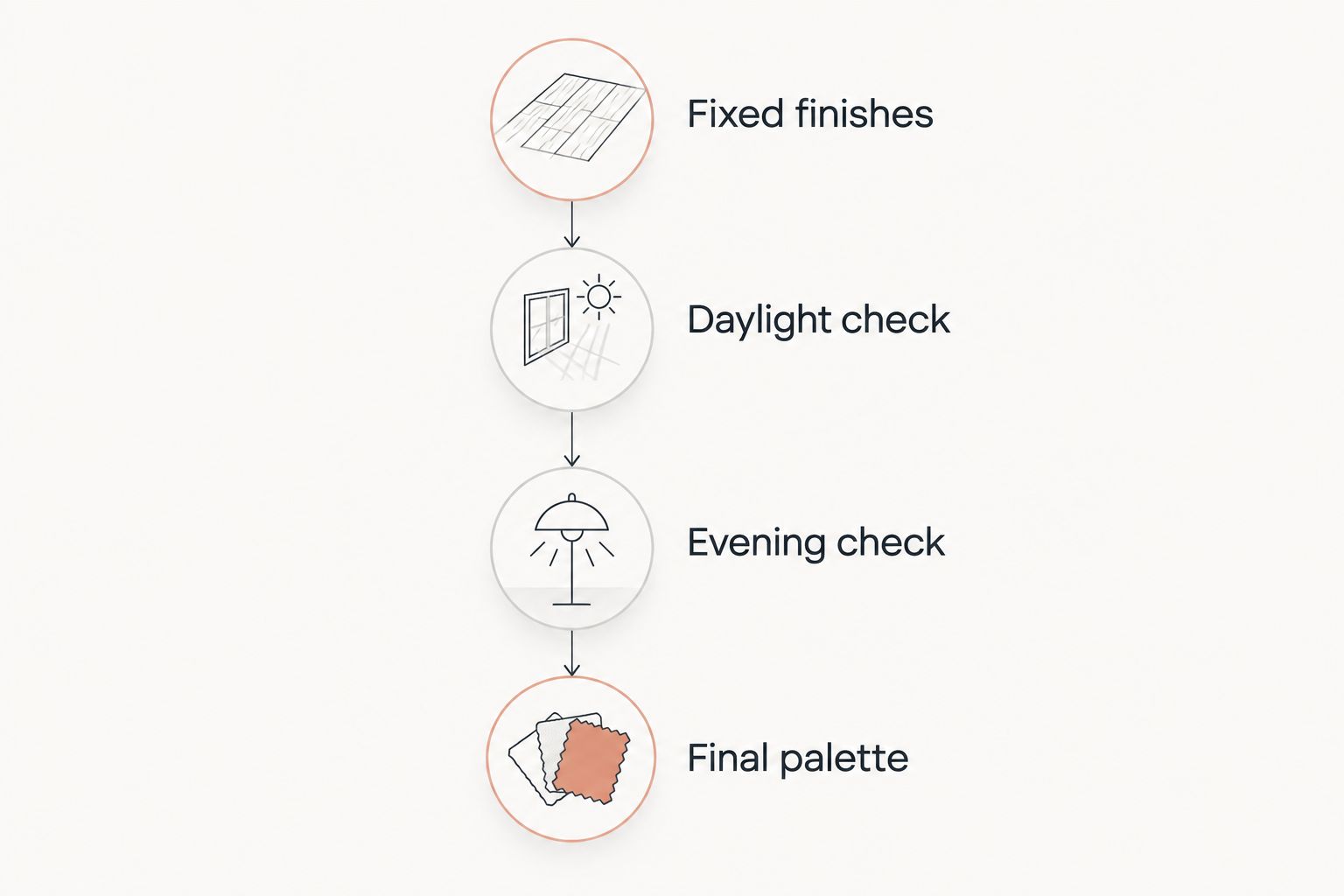
Follow this sequence:
- Fixed finishes: Place each sample beside the floor, headboard, and trim. Eliminate clashes with materials you are keeping.
- Daylight check: View the remaining samples in the bedroom's actual daylight, not only under store lighting.
- Evening check: Turn on the lamps you normally use. Reject a sample that changes into an undertone you dislike.
- Final palette: Compare the remaining choice with bedding and curtains before deciding on the full-room treatment.
Keep the paint color decision separate from the sheen decision. A color sample establishes the palette; the selected coating and finish determine the application requirements. Discuss surface repairs and follow the paint manufacturer's preparation and application instructions.
KB's Painting Services offers bedroom interior painting and drywall repair for homeowners in its stated Georgia service area. Decide on the color direction before discussing the painting scope, then include wall condition and trim treatment in that conversation.
Discuss your bedroom painting project
Plan interior painting and drywall repair for your Pooler or Savannah home.
How these bedroom colors are ranked
This ranking prioritizes compatibility, lighting checks, undertone control, contrast, and decorating flexibility. Sage takes the default position because it offers restrained color; each remaining pick answers a different decorating need.
The 2026 order is a decision guide, not a claim that one shade performs better as a coating. Color families do not establish durability, washability, or application quality. Those depend on the selected paint and the work specified.
Which bedroom paint color should you choose?
Choose muted sage green if you want a default colored-wall direction. Choose warm off-white if you want your bedding to lead. Choose deep navy only when dark walls are the goal.
For mixed gray and beige furniture, start with light greige. For wood and fabric texture, start with soft taupe. Dusty blue and muted blush are stronger choices when those hues already belong in your intended palette.
For a 2026 refresh, changing the walls is enough of a commitment without also replacing furnishings to rescue a poor match. Keep the sample that works with what you own.
FAQ
What's the best interior paint color for a bedroom?
Muted sage green is this guide's best overall bedroom color for restrained color. Warm off-white is the better choice when decorating flexibility matters most, while deep navy suits an intentionally dark room.
What's the best paint color for a small bedroom?
Warm off-white is a useful starting point when you want a small bedroom with a light wall palette. Compare it beside your trim and bedding; room size alone does not determine the right undertone.
Is sage green better than blue for bedroom walls?
Sage green is better for a restrained green-and-neutral palette; dusty blue is better when blue textiles lead the design. Neither color is universally better, so compare physical samples with your furnishings.
Should I paint my bedroom dark navy?
Choose deep navy when you want an intentionally dark, enveloping bedroom. Plan the contrast with bedding and trim first rather than expecting navy to produce a light wall palette.
How do I choose between greige and taupe?
Choose light greige to connect gray and beige furnishings, and soft taupe for a warmer, texture-focused neutral room. Check both beside your flooring because their undertones can change the overall combination.
How many bedroom paint samples should I compare?
Compare three color samples across two wall locations as a practical starting point. Inspect them in daylight and under your usual evening lighting before choosing.
Can bedroom paint colors help me sleep better?
This guide does not claim that a paint color improves sleep. Choose a bedroom palette you enjoy, and do not treat a color recommendation as a health claim.
Does KB's Painting Services paint bedroom interiors?
KB's Painting Services offers interior painting for homeowners in Pooler, Savannah, and surrounding Georgia communities. Its stated services also include drywall repair.
One last thing
Use your existing trim as a reference, not an afterthought. An off-white wall can look unexpectedly yellow beside one white and comparatively muted beside another. Before approving your 2026 bedroom color, hold the final sample directly against the trim you intend to keep.