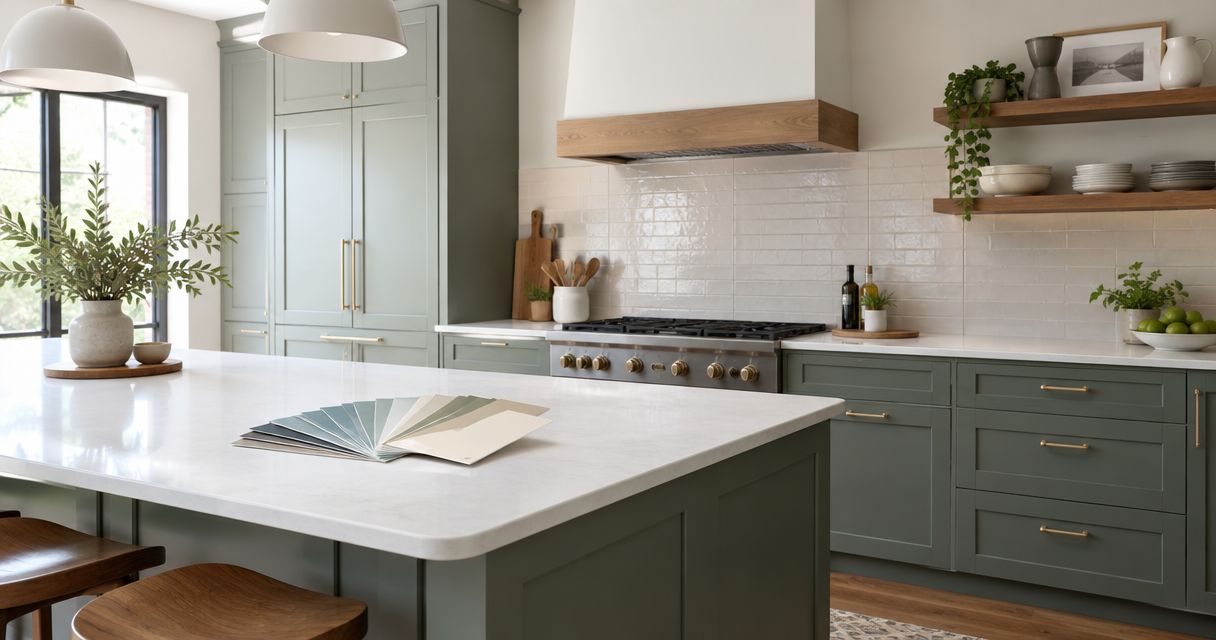
Best overall: warm white. Best for mixed warm and cool finishes: greige. Best for keeping a traditional kitchen’s existing finishes: cream. This 2026 guide ranks the best cabinet paint colors for kitchen cabinets by the room each color suits, with clear reasons to choose—or skip—every option.
- Warm white leads the best cabinet paint colors for kitchen cabinets when you want a neutral starting point.
- Choose greige for mixed finishes, sage green for earthy materials, and navy for a contrasting island.
- KB's Painting Services offers cabinet finishing for homeowners in Pooler, Savannah, and surrounding Georgia communities.
- Compare painted samples beside your countertop and backsplash before choosing a cabinet color.
Why this matters
Cabinet color covers a large part of your kitchen’s visible surface. A shade that looks balanced on a small paint chip can look too yellow, too gray, or too dark across a full run of doors.
Your countertop, backsplash, and flooring set the constraints. Start with those fixed surfaces rather than a photograph of another kitchen. The best cabinet color works with the materials you are keeping.
KB's Painting Services is a cabinet-finishing option for homeowners in Pooler, Savannah, and surrounding Georgia communities. Use this guide to narrow your color direction before discussing the finishing work.
What makes the best cabinet paint colors for kitchen cabinets?
The strongest choice meets these criteria before it earns a place on your cabinets:
- Undertone compatibility: The color belongs beside your countertop, backsplash, and flooring without making one surface look unexpectedly yellow, pink, or blue.
- Light response: You like the painted sample in daylight and under the lights you actually use at night.
- Visual weight: The depth of color suits the amount of cabinetry you intend to paint, not just an isolated door.
- Material coordination: The color supports your wood, stone, metal, and tile rather than competing with every finish.
- Maintenance visibility: You understand whether the shade emphasizes marks, dust, or contrasting chips.
- Whole-room continuity: The cabinets make sense beside adjacent rooms, especially in an open kitchen.
Color and finish are separate decisions. A suitable shade does not correct damaged doors, surface contamination, or poor coating adhesion. Agree on preparation and coating details alongside the color.
Cabinet paint colors at a glance
These 2026 recommendations rank color families by practical fit, not by claimed popularity. Each option has a different job.
| Rank | Color family | Best for | Standout feature | Key limitation |
|---|---|---|---|---|
| 1 | Warm white | A neutral starting point | Light appearance without an intentionally cool cast | Can look yellow beside cool white surfaces |
| 2 | Greige | Mixed warm and cool finishes | Combines gray and beige character | Undertones vary substantially between shades |
| 3 | Sage green | Earthy kitchens with natural materials | Adds muted color beside wood and stone | Can conflict with existing green undertones |
| 4 | Navy blue | A contrasting kitchen island | Creates a dark focal point | Strong visual weight across extensive cabinetry |
| 5 | Charcoal | Modern kitchens with light surrounding surfaces | Delivers dark neutral contrast | Makes contrasting dust and marks noticeable |
| 6 | Cream | Traditional kitchens with warm fixed finishes | Relates naturally to beige and warm wood | Looks yellow beside some bright whites |
| 7 | Muted blue | An airy, color-led kitchen | Adds color without navy’s depth | Can look cold beside strongly warm materials |
1. Warm white: best cabinet color for a neutral starting point
Warm white is the default to sample when you want a light kitchen without an intentionally blue-gray cabinet color. Its slight warmth can suit wood flooring and warm-toned stone, but the exact undertone matters more than the label.
Do not treat every off-white as interchangeable. Put the sample against the backsplash: that meeting point often makes an unwanted undertone easier to see.
Warm white pros:
- Gives you a neutral starting point for comparing other colors.
- Keeps the cabinetry visually lighter than dark alternatives.
- Leaves room for color in hardware, textiles, and accessories.
Warm white cons:
- Can appear yellow beside a cooler white countertop or tile.
- Makes dark splashes and handling marks easy to see.
Best for: Homeowners who want light cabinets without making cabinet color the room’s main feature.
Verdict: Choose warm white as your first sample, not as an automatic final selection.
2. Greige: best cabinet color for mixed warm and cool finishes
Greige combines gray and beige characteristics. It is a useful candidate when your kitchen includes both warm wood and cooler-looking stone or metal.
The name alone does not guarantee compatibility. Some greiges lean green, others violet or beige; compare the actual coating with every fixed surface before committing.
Greige pros:
- Offers more depth than white without requiring a dark palette.
- Gives mixed-material kitchens a neutral color to evaluate.
- Works as a whole-cabinet direction rather than only an accent.
Greige cons:
- An unsuitable undertone can become obvious beside stone veining.
- Similar cabinet and wall tones can make the room look flat.
Best for: Kitchens where warm and cool finishes both need a place in the palette.
Verdict: Choose greige when the painted sample connects your existing materials; skip it when it introduces another competing undertone.
3. Sage green: best cabinet color for earthy materials
Sage green brings muted color to a kitchen built around wood, stone, and other earthy finishes. It is a color choice, not a neutral replacement that works everywhere.
Compare sage with the countertop’s quieter background colors as well as its most visible veining. A green cabinet shade can expose green undertones you had not noticed in another surface.
Sage green pros:
- Adds a clear color direction without using a vivid green.
- Provides an alternative to white, gray, and beige cabinetry.
- Supports a palette centered on natural-looking materials.
Sage green cons:
- Can clash with a different green already present in stone or tile.
- Needs coordination with adjoining rooms in an open layout.
Best for: Homeowners who want an earthy kitchen where cabinet color is part of the design.
Verdict: Choose sage green when it relates to your materials; skip it when the kitchen already contains conflicting green tones.
4. Navy blue: best cabinet color for a contrasting island
Navy blue gives an island a distinct visual identity against lighter perimeter cabinets. This is the clearest use case for homeowners who want dark cabinetry without applying it throughout the kitchen.
Test navy beside the island countertop and the perimeter color together. Each pairing must work; a successful countertop match alone is not enough.
Navy blue pros:
- Creates a defined focal point for an island.
- Establishes contrast with light perimeter cabinets.
- Adds deep color without choosing a black or gray family.
Navy blue cons:
- Can dominate when used across extensive cabinetry.
- Makes pale dust, dried splashes, and light-colored chips conspicuous.
Best for: Kitchens with an island that deserves emphasis rather than visual continuity.
Verdict: Choose navy for a deliberate island accent; hold on an all-navy scheme until you have assessed a large sample.
5. Charcoal: best cabinet color for modern high-contrast kitchens
Charcoal is a dark gray direction for kitchens with lighter counters, walls, or backsplashes. It creates contrast without requiring an overtly blue or green cabinet color.
Charcoal still has undertones. Check whether the sample reads blue, brown, or green next to your finishes rather than assuming dark gray is automatically neutral.
Charcoal pros:
- Creates strong separation from light surrounding surfaces.
- Keeps the palette focused on neutral contrast.
- Suits a design where cabinet lines should remain visually distinct.
Charcoal cons:
- Can make a cabinet-heavy room feel visually weighty.
- Emphasizes pale residue and contrasting surface imperfections.
Best for: Modern kitchens where light fixed surfaces balance dark cabinetry.
Verdict: Choose charcoal for intentional contrast; skip it when the surrounding surfaces are already dark and you want a lighter-looking room.
6. Cream: best cabinet color for traditional warm finishes
Cream belongs on your shortlist when warm wood, beige tile, or warm-toned stone will stay. It follows those materials rather than forcing them into a cooler palette.
Cream differs from warm white in its more noticeable yellow or beige character. That distinction matters beside appliances, trim, and a bright white backsplash.
Cream pros:
- Gives warm existing materials a related cabinet color.
- Offers a light alternative to beige or brown cabinets.
- Supports a traditional palette without introducing strong contrast.
Cream cons:
- Can look yellow beside cool or bright white surfaces.
- Provides limited contrast when walls and counters are similarly warm.
Best for: Traditional kitchens retaining warm finishes rather than replacing them.
Verdict: Choose cream when it agrees with the surfaces you are keeping; skip it when bright white tile makes the sample look yellow.
7. Muted blue: best cabinet color for an airy, color-led kitchen
Muted blue adds a lighter blue direction without navy’s depth. It suits homeowners who want visible cabinet color while keeping the overall palette lighter.
Compare the sample with your flooring early. A cool blue beside orange-toned wood creates a stronger contrast than the same blue beside pale neutral flooring.
Muted blue pros:
- Introduces color without choosing a dark cabinet scheme.
- Gives you an alternative to green for a softer palette.
- Leaves a clear distinction between cabinetry and white surfaces.
Muted blue cons:
- Can look cold beside strongly warm materials.
- Changes character as surrounding light and colors change.
Best for: Homeowners who want lighter colored cabinets and are prepared to coordinate the surrounding palette.
Verdict: Choose muted blue when you like its relationship with the floor; skip it when that contrast feels distracting.
How to check your shortlist before painting
For your 2026 cabinet project, use painted samples to make the final decision. Screen images and printed chips help you shortlist colors, but neither shows the selected coating on your cabinet surface.
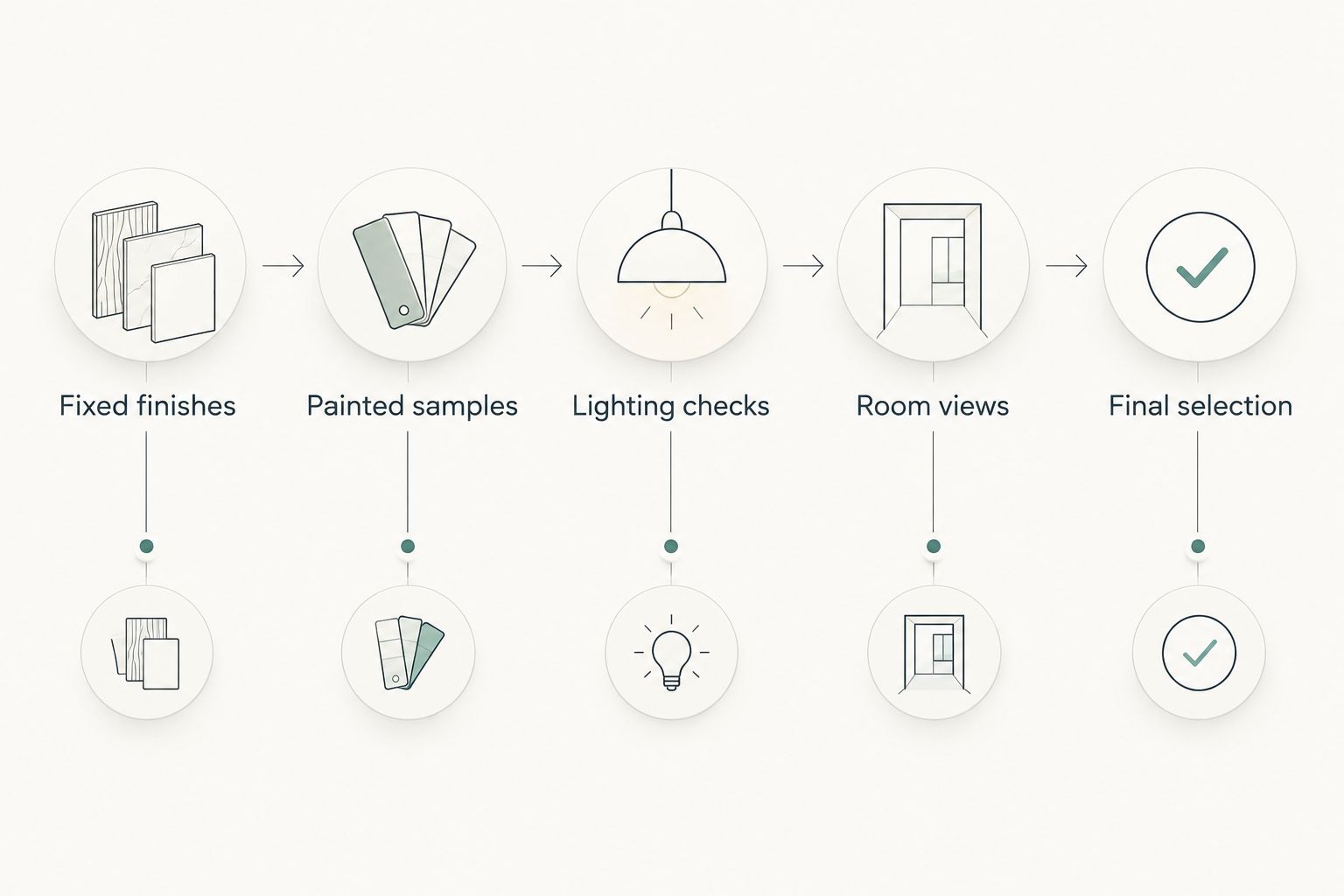
Follow this sequence:
- Fixed finishes: Place countertop, backsplash, and flooring references together. Include the perimeter color when choosing an island shade.
- Painted samples: Start with 3 sample boards representing distinct directions rather than nearly identical shades. Use the intended coating and sheen for the final comparison.
- Lighting checks: Compare each sample during 3 viewing periods: morning, afternoon, and evening with your usual lights on.
- Room views: Review the samples from 2 viewing positions: beside the countertop and from the kitchen entrance. Stand samples vertically, as cabinet doors sit.
- Final selection: Remove shades that clash with fixed finishes. Choose among the survivors by the overall appearance you want.
The sample counts are a practical starting plan, not a guarantee. Add a new sample only when it answers a specific question, such as whether a less yellow white works better.
Keep the finalists in the kitchen while you use the room. A sample that looks good beside the sink but clashes with the floor across the room has not passed the full comparison.
How the colors were ranked
This 2026 ranking prioritizes compatibility with fixed finishes, light response, visual weight, and a distinct use case. Warm white takes the default position because it offers a light neutral starting point; the other colors solve more specific design needs.
The order is not a claim about sales, search popularity, or tested coating performance. A color family cannot tell you whether a particular coating system suits your cabinets. Separate the visual decision from the preparation and finishing specification.
Which cabinet paint color should you choose?
Choose warm white if you are undecided, then test it against greige or cream according to your fixed finishes. Move to sage, navy, charcoal, or muted blue only when you want the cabinetry to carry a stronger design role.
For a 2026 refresh that keeps the countertop and backsplash, let those surfaces decide which shades remain on the shortlist. Do not choose a fashionable color first and spend the rest of the project trying to make the room accept it.
KB's Painting Services is a cabinet-finishing option for homeowners in Pooler and Savannah who want to update existing kitchen cabinets. The company also serves surrounding Georgia communities. Discuss surface condition, preparation, coating selection, and the final color sample before cabinet finishing begins.
Discuss your cabinet finishing project
Review cabinet finishing for your home in Pooler, Savannah, or surrounding Georgia communities.
FAQ
What's the best paint color for kitchen cabinets in 2026?
Warm white is the best starting point for a light, neutral kitchen cabinet palette. Compare a painted sample with your countertop and backsplash before making it the final choice.
Is greige better than white for kitchen cabinets?
Greige is the better candidate when you want more depth and need to coordinate mixed warm and cool finishes. White is the better starting point when you want lighter-looking cabinetry; neither works without checking undertones.
Should I paint all my cabinets navy blue?
Choose all-navy cabinets only when you want dark cabinetry to dominate the palette. A navy island with lighter perimeter cabinets gives the color a more limited and distinct role.
What cabinet color works with warm wood floors?
Warm white, cream, greige, and sage green are useful candidates to compare with warm wood floors. The floor's actual undertone determines which sample belongs, so evaluate the cabinet color beside the wood rather than in isolation.
What's the difference between cream and warm white cabinets?
Cream has a more noticeable yellow or beige character than warm white. That extra warmth can relate to beige and warm wood, but it can also look yellow beside cool white tile.
Does cabinet color determine how durable the finish is?
Cabinet color alone does not determine finish durability. Surface preparation, coating suitability, application, and curing are separate decisions that need attention during the finishing project.
Does KB's Painting Services offer cabinet finishing near Savannah?
KB's Painting Services offers cabinet finishing for homeowners in Pooler, Savannah, and surrounding Georgia communities. The veteran-owned contractor also offers interior and exterior painting, staining, drywall repair, and deck/fence restoration.
One last thing
A cabinet sample needs to stand upright. Laying it flat on the countertop changes how light reaches it and does not reproduce the orientation of a cabinet door.
Before approving your 2026 cabinet color, hold the final sample vertically against the backsplash and then step into the adjoining room. Approve the color where it will live, not where the paint chip happened to look good.