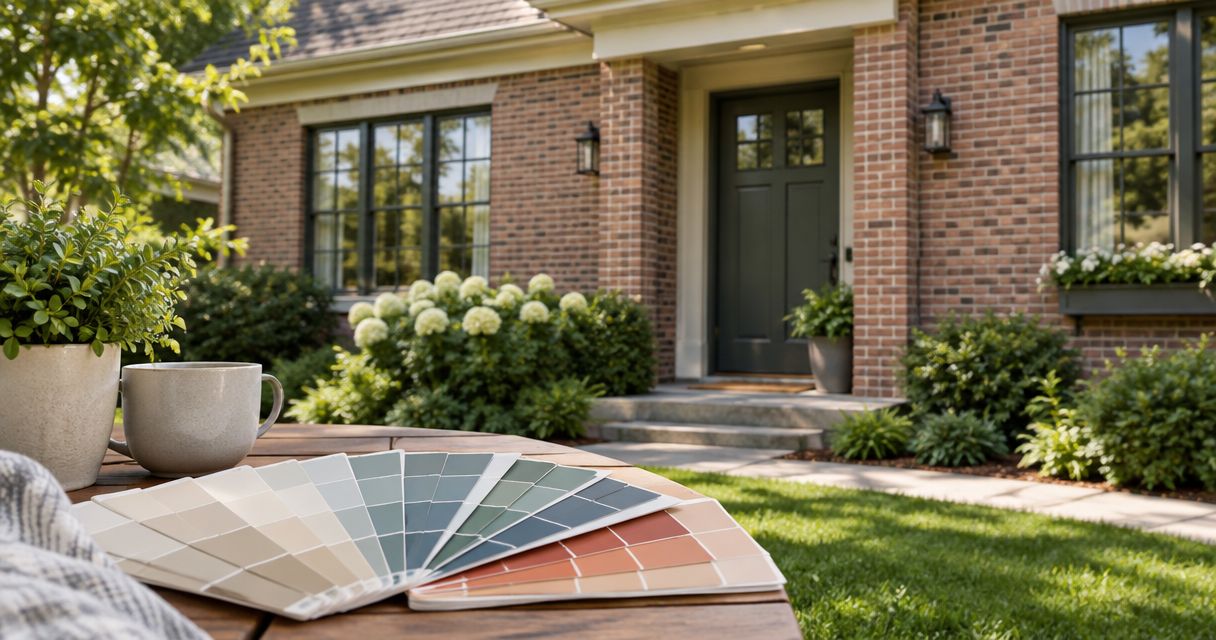

Best overall: Benjamin Moore Eco Spec for a zero-VOC interior specification. Best for retail shopping: BEHR PREMIUM PLUS. Best for contractor-led projects: Sherwin-Williams ProMar 200 Zero VOC. Best for ingredient disclosure: ECOS interior wall paint. These are the best low-VOC interior paint brands to shortlist for a family painting project in 2026; choose the exact coating, not just the brand name.
- Benjamin Moore Eco Spec leads this best low-voc interior paint brands shortlist for its zero-VOC formulation.
- BEHR PREMIUM PLUS suits retail shopping; Sherwin-Williams ProMar 200 Zero VOC suits contractor-led interior painting.
- ECOS interior wall paint suits families who want to examine ingredient disclosures before choosing.
- Low-VOC paint still needs ventilation, careful preparation, and drying time before rooms return to normal use.
Why this matters
A low-VOC label answers a formulation question, not every indoor-air question. VOC content, emissions after application, tinting, and surface preparation all deserve separate checks—especially when you are painting occupied bedrooms or shared living spaces.
KB's Painting Services is an interior painting contractor for homeowners in Pooler, Savannah, and surrounding Georgia communities. KB's Painting Services is best for local families seeking interior painting services rather than a paint-only purchase. Use this shortlist to discuss the coating and room-use plan before work begins.
For a 2026 project, treat the manufacturer's current technical data sheet as the specification. Marketing terms on the front of a container do not replace instructions for ventilation, compatible primers, or cleaning after the finish cures.
What makes the best low-VOC interior paint brands
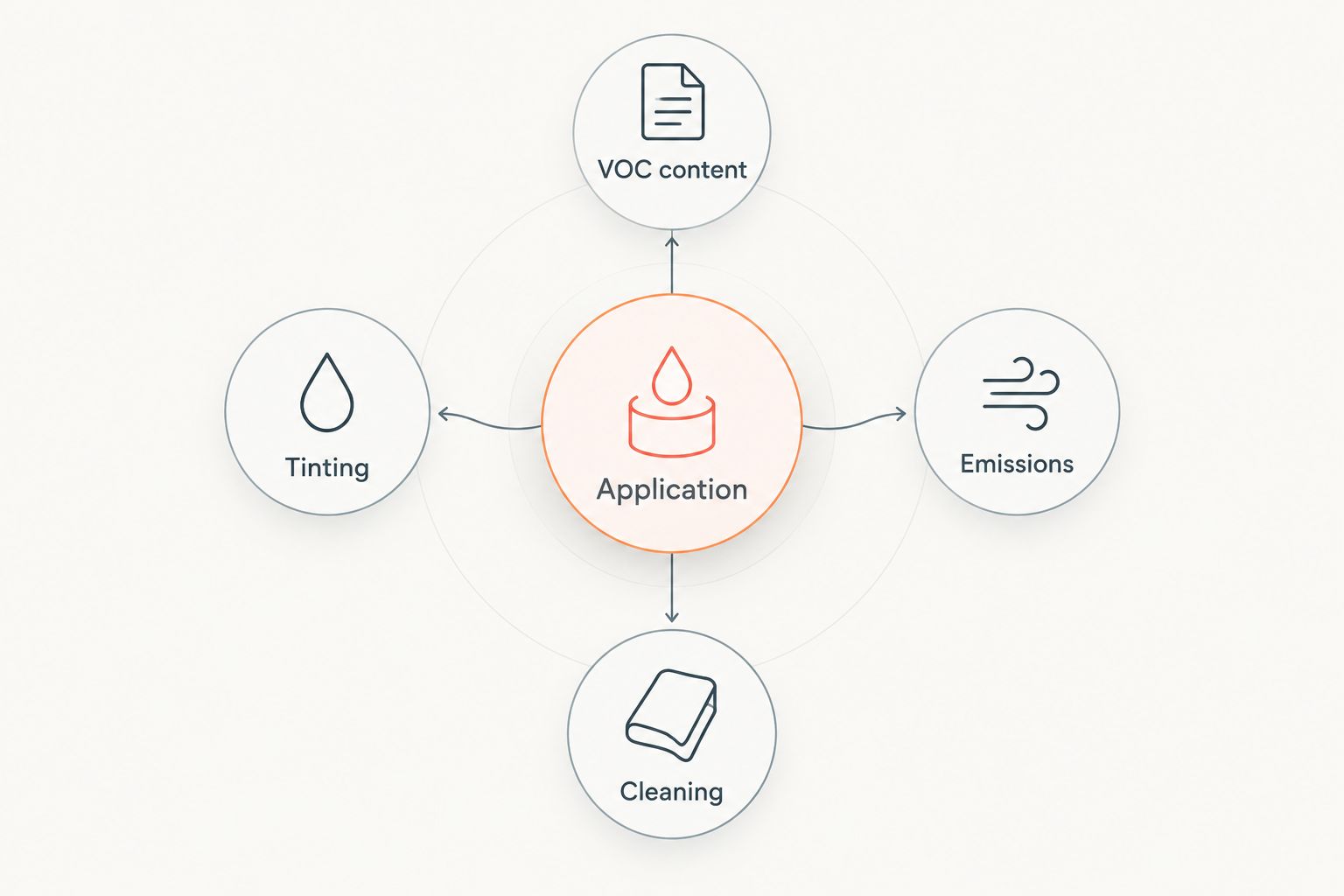
Judge the exact interior coating against these criteria before choosing a color:
- VOC content: Check the stated grams per liter, or g/L. If you want a numerical screening rule, specify a coating at or below 50 g/L; that is a selection threshold, not a promise of harmlessness.
- Tinting: Ask whether the VOC statement applies to the selected base and finished color. Do not assume every color shares an untinted base's specification.
- Emissions: Distinguish VOC content in the liquid paint from substances released into room air. An emissions certification answers a different question from a zero-VOC formulation claim.
- Cleaning: Match the finish to fingerprints, splashes, and routine wiping. Look for the manufacturer's cleaning and cure instructions, not just a washable label.
- Application: Check substrate compatibility, primer requirements, recoat instructions, and ventilation. The wrong preparation undermines an otherwise suitable paint choice.
These criteria keep the comparison useful for families: select a coating you can document, apply correctly, and maintain without guessing.
Low-VOC interior paint brands at a glance
The ranking below separates shopping and specification needs. It does not claim that these coatings produce identical emissions or perform identically on every wall.
| Paint option | Best for | Standout feature | Key limitation |
|---|---|---|---|
| Benjamin Moore Eco Spec | A zero-VOC interior specification | A waterborne interior paint line identified by the manufacturer as zero VOC | The exact finish, base, and preparation still need checking |
| BEHR PREMIUM PLUS | Retail-led household projects | A zero-VOC interior paint line sold through The Home Depot | Its paint-and-primer description does not eliminate all separate priming |
| Sherwin-Williams ProMar 200 Zero VOC | Contractor-coordinated repainting | A professional interior coating with an explicit zero-VOC product identity | A professional product designation does not establish a room-use schedule |
| ECOS interior wall paint | Ingredient-focused selection | Manufacturer ingredient disclosures alongside its zero-VOC positioning | Ingredient information alone does not establish personal tolerance |
For your 2026 shortlist, read each manufacturer's current product page and technical documents for the exact interior version. Exterior products, primers, and other lines from the same brand are separate decisions.
1. Benjamin Moore Eco Spec: best for a zero-VOC specification
Benjamin Moore Eco Spec is a waterborne interior paint line that the manufacturer identifies as zero VOC. It is the default shortlist choice when your main requirement is an explicitly identified zero-VOC interior coating rather than a general brand preference.
Keep the specification precise. Write Benjamin Moore Eco Spec, the selected finish, and the intended color into the project scope so a different Benjamin Moore line does not become an unnoticed substitution.
Benjamin Moore Eco Spec pros:
- Its product identity makes the zero-VOC requirement explicit.
- The interior line provides a clear starting point for reviewing manufacturer application documents.
- Specifying the named coating avoids treating every paint from one brand as equivalent.
Benjamin Moore Eco Spec cons:
- Zero VOC does not mean the wet coating requires no ventilation.
- The wall condition and chosen finish still determine preparation and cleaning requirements.
Best for: Families who want a clearly named zero-VOC coating in their interior painting scope.
Before selecting it, review Benjamin Moore's Eco Spec technical data sheet for the relevant base and finish. Check whether the proposed primer meets your separate formulation requirements; the topcoat's claim does not extend to every material used underneath it.
Verdict: Buy Benjamin Moore Eco Spec when a documented zero-VOC interior specification is your first priority.
2. BEHR PREMIUM PLUS: best for retail-led family projects
BEHR PREMIUM PLUS is an interior paint line that BEHR describes as zero VOC and low odor. Its connection with The Home Depot makes it a straightforward option for households organizing their own paint selection and purchasing.
The important distinction is preparation. A paint-and-primer description does not mean that stains, bare surfaces, glossy coatings, and damaged walls all need the same treatment.
BEHR PREMIUM PLUS pros:
- The manufacturer's zero-VOC positioning directly addresses the formulation requirement.
- Its retail channel supports a homeowner-led purchasing process.
- The named interior line makes it easier to distinguish the intended coating from other BEHR products.
BEHR PREMIUM PLUS cons:
- Some surfaces still require a separate, appropriate primer.
- Low odor does not establish that a freshly painted room is ready for normal occupancy.
Best for: Families handling the shopping themselves while following a defined preparation plan.
Review BEHR's PREMIUM PLUS interior product information and the technical data sheet for your chosen finish. In 2026, confirm the exact product at selection time rather than relying on an old container, a remembered label, or advice about another BEHR line.
Verdict: Buy BEHR PREMIUM PLUS for a retail-led project; hold if your surface preparation is still undefined.
3. Sherwin-Williams ProMar 200 Zero VOC: best for contractor-led work
Sherwin-Williams ProMar 200 Zero VOC is a professional interior coating line with zero VOC stated in its product name. It belongs on the shortlist when your painter is coordinating coating selection, surface preparation, and application as one job.
The useful comparison is the written scope, not the professional label. Your contractor should identify the finish, primer, surfaces, and application requirements instead of specifying only Sherwin-Williams paint.
Sherwin-Williams ProMar 200 Zero VOC pros:
- The named line makes the zero-VOC formulation requirement explicit.
- It fits a contractor-managed product-selection process.
- Product-specific technical documents support a more precise written scope.
Sherwin-Williams ProMar 200 Zero VOC cons:
- The product name alone does not identify every detail needed for application.
- A professional coating still requires ventilation and adherence to its drying and cure instructions.
Best for: Families who want their painter to manage an exact coating specification and room-by-room schedule.
Use Sherwin-Williams' ProMar 200 Zero VOC product data for the selected finish as the reference. Ask your painter to explain any substitution before application; a different coating needs its own VOC, preparation, and maintenance review.
Verdict: Buy Sherwin-Williams ProMar 200 Zero VOC when it is explicitly specified within a contractor-led interior painting plan.
4. ECOS interior wall paint: best for ingredient-focused families
ECOS presents its interior wall paints as zero VOC and provides ingredient information. That makes the brand a useful option when you want to examine what the manufacturer discloses instead of relying only on a front-label claim.
Ingredient transparency is information, not a medical assurance. If a household member has a known sensitivity, compare the disclosed ingredients with that person's specific needs and seek appropriate clinical advice.
ECOS interior wall paint pros:
- Ingredient disclosures support a more detailed product review.
- The manufacturer's zero-VOC positioning addresses the liquid-coating criterion.
- Its interior wall-paint category gives you a relevant starting point rather than a general-purpose coating.
ECOS interior wall paint cons:
- No ingredient list guarantees that every household member will tolerate application.
- Zero VOC does not replace surface preparation, ventilation, or curing instructions.
Best for: Families whose first purchasing question is what the manufacturer discloses about ingredients.
Read ECOS's ingredient information alongside the application documents for the chosen wall paint and finish. Do not transfer claims between wall paint, primers, or specialty coatings without checking the relevant documentation.
Verdict: Buy ECOS interior wall paint when ingredient disclosure is your deciding criterion; skip treating it as a medical guarantee.
How these paint options are ranked
The ranking uses documented product positioning and distinct household decision needs: a zero-VOC specification, retail purchasing, contractor coordination, and ingredient disclosure. It is not a laboratory emissions ranking or a claim based on comparative application testing.
For a 2026 decision, give more weight to current documentation for your selected coating than to a brand-wide reputation. If the required finish or surface changes, review the choice again.
Choose the finish and room-use plan together
A family paint project includes more than the topcoat. Primer, patching materials, cleaning products, and application work all belong in the plan.
Use this sequence before opening a container:
- Inspect the surface. Identify damage, stains, bare areas, and existing coatings before deciding on preparation.
- Specify the materials. Record the exact topcoat, finish, color, and any primer or repair products.
- Plan ventilation. Arrange outdoor-air exchange without directing paint vapors into occupied rooms.
- Control access. Keep children and pets away from wet coatings, tools, and preparation debris.
- Check the instructions. Separate recoat time, drying, curing, and cleaning guidance; these are not interchangeable milestones.
The U.S. Environmental Protection Agency's indoor-painting guidance recommends ventilation during painting and for 2–3 days afterward. Treat that as general ventilation guidance, not a universal clearance period for every coating or household.
For houses built before 1978, the EPA's lead-paint guidance makes disturbance of existing coatings a separate safety issue. A low-VOC topcoat does not address lead-containing dust created during preparation.
KB's Painting Services offers interior painting and drywall repair. Discuss damaged surfaces and room access as part of the project scope rather than choosing a topcoat first and leaving preparation unresolved.
Discuss your interior painting project
Review the coating choice, wall preparation, and room-use plan for your home.
Which low-VOC interior paint should you choose?
Choose Benjamin Moore Eco Spec as the default when an explicit zero-VOC interior specification is your main requirement. Choose BEHR PREMIUM PLUS for homeowner-led retail purchasing, Sherwin-Williams ProMar 200 Zero VOC for contractor-coordinated work, or ECOS interior wall paint for ingredient-focused review.
The decision becomes simpler when you separate the coating from the work. Select the exact paint, then confirm preparation, ventilation, and room use with the person applying it.
For a 2026 interior painting project with KB's Painting Services, bring the named coating to the scope discussion. Do not assume the contractor uses any shortlisted product unless it is agreed for your job.
FAQ
What's the best low-VOC interior paint for a family home?
Benjamin Moore Eco Spec is the default shortlist choice when your priority is an explicitly identified zero-VOC interior coating. Confirm the selected finish, color, primer, and application instructions before approving the specification.
Is zero-VOC paint the same as zero emissions?
No. VOC content describes the coating formulation, while emissions concern substances released into indoor air; a zero-VOC claim does not establish that nothing is emitted.
Is BEHR PREMIUM PLUS a low-VOC option?
BEHR identifies PREMIUM PLUS interior paint as zero VOC and low odor. Review the current documents for the exact interior finish and follow the required preparation and ventilation instructions.
Is Sherwin-Williams ProMar 200 Zero VOC better than Benjamin Moore Eco Spec?
Neither is established here as better in comparative performance or emissions. Choose ProMar 200 Zero VOC for a contractor-coordinated specification or Eco Spec when its documented interior formulation fits your requirements.
Can children sleep in a room as soon as low-VOC paint feels dry?
Dry-to-touch paint alone is not a sufficient room-use decision. Follow the coating's instructions, ventilate the space, and consider household sensitivities; EPA guidance recommends ventilation during painting and for 2–3 days afterward.
Does low-VOC paint need a separate primer?
Some surfaces require a separate primer even when the topcoat is described as paint and primer. Base the decision on the substrate, stains, existing finish, and manufacturer instructions, then check the primer's own VOC information.
What should I ask a painting contractor before a 2026 family project?
Ask for the exact coating, finish, primer, preparation method, and ventilation plan in the project scope. KB's Painting Services offers interior painting for homeowners in Pooler, Savannah, and surrounding Georgia communities; agree on the selected materials rather than assuming a brand.
One last thing
The easiest specification mistake is approving a brand instead of a coating. A container from your preferred manufacturer is not automatically equivalent to the low-VOC line you researched.
Before your 2026 project starts, check the container's product name against the written scope. That simple check keeps the formulation decision attached to the paint actually applied to your walls.