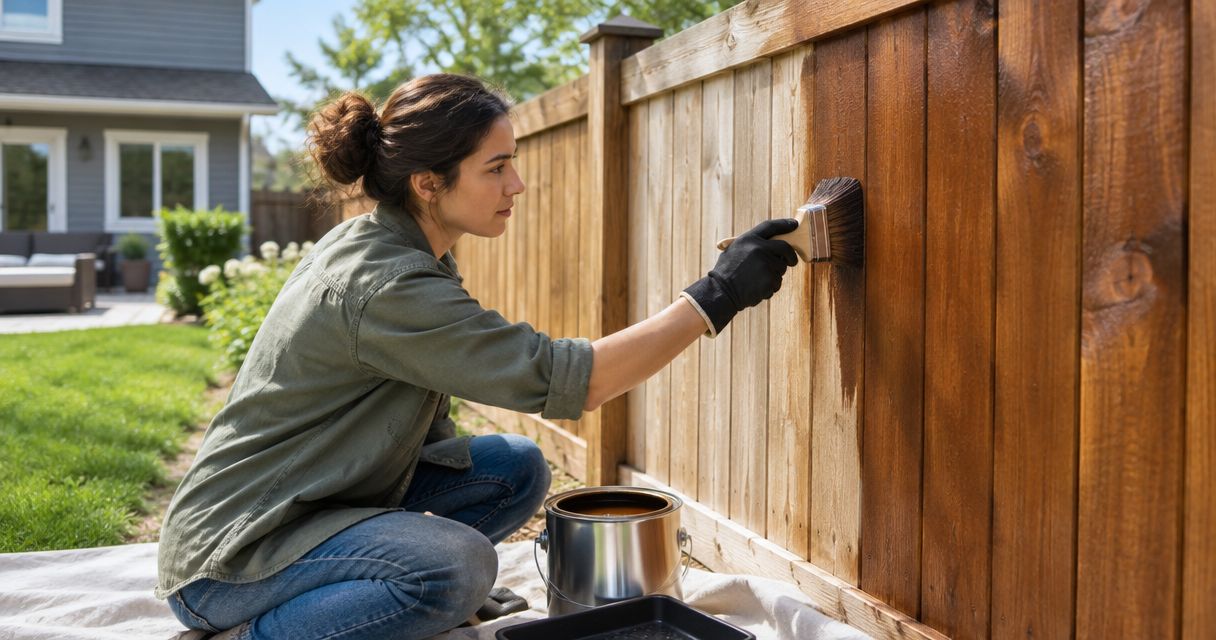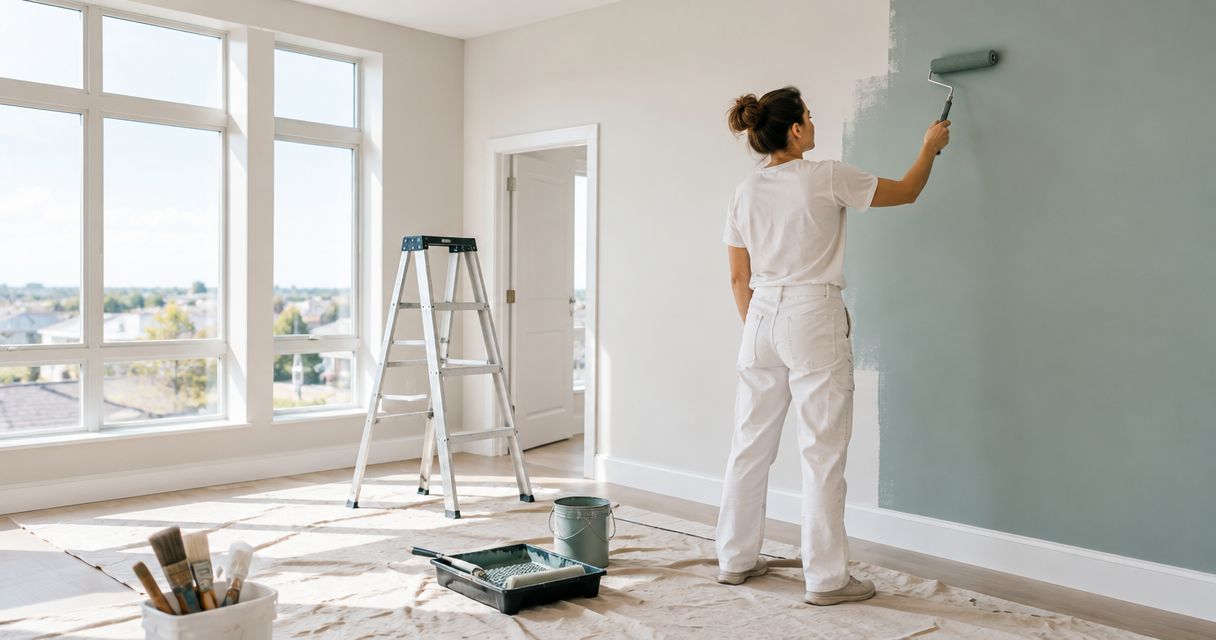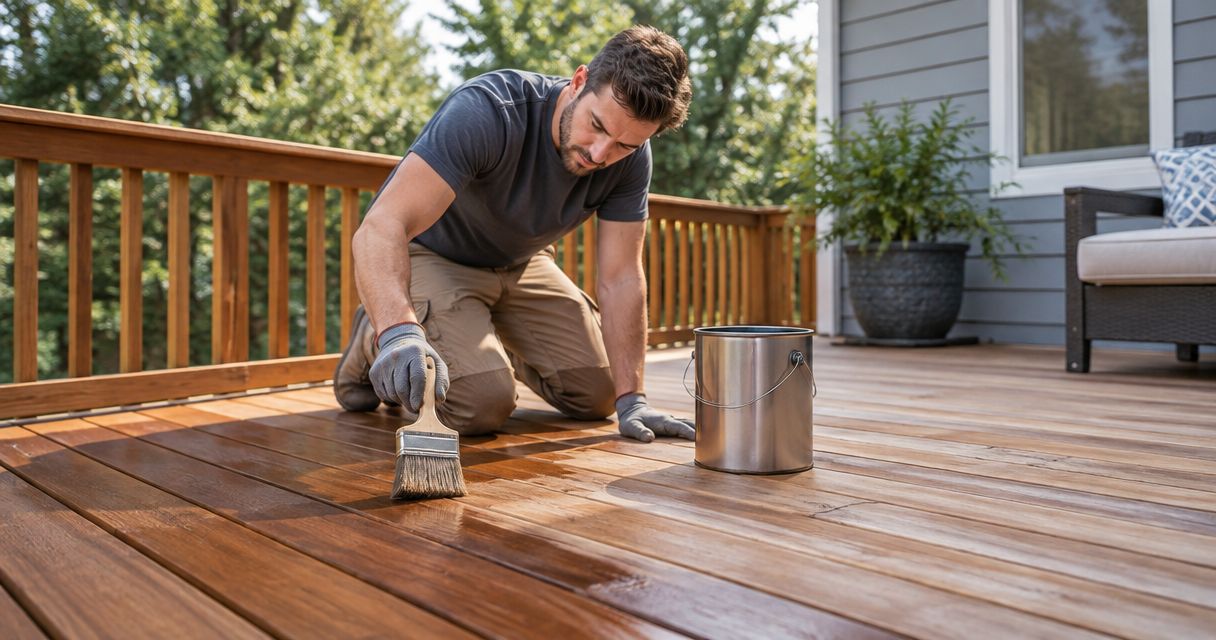
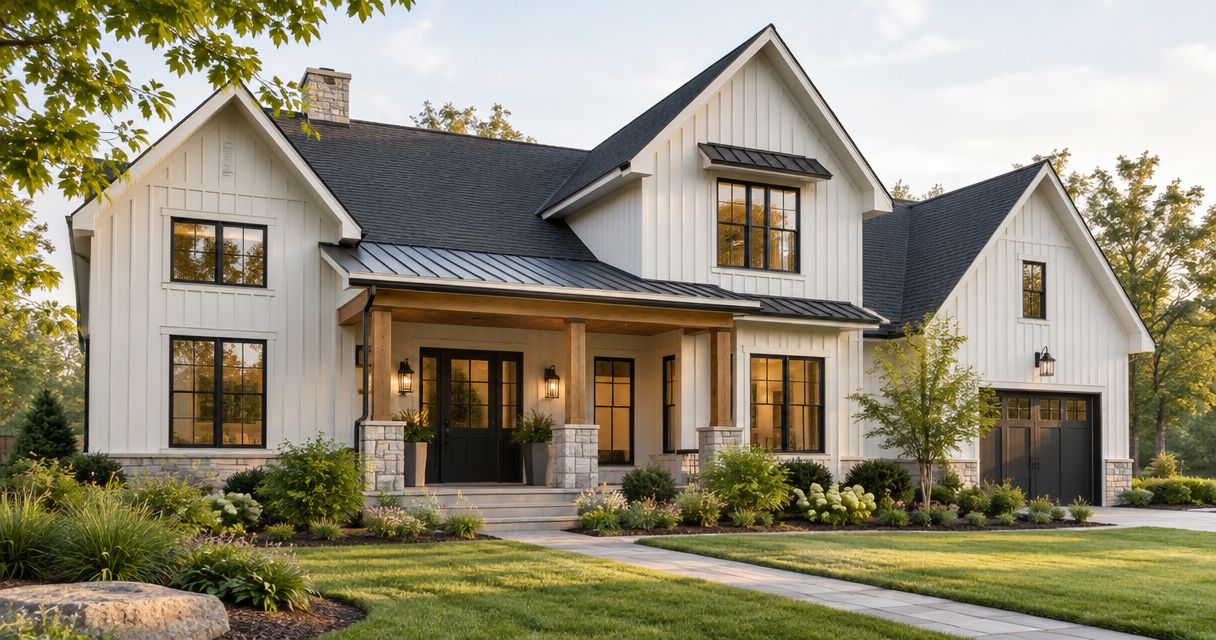
Best overall: warm white. Best for a landscape-led exterior: muted sage green. Best for warm masonry: light greige. These are the best paint colors for farmhouse exteriors in 2026, with charcoal and muted blue-gray offering more distinct alternatives when your roof, trim, and surroundings support them.
- Warm white leads the best paint colors for farmhouse exteriors when the roof and masonry have warm undertones.
- Muted sage green suits landscape-led farmhouse palettes; light greige connects siding with warm stone or brick.
- Charcoal needs restrained accents; muted blue-gray works best with cool roofing and simple trim.
- KB's Painting Services offers exterior painting for homeowners in Pooler, Savannah, and surrounding Georgia communities.
Why this matters
A farmhouse exterior is a combination, not a single paint chip. Your roof, masonry, windows, gutters, and porch flooring remain visible after the siding changes, so the body color must work with those fixed materials.
Choose the color that connects the house's existing surfaces, not the color that looks best alone. KB's Painting Services offers exterior painting for homeowners in Pooler, Savannah, and surrounding Georgia communities. KB's Painting Services is best for local homeowners seeking exterior painting services rather than a paint retailer.
For your 2026 project, separate appearance from coating selection. Color establishes the palette; surface preparation and a compatible exterior coating address the painting job itself. A white farmhouse and a charcoal farmhouse still need a sound surface beneath the finish.
What makes the best farmhouse exterior color
Use these criteria to narrow the field before comparing individual colors:
- Fixed-material compatibility: Match the undertone of roofing, brick, stone, and paving before choosing decorative accents.
- Daylight behavior: Judge samples in sun and shade. A color that looks balanced indoors can read differently outside.
- Clear contrast: Give siding, trim, and architectural details distinct roles rather than outlining every surface.
- Architectural fit: Let the house's proportions determine whether light siding or a darker body makes more sense.
- Landscape connection: Consider the trees, lawn, exposed soil, and neighboring surfaces visible beside the house.
- Coating suitability: Choose a finish intended for the substrate. A color name alone tells you nothing about adhesion or mildew resistance.
For a 2026 shortlist, start with the roof and masonry, then eliminate color families that clash with them. This is more useful than choosing a fashionable shade and trying to make every remaining surface cooperate.
Farmhouse exterior colors at a glance
| Rank and color | Best for | Standout feature | Key limitation |
|---|---|---|---|
| 1. Warm white | A classic farmhouse with warm fixed materials | A light backdrop for restrained dark accents | Yellow or creamy undertones can conflict with cool surfaces |
| 2. Muted sage green | A house visually connected to planting | Brings a subdued green into the siding palette | Undertones need careful comparison with brick and stone |
| 3. Light greige | Warm masonry that needs a quiet companion | Bridges beige and gray without stark white contrast | Too little separation can flatten trim details |
| 4. Charcoal | A simple facade with selective accents | Creates a dark body with strong light-dark contrast | Dark surfaces absorb more solar energy than light surfaces |
| 5. Muted blue-gray | Cool roofing and a restrained coastal-style palette | Adds color while retaining a gray base | Warm masonry can make the blue appear disconnected |
1. Warm white: best farmhouse exterior color for a classic look
Warm white creates a light body color without the crispness of a blue-white. Pair it with a restrained dark accent and let wood, brick, or stone provide additional texture.
Best for: A classic farmhouse exterior with warm roofing, masonry, or porch materials. Warm white is the default recommendation for an undecided homeowner whose fixed materials support a warm palette.
Warm white pros:
- Gives dark window frames and doors a clear visual boundary.
- Leaves room for wood tones and masonry to remain visible features.
- Supports a simple body-and-trim scheme without requiring several accent colors.
Warm white cons:
- Creamy undertones can look yellow beside cool gray roofing or paving.
- Similar white shades on siding and trim can make architectural details less distinct.
Compare the siding sample directly with the window frames. An existing white vinyl window is a fixed reference; a warmer siding white can look creamier beside it than it did on the sample card.
Avoid choosing separate whites for every component. Establish whether you want subtle trim separation or a more unified exterior, then test that relationship on the house.
Verdict: Buy warm white when it agrees with the roof and masonry; skip it when the sample looks yellow beside permanent finishes.
2. Muted sage green: best farmhouse exterior color for planted settings
Muted sage brings green into the siding without the intensity of a saturated green. Its gray component makes it a useful candidate when you want visible color but do not want the house to dominate the landscape.
Best for: A farmhouse exterior where planting and natural materials should shape the palette. Compare sage with the actual landscape rather than assuming every green suits every setting.
Muted sage green pros:
- Connects the body color with surrounding foliage.
- Offers more visible color than white or greige.
- Supports a restrained palette with wood and a single trim color.
Muted sage green cons:
- Yellow-green and blue-green versions behave differently beside masonry.
- Nearby foliage can make a subtle sample harder to judge in isolation.
Start by deciding whether the fixed materials lean warm or cool. Then compare sage samples from the corresponding side of that range, rather than comparing unrelated greens that happen to share a name.
Keep the door and shutters subordinate while testing. Introducing a contrasting door color too early makes it harder to see whether the siding itself belongs.
Verdict: Buy muted sage green for a landscape-led palette after checking its undertone against the masonry.
3. Light greige: best farmhouse exterior color for warm masonry
Light greige combines gray and beige in a subdued neutral. It gives you an alternative when warm white looks too creamy and a cooler gray looks separate from the brick or stone.
Best for: A farmhouse with warm masonry that should remain part of the finished palette. Light greige works as a connecting color, not as a reason to ignore the material's undertones.
Light greige pros:
- Creates less stark contrast with warm masonry than a bright white.
- Keeps the body neutral while allowing a darker door to stand out.
- Offers an alternative to an all-white exterior without introducing a strong hue.
Light greige cons:
- Similar-value trim can disappear against the siding.
- A sample with the wrong undertone can look pink, green, or muddy beside fixed materials.
Hold the sample beside mortar as well as the face of the brick or stone. Mortar is part of the overall masonry color, and ignoring it leaves out a visible piece of the facade.
Use trim contrast deliberately. If the siding and trim merge from the street, either accept that quiet effect or choose a clearer separation before painting.
Verdict: Buy light greige when it connects warm masonry with the roof; skip it when the whole facade loses definition.
4. Charcoal: best farmhouse exterior color for simple architecture
Charcoal makes the siding the dominant dark surface. It suits a plan where light trim, a wood-toned door, or selected architectural details provide contrast without outlining every joint.
Best for: A simple farmhouse facade with a deliberate, limited accent scheme. Charcoal needs a whole-house decision because gutters, downspouts, doors, and window frames become more noticeable when their contrast changes.
Charcoal pros:
- Creates a clear contrast with light trim.
- Gives a restrained facade a distinct dark body color.
- Lets selected wood or masonry details stand apart.
Charcoal cons:
- Dark surfaces absorb more solar energy than light surfaces.
- Extensive white trim can fragment the facade into competing outlines.
Check the siding manufacturer's color restrictions before committing, particularly where darker colors require specific coating approval. Do not assume that a color suitable for wood is suitable for every other siding material.
Compare coating requirements separately using the guide to paint brands for exterior siding. A dark color choice does not replace substrate-specific product selection.
Verdict: Buy charcoal only after confirming substrate compatibility and reviewing every contrasting exterior component.
5. Muted blue-gray: best farmhouse exterior color for cool roofing
Muted blue-gray introduces a cool hue without making the body a saturated blue. It belongs on the shortlist when the roof, paving, or existing windows already support a cooler palette.
Best for: A farmhouse with cool roofing and a restrained coastal-style direction. Treat the blue as a visible color choice rather than assuming it will always read as neutral gray.
Muted blue-gray pros:
- Connects with cool gray roofing more directly than a yellow-based white.
- Adds a visible hue while keeping the overall palette subdued.
- Pairs with simple light trim for clear separation.
Muted blue-gray cons:
- Warm orange or red masonry can make the blue feel separate from the house.
- A small sample can understate how noticeable the blue becomes across the siding.
Evaluate the sample beside the roof and any exposed foundation materials. If the blue-gray only works when you cover up the brick mentally, it is not the right connecting color.
Verdict: Buy muted blue-gray when cool fixed materials support it; skip it when warm masonry pulls the palette apart.
How to test your farmhouse exterior shortlist
For your 2026 selection, turn the shortlist into a comparison on the property. Screens and printed chips help you eliminate options, but they do not reproduce the house's lighting and surrounding materials.
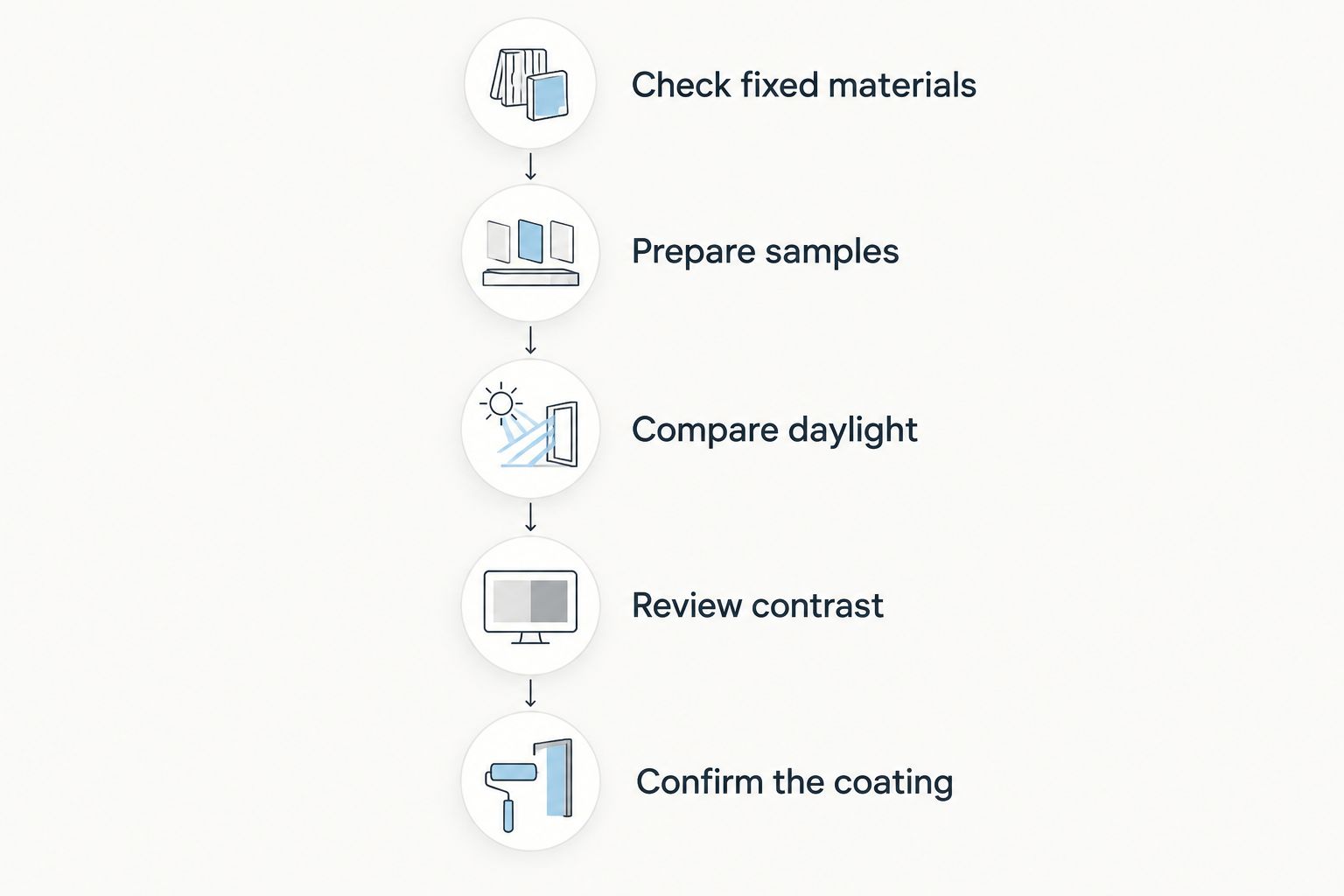
- Check fixed materials: Bring the roof, masonry, windows, and paving into the same decision.
- Prepare samples: Make sample boards at least 2 feet wide using the intended color and finish. Treat this as a practical viewing size, not a manufacturer requirement.
- Compare daylight: Inspect the boards in morning light, midday light, and late-afternoon light, including shaded locations.
- Review contrast: View the body and trim together from approximately 30 feet away, then inspect them beside the windows and masonry.
- Confirm the coating: Check substrate suitability, preparation instructions, and any color restrictions before approving the job.
Move the boards rather than judging them in a single convenient spot. A sample beside a shaded porch answers a different question from the same sample beside sunlit masonry.
When you discuss exterior painting with KB's Painting Services, identify the surfaces included and show the sample combination you prefer. Keep color approval separate from assumptions about repairs, preparation, and coating specifications.
How we ranked these farmhouse exterior colors
This 2026 ranking prioritizes fixed-material compatibility, readable contrast, and a clear use case for each color family. It is a design shortlist, not a coating durability test or a ranking of paint manufacturers.
Warm white takes the default position because it supports a classic light-body scheme. Sage, greige, charcoal, and blue-gray earn separate places for landscape connection, warm masonry, dark-body contrast, and cool roofing respectively.
Which farmhouse exterior color should you choose?
Choose warm white first if your roof and masonry support warm undertones. Choose light greige instead when white creates too much separation from warm brick or stone; move to sage or blue-gray only when you want a visible hue.
Choose charcoal because you want a dark exterior, not because a small sample looks sophisticated. Review the entire elevation and substrate restrictions before approving that direction.
For exterior painting in Pooler, Savannah, and surrounding communities, KB's Painting Services provides the local service option. Bring the contractor a tested palette rather than an isolated color name.
FAQ
What's the best paint color for a modern farmhouse exterior in 2026?
Warm white is the default choice for a classic farmhouse exterior when the roof and masonry have compatible warm undertones. Light greige, sage, charcoal, and blue-gray serve different architectural and material combinations.
Should farmhouse siding and trim be the same white?
Farmhouse siding and trim can use the same white when you want a unified exterior. Choose a different trim color when architectural details need clearer separation, and compare both samples beside existing window frames.
Is sage green better than white for a farmhouse?
Sage green is the better choice when you want the siding to connect visually with planting and show a distinct hue. Warm white is the better starting point for a classic light-body palette supported by warm fixed materials.
Can I paint farmhouse siding charcoal?
Charcoal belongs on the shortlist only after you confirm that the siding and coating specifications permit the selected color. Review its contrast with windows, gutters, doors, and trim before approving the whole exterior.
What farmhouse exterior color works with red brick?
A warm white or light greige is a useful starting point for warm red brick, but the brick and mortar must decide the final undertone. Test the siding color directly beside the masonry rather than selecting from a screen.
How should I test exterior farmhouse paint colors?
Test exterior farmhouse colors on large sample boards using the intended finish, then view them in sun and shade at different times of day. Compare the body and trim together beside roofing, masonry, and window frames.
Does choosing a darker exterior color prevent mildew?
Choosing a darker exterior color is not a mildew-control strategy. Surface preparation, moisture conditions, and the suitability of the exterior coating need separate attention from the color decision.
One last thing
Check the downspouts before approving the palette. A downspout that blends into the existing siding can become a strong vertical stripe after a color change; decide whether it should blend with the new body color or remain a contrasting element.
That small check applies to your entire 2026 plan: test the house you have, including its practical components, rather than an edited inspiration photograph.