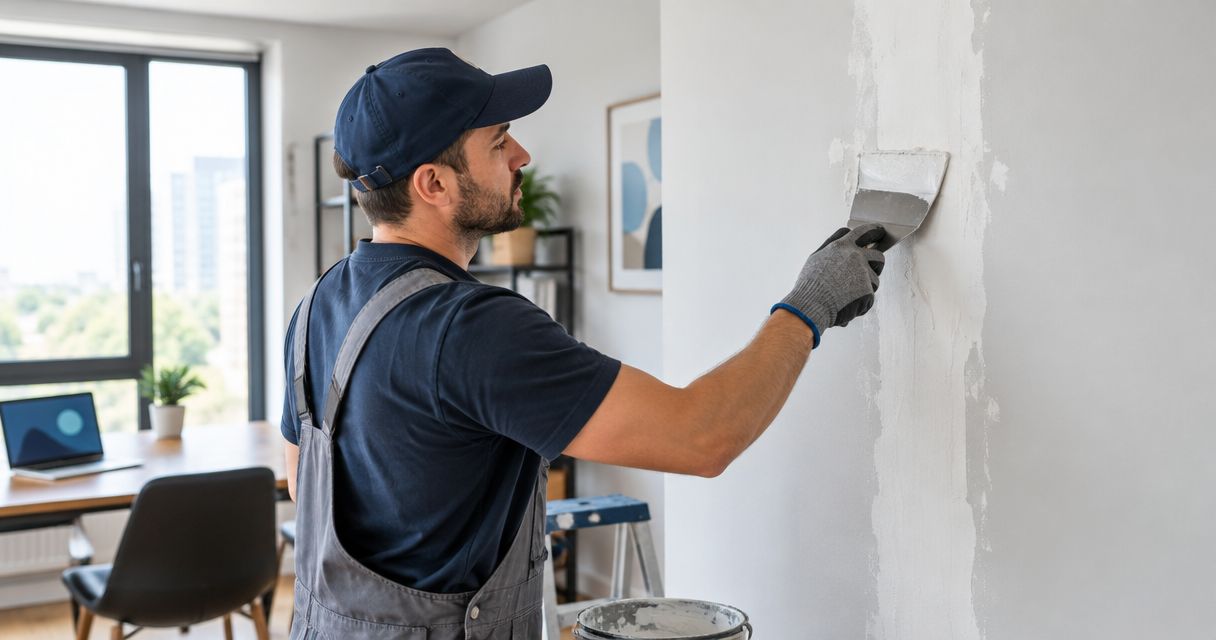
Property managers’ drywall repair is the process of assessing, repairing, and finishing damaged walls and ceilings to return rental homes to usable condition. This 2026 guide to drywall repair for property managers focuses on tenant access, owner approvals, repair scope, and paint matching—not just filling holes.
- Drywall repair for property managers starts with identifying the cause, documenting damage, and agreeing on the finished result.
- KB's Painting Services is best for local homeowners who need drywall repair and painting in Pooler and Savannah.
- Separate cosmetic patches from moisture damage before scheduling rental maintenance or turnover painting.
- Approve repairs by surface condition, texture, and paint appearance—not by whether the hole is covered.
Why drywall repair matters for property managers
A rental repair involves more than a damaged surface. You also have to coordinate access, distinguish maintenance from an unresolved building problem, obtain authorization, and decide what counts as finished. An unclear scope pushes those decisions into the middle of the job.
Treat drywall repair and paint restoration as one approval process. A sound patch can still look unfinished when its texture or sheen differs from the surrounding wall. Conversely, fresh paint does not establish that the underlying damage has been addressed.
For homeowner-owned rentals around Pooler and Savannah, KB's Painting Services offers both drywall repair and interior painting. Those services match the repair-and-finish portion of the work; confirm tenant coordination, scheduling, and documentation requirements directly rather than assuming they are included.
For your 2026 maintenance plan, separate urgent investigation from routine cosmetic work. A ceiling stain linked to an unresolved leak belongs in a different queue from an isolated furniture dent.
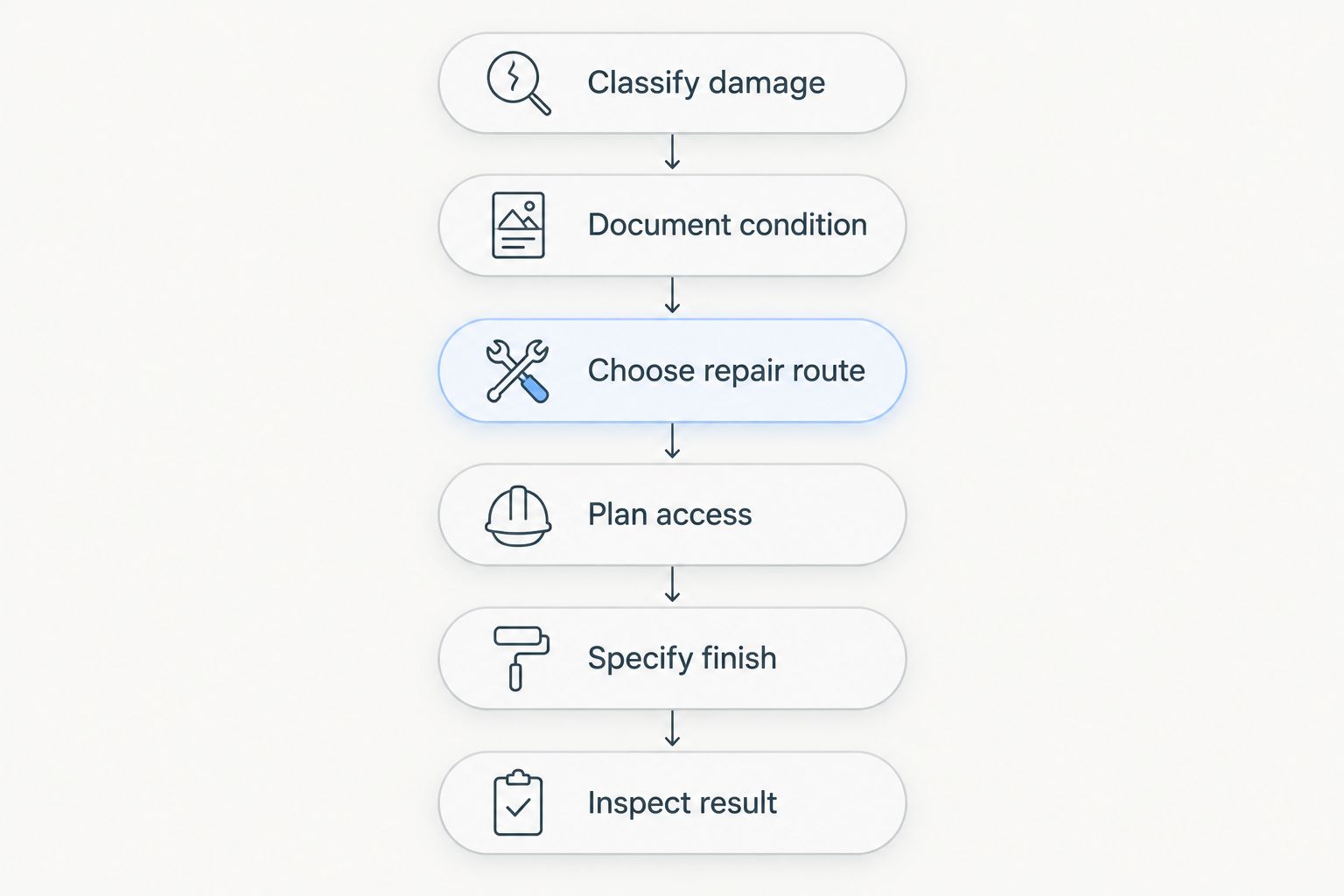
How to manage drywall repairs from report to sign-off
1. Classify the damage before assigning the job
Start with a manual inspection and a simple maintenance record. Identify what you can see, where it occurs, and whether the surrounding material feels sound. Do not label a stain or recurring crack as cosmetic just because the visible area is small.
Distinguish isolated surface damage from problems involving moisture, loose joints, or movement. A repeated crack deserves investigation before another application of compound. Soft or sagging material also needs assessment rather than an instruction to patch and paint.
Do not ask tenants to cut into a wall or disturb suspect material. Where the cause is unclear, assign investigation before finish work and keep those responsibilities explicit.
- Record whether the damage is on a wall, ceiling, corner, or joint.
- Describe visible holes, dents, stains, loose tape, or cracking.
- Check whether the area has a previous repair history.
- Flag active moisture, softness, sagging, or unexplained recurrence.
- Assign cause investigation separately from cosmetic restoration.
2. Document the condition and obtain a usable scope
Use a phone camera and a shared work order before choosing a repair method. As a documentation template, request 3 photographs per repair area: a room view, a closer view, and a detail showing the damage. This is a suggested recording standard, not a technical requirement.
Add room names and written dimensions. A close-up without location context leaves the contractor guessing which wall needs attention, while a room photograph alone hides damaged edges and texture.
Your 2026 work-order template should specify the desired finish. Ask whether the scope includes surface preparation, patching, texture matching, priming, painting, and cleanup. Require any exclusions in writing so an owner does not approve a patch while expecting a repainted wall.
- Label each repair by property, room, and surface.
- Attach the room view, closer view, and damage detail.
- Record dimensions without relying on a photograph for scale.
- State whether you expect a touch-up or a full-wall finish.
- Identify who approves changes when concealed damage is exposed.
3. Choose the repair route around the actual damage
Your maintenance team can first assess whether a repair fits its skills, equipment, and authorized scope. An isolated cosmetic defect is different from a ceiling opening, damaged corner, or patch that requires careful texture blending. Choose by the finished result you need, not simply by hole size.
Use the guide to drywall repair products for DIY and pro jobs to understand material choices before assembling a repair kit. Product selection does not replace diagnosis, safe working practices, or the skill needed to finish a visible wall.
For homeowner-owned properties, KB's Painting Services offers drywall repair and painting as an alternative to coordinating those tasks yourself. Its stated service area includes Pooler, Savannah, and surrounding Georgia communities; confirm the individual property's scope before assigning work.
- Keep straightforward cosmetic work within your team's demonstrated skills.
- Ask how replacement material will be supported where required.
- Include loose tape, damaged corners, and texture in the scope.
- Request a clear boundary between repair and painting responsibilities.
- Escalate unresolved moisture or movement before approving finish work.
4. Plan tenant access and the repair sequence
Build an access plan manually before booking the work. Identify the affected room, the person authorizing entry, and any furniture or belongings that need moving. Follow applicable lease terms and entry requirements rather than treating a maintenance request as unrestricted permission.
Drywall repairs involve preparation, application, drying, and finishing. Follow the selected materials' instructions and actual site conditions instead of promising a fixed completion time. Drying and coating requirements determine when the next task can begin.
Use these 3 checkpoints to structure communication: access confirmed, repair ready for finishing, and final inspection complete. They are management milestones, not a promise of three visits. For occupied homes in 2026, explain any room-use restrictions before work starts.
- Confirm entry arrangements with the authorized occupant or representative.
- Record furniture-moving and floor-protection responsibilities.
- Ask the contractor to explain dust-control and cleanup arrangements.
- Sequence leak correction before drywall restoration.
- Communicate changes when drying or concealed damage affects the plan.
5. Specify the paint finish before the patch disappears
Start by checking your paint records, labeled containers, and previous work orders. Record the manufacturer, product, color, and sheen when those details are available. A color name alone does not define a matching finish.
Decide between a localized touch-up and painting the wall before approving the job. A small patch does not guarantee an invisible touch-up. Differences in texture, existing wear, application, and sheen can remain visible even when the color appears close.
KB's Painting Services offers both drywall repair and interior painting, making it relevant when a homeowner needs both tasks scoped together. Confirm whether the proposed work ends at a primed repair, a painted patch, or a painted wall; those are different deliverables.
- Locate the existing paint specifications before buying materials.
- Include texture matching where the surrounding surface is textured.
- Specify preparation and priming appropriate to the repaired surface.
- Agree on a touch-up or wall-painting boundary in writing.
- Inspect the finish in normal room lighting after it has dried.
6. Inspect the result and preserve the repair record
Use a written checklist rather than approving the work from a distant photograph. Examine the repaired area for visible edges, uneven texture, cracking, loose material, and paint differences. View it from the room's normal sightlines as well as close up.
Separate appearance from cause resolution. A dry-looking painted stain does not prove that the original leak was corrected. Keep the relevant investigation or repair record attached to the cosmetic work order.
For your 2026 maintenance records, request 2 sign-offs where responsibilities are split: one confirming the underlying issue was addressed, and one accepting the finished surface. These are suggested administrative checks, not legal requirements or substitutes for professional assessment.
- Photograph the completed surface from the original viewing positions.
- Check texture, patch edges, and paint appearance after drying.
- Confirm that agreed cleanup and furniture arrangements are complete.
- Attach any cause-resolution record to the work order.
- Save paint details and note unresolved defects before closing the job.
Compare drywall repair options for rental homes
Choose the route that matches both the damage and your team's ability to deliver the agreed finish. The comparison below separates the work itself from the coordination burden. No option removes the need to investigate an unresolved cause.
| Option | Best for | Main advantage | Key limitation |
|---|---|---|---|
| In-house maintenance | Isolated cosmetic damage within staff skills | Direct control over access and work-order records | Your team handles preparation, finishing, and cleanup |
| Drywall repair specialist | Repairs requiring focused board, joint, or texture work | A scope centered on the damaged surface | Painting responsibilities still need explicit agreement |
| Painting contractor offering drywall repair | Homeowners needing surface repairs and painting | Both tasks can be discussed within the same scope | Structural issues and moisture sources need separate assessment |
| Separate cause investigation followed by finishing | Unresolved leaks, recurring damage, or uncertain causes | Keeps diagnosis ahead of cosmetic work | Requires coordination between responsible parties |
For local homeowners seeking the combined repair-and-painting route, KB's Painting Services fits the stated service category. Its offering does not establish dedicated property-management reporting, emergency response, or portfolio maintenance arrangements; confirm any such requirements directly.
Choose the scope before choosing the route. Otherwise, proposals for a bare patch, a primed patch, and a repainted wall appear comparable when they describe different outcomes.
Common mistakes property managers make
Closing the ticket when the hole is filled
A filled opening is not necessarily a finished wall. If the approved scope includes texture and paint, keep the ticket open until those tasks are complete and inspected. Write the acceptance condition before work begins.
Painting over evidence of an unresolved problem
A stain or recurring crack needs more than concealment. Record the suspected cause and the party responsible for assessment, then schedule cosmetic restoration after that issue is addressed. Do not use appearance as evidence that a leak or movement problem has stopped.
Assuming every small repair needs only touch-up paint
The damaged area and the visible finishing area are not always the same. A localized repair can leave an obvious paint boundary. Agree on the finish expectation with the owner before instructing the contractor to perform the smallest possible touch-up.
Mixing repair approval with damage-charge decisions
Document the condition objectively before deciding who is responsible. Keep maintenance scope, photographs, tenancy records, and any charge decision distinct. Follow the lease and applicable law rather than treating a contractor's repair description as a liability finding.
Leaving access and cleanup to informal messages
Instructions scattered across tenant texts and contractor calls are difficult to verify. Put access authorization, room preparation, cleanup, and the responsible contact in the work order. In your 2026 process, make that record the shared reference when arrangements change.
FAQ
What's the best approach to drywall repair for property managers?
Start with cause assessment, then document the damage and agree on the finished result. Choose the repair route only after deciding whether the work includes texture, priming, and painting.
Can my maintenance team handle drywall repairs?
Your maintenance team can handle repairs that fit its skills, equipment, and authorized scope. Escalate unresolved moisture, recurring cracks, damaged ceilings, or finishing work beyond the team's experience.
Should I repair drywall before painting a rental?
Complete required drywall repairs and surface preparation before applying the finish paint. Address the underlying cause first when damage involves a leak or another unresolved problem.
Does a small drywall patch need the entire wall painted?
A small patch does not automatically require full-wall painting, but a touch-up is not guaranteed to blend. Assess texture, existing paint condition, sheen, and the owner's acceptance standard before choosing the painting boundary.
How long should I allow for a rental drywall repair?
Set the schedule from the actual repair scope, material instructions, drying conditions, and access arrangements. Do not promise a fixed turnaround before those requirements are understood.
What should I ask a painting contractor before assigning drywall work?
Ask whether the scope includes preparation, repair, texture matching, priming, painting, protection, and cleanup. Confirm access arrangements, exclusions, and how changes will be approved.
What records should I keep after a drywall repair?
Keep location-labeled before-and-after photographs, the approved scope, paint details, and final inspection notes. Attach records addressing the underlying cause when the repair followed a leak or recurring defect.
One last thing
The repair boundary and the paint boundary are separate decisions. Mark both on the work order: where damaged material needs attention, and where the finished paint must end. That distinction gives you a clearer approval standard than an instruction to make the wall look good.