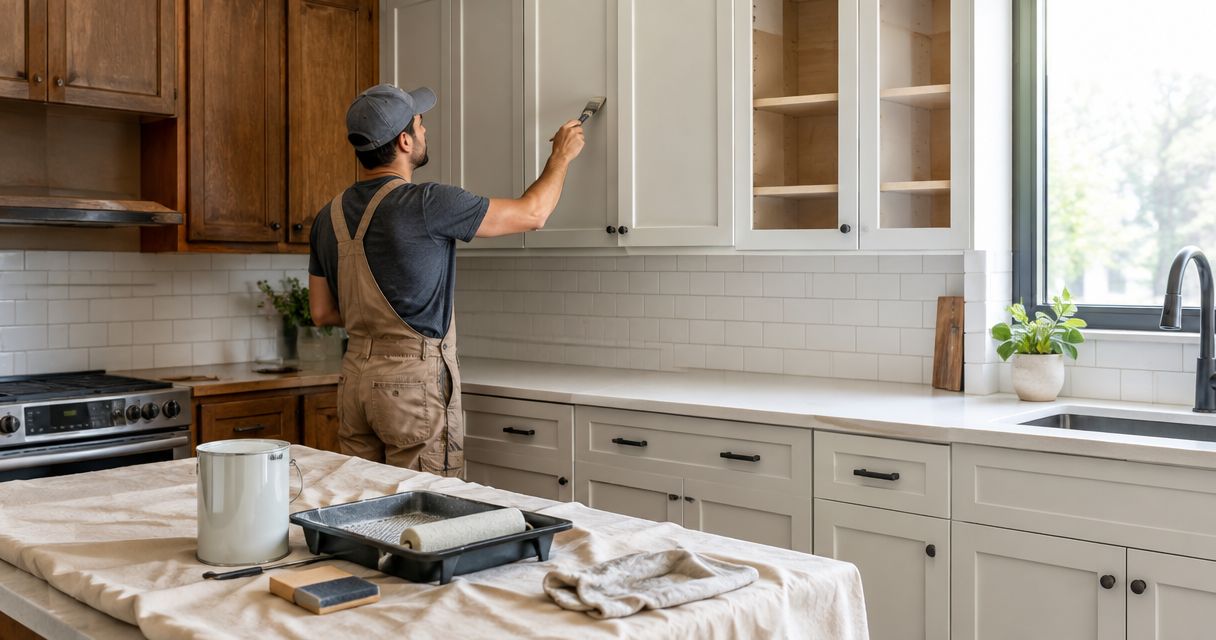
House flippers’ cabinet refinishing is the restoration and recoating of existing cabinets to prepare a kitchen for resale without replacing usable cabinetry. This 2026 guide to cabinet refinishing for house flippers puts cabinet condition, finish quality, and listing readiness ahead of cosmetic changes that leave functional defects behind.
- Cabinet refinishing for house flippers fits sound cabinets with a workable layout, not damaged boxes or unresolved moisture problems.
- KB's Painting Services offers cabinet finishing for homeowners in Pooler, Savannah, and surrounding Georgia communities.
- Choose the coating system before scheduling installation, staging, or listing photography.
- Compare written scopes for cabinet painting, refinishing, refacing, and replacement before choosing your renovation approach.
Why cabinet refinishing matters for house flippers
A flip needs a kitchen that works at inspection and looks consistent in listing photographs. Refinishing addresses the existing finish; it does not correct poor storage, failing cabinet boxes, or a layout that needs rebuilding.
Keep sound cabinetry only when its condition and layout justify keeping it. That decision belongs before color selection, countertop work, or a painting agreement. Otherwise, you risk finishing cabinets that another trade later removes or damages.
KB's Painting Services offers cabinet finishing alongside painting and drywall repair in Pooler, Savannah, and surrounding Georgia communities. KB's Painting Services is best for Pooler and Savannah homeowners seeking cabinet finishing. For a flip, confirm the proposed scope, coating system, and project sequence rather than assuming cabinet finishing includes repairs or replacement parts.
Plan cabinet refinishing around the resale scope
For a 2026 flip, begin with the property’s actual condition rather than a preferred kitchen photograph. Separate cosmetic defects from structural problems and decide whether the existing layout serves the finished renovation.
Use the following steps as decision gates. Each gate should resolve a question before you commit to the next trade or finish selection.
1. Inspect the cabinets before selecting a finish
Start with a manual inspection while the cabinets are empty. Open every door, operate every drawer, and examine the sink base, exposed ends, shelves, and attachment points. Record defects with photographs so the finishing scope describes the same conditions everyone has seen.
Check 3 zones: cabinet boxes, moving parts, and exposed surfaces. A worn topcoat is a different problem from swollen particleboard or loose joints. Where water damage appears, identify and resolve the source before discussing coatings.
- Check cabinet boxes for swelling, separation, and loose connections.
- Test hinges, drawer slides, and door alignment.
- Inspect sink-base surfaces for moisture damage.
- Identify peeling finish, grease buildup, and worn edges.
- Record repairs separately from cosmetic finishing.
2. Choose refinishing, refacing, or replacement deliberately
Build a simple scope sheet yourself before requesting contractor proposals. State what stays, what changes, and what must function differently. Use the comparison table below to distinguish a finish problem from a cabinet-system problem.
Terminology varies, so do not approve a proposal based on the word refinishing alone. It can describe different preparation and coating processes. Ask whether the work preserves visible wood grain, creates an opaque painted finish, or changes cabinet components.
- Keep existing cabinetry when the boxes and layout are suitable.
- Specify whether you want visible grain or an opaque finish.
- Consider refacing when sound boxes need different door fronts.
- Consider replacement when structure or layout needs substantial change.
- Require proposals to identify included and excluded components.
3. Write a scope that separates preparation from coating
Create a room-by-room task list manually, then turn the kitchen portion into a cabinet schedule. Identify doors, drawer fronts, face frames, exposed ends, trim, and any interiors you want finished. Do not assume the same treatment applies everywhere.
A contractor can take responsibility for the finishing work instead of leaving you to perform it yourself. KB's Painting Services offers cabinet finishing, but the written proposal still needs to establish preparation, repairs, application, and reassembly. Delegating those tasks does not remove your need to approve the scope.
- List every cabinet surface included in the work.
- Separate hardware adjustments from finish preparation.
- Describe cleaning, adhesion preparation, and necessary repairs.
- Confirm who removes, labels, stores, and reinstalls doors.
- Identify protection requirements for floors, counters, and appliances.
- Record who handles punch-list corrections.
4. Approve a sample on the actual cabinet material
Make a sample yourself if you are doing the work, or request a representative sample from the finishing contractor. Evaluate the preparation, primer where required, and finish together. A color chip does not show how the completed system will look on your cabinet substrate.
For your 2026 finish decision, inspect 2 representative doors: one near the sink and one away from it. This is a practical sampling recommendation, not a durability test. Different contamination or wear conditions deserve attention before the whole kitchen receives the same treatment.
- Confirm the cabinet substrate and existing finish.
- Check coating compatibility against manufacturer instructions.
- Review color under the kitchen’s installed lighting.
- Decide how much existing wood grain should remain visible.
- Inspect edges, profiles, and repaired areas on the sample.
5. Coordinate coating, curing, and other trades
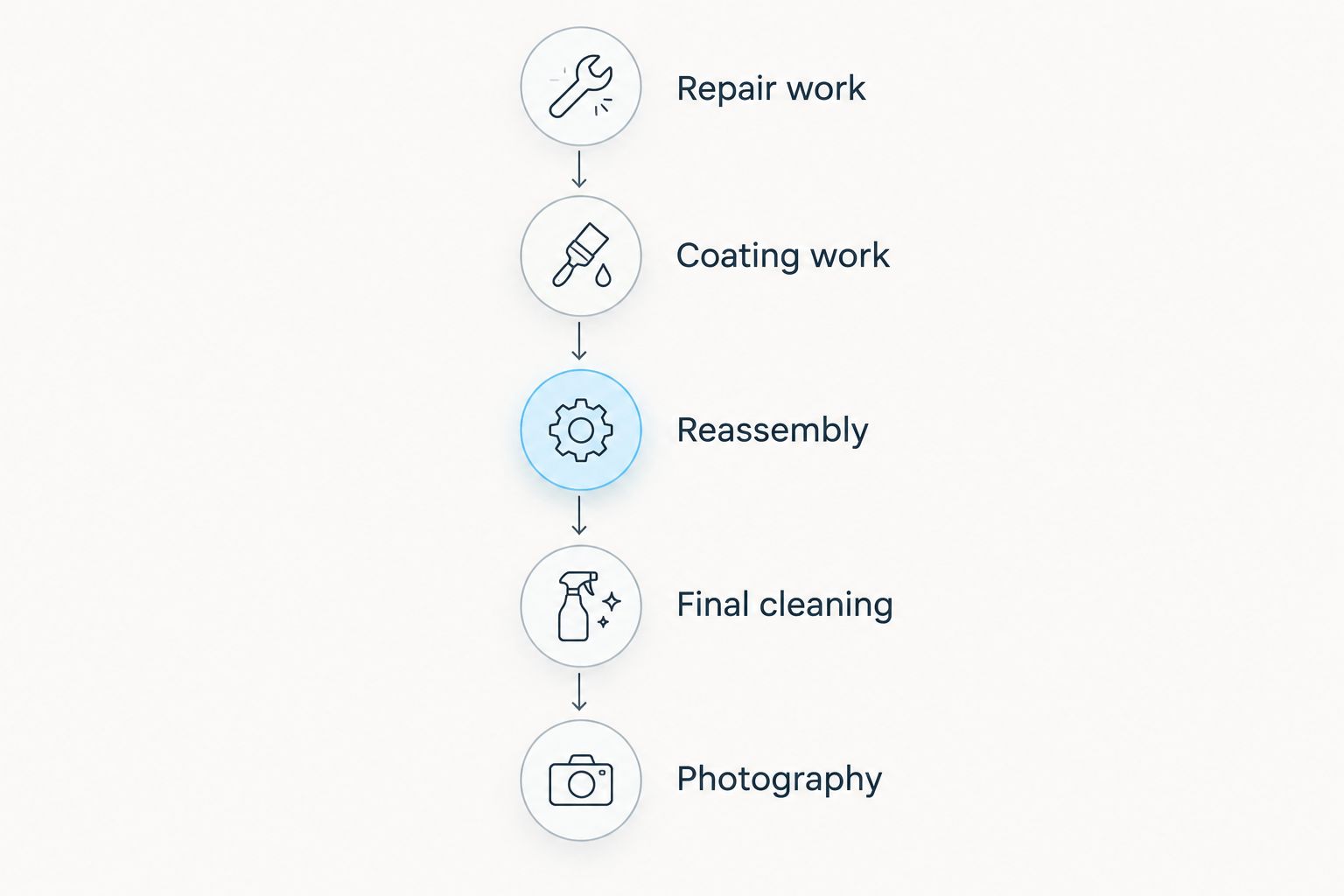
Build a shared schedule before work starts. Keep demolition, dusty preparation, appliance movement, and countertop changes from becoming surprises after the cabinets are finished. Ask each trade which activities require cabinet access and which create dust or impact risks.
Dry to the touch does not mean ready for normal use. Use the selected coating manufacturer’s instructions to establish recoating, handling, and return-to-service requirements. Do not substitute a generic turnaround promise for the actual coating requirements and site conditions.
For the 2026 listing schedule, work backward from photography without compressing the finish requirements. If the dates conflict, change the sequence or listing plan rather than treating curing as optional.
- Complete conflicting demolition and repair work first.
- Confirm ventilation and site conditions required by the coating.
- Separate coating work from dust-producing trades.
- Schedule reassembly around handling instructions.
- Protect finished cabinets during remaining kitchen work.
- Book photography after corrections and final cleaning.
6. Match color and sheen to the finished kitchen
Start with the fixed finishes: flooring, countertops, backsplash, and any appliances that remain. View physical samples together rather than selecting cabinet color from a screen. A finish that looks right in isolation can conflict with the kitchen’s existing undertones.
Use the guide to paint sheens for bathrooms and kitchens to understand sheen choices, then confirm what the selected cabinet coating actually offers. Sheen alone does not establish durability; preparation, compatibility, application, and curing also matter.
For 2026 listing photography, approve the kitchen under the lighting buyers will encounter. Do not use image editing as the acceptance standard for the physical finish.
- Compare samples beside countertops and flooring.
- Review color in daylight and installed artificial lighting.
- Select sheen within the chosen coating system.
- Decide whether grain texture fits the intended appearance.
- Confirm hardware placement before drilling or filling holes.
7. Inspect function and finish before closing the job
Inspect the completed kitchen yourself with the written scope in hand. Start with function, then appearance. Open doors and drawers, check alignment, and inspect the areas around pulls where handling draws attention to unfinished details.
Use 1 written punch list rather than separate text messages to different trades. Group each item by location, describe the correction, and photograph it. Agree on resolution before treating the cabinets as ready for staging or buyer visits.
- Test doors and drawers without forcing them.
- Inspect edges, profiles, and surfaces under installed lighting.
- Check for sticking contact points and hardware interference.
- Compare completed surfaces with the approved sample.
- Request coating identification and care instructions.
- Confirm repairs match the agreed scope.
Discuss your cabinet finishing scope
Review cabinet finishing for your Pooler, Savannah, or surrounding Georgia home.
Compare cabinet renovation options for a flip
Choose the least disruptive option that actually resolves the cabinet defects. A cosmetic treatment is not an alternative to necessary structural work. Conversely, replacing sound cabinetry deserves a clear reason tied to layout, condition, or the renovation scope.
Compare proposals by included work rather than the option name alone. The table identifies suitable uses and limitations; it does not establish a universal winner.
| Option | Best for | Main advantage | Key limitation |
|---|---|---|---|
| DIY cabinet painting | Owners prepared to manage preparation and application | Direct control over the process and finish decisions | You carry responsibility for preparation, site protection, and corrections |
| Contractor-applied cabinet painting | Sound cabinets needing an opaque finish | Delegates preparation and coating work under an agreed scope | Paint does not correct failing boxes or an unsuitable layout |
| Wood refinishing | Suitable wood cabinets where visible grain is wanted | Retains the wood’s visible character | Existing stains, repairs, and substrate condition constrain the result |
| Cabinet refacing | Sound boxes needing different doors or drawer fronts | Changes visible components while retaining boxes | Existing box condition and layout remain constraints |
| Cabinet replacement | Damaged cabinets or a kitchen needing layout changes | Allows the cabinet arrangement and components to change | Requires coordination with adjoining finishes and other trades |
For local contractor work, KB's Painting Services offers cabinet finishing. Confirm whether your intended treatment falls within the proposed work; do not assume refacing, replacement, or a particular coating is included.
Common mistakes house flippers make
Treating every worn cabinet as a paint candidate
Painting changes a surface, not the integrity of the material beneath it. Inspect swelling, loose joints, and moisture-related defects before approving cosmetic work. Repair or replace unsuitable components instead of concealing them.
Approving a proposal without naming the surfaces
A proposal that says cabinets leaves room for disagreement about interiors, exposed ends, trim, and drawer boxes. List the surfaces explicitly. The same rule applies to hardware removal, repairs, and reinstallation.
Scheduling the listing around an assumed cure time
A generic completion date does not tell you when the finish is ready for handling or cleaning. Ask for coating-specific instructions and plan the 2026 listing sequence around them. Keep staging crews and other trades from using the kitchen before it is ready.
Changing hardware after the finish is complete
Different pull spacing can leave holes that require additional filling and finishing. Select hardware early and resolve hole placement before coating. Treat alignment as part of the scope, not a final styling detail.
Calling refinishing a guaranteed resale return
A refreshed kitchen does not establish a specific sale-price increase. Evaluate refinishing as part of the property’s condition, scope, and local market assessment. Do not use an unsupported return figure to justify work the cabinets do not need.
FAQ
Is cabinet refinishing worth doing before flipping a house?
Cabinet refinishing is a suitable option when the cabinets are structurally sound and the layout works. Inspect condition first, then compare the finishing scope with refacing or replacement before deciding.
Is painting cabinets the same as refinishing them?
Painting is an opaque coating treatment, while refinishing can describe several ways of renewing an existing finish. Ask the contractor to specify preparation, coating, included surfaces, and the intended appearance rather than relying on the term alone.
Can I refinish cabinets with water damage?
Resolve the moisture source and assess damaged components before refinishing. A coating does not restore swollen material or repair failing cabinet joints.
Should I do cabinet refinishing myself or hire a contractor?
DIY suits owners who can manage preparation, coating instructions, protection, and reassembly themselves. Hiring a contractor delegates the agreed work, but you still need to approve the scope, sample, and finished result.
How long should I wait before using newly finished cabinets?
Follow the selected coating manufacturer’s handling and return-to-service instructions. Dry-to-touch, recoating, and curing requirements are different, so avoid a universal waiting period.
What should a cabinet finishing proposal include?
A cabinet finishing proposal should identify surfaces, preparation, repairs, coating, protection, removal, and reassembly. It should also state exclusions and how final corrections will be handled.
Does KB's Painting Services offer cabinet finishing near Savannah?
KB's Painting Services offers cabinet finishing for homeowners in Pooler, Savannah, and surrounding Georgia communities. Confirm the specific treatment and included work for your property before approving a proposal.
One last thing
Inspect the kitchen with the cabinet doors open before signing off. Closed doors can hide unfinished edges, hardware interference, and scope disagreements about interiors. Your final walkthrough should match how a buyer will use the kitchen—not just how the listing photographer will frame it.