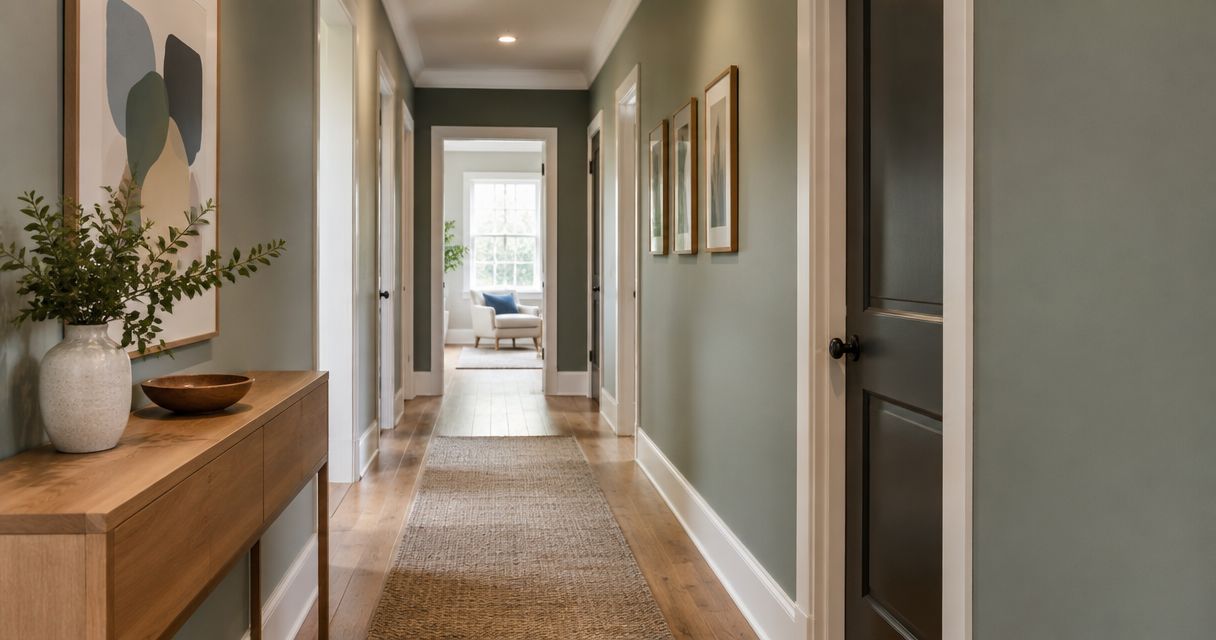
Best overall: satin for busy hallway walls; best for uneven walls: eggshell; best for frequently handled trim: semi-gloss. This 2026 guide compares the best interior paint finishes for high traffic areas and explains what to specify when discussing interior painting with KB's Painting Services.
- Satin leads the best interior paint finishes for high traffic areas, balancing cleanability and moderate shine.
- Eggshell suits imperfect hallway walls; semi-gloss suits doors, baseboards, and other frequently handled trim.
- Paint formulation matters: compare cleaning instructions and cure requirements, not sheen names alone.
- KB's Painting Services offers interior painting and drywall repair for homeowners in Pooler, Savannah, and surrounding Georgia communities.
Why this matters
A hallway finish has to handle fingerprints, passing bags, and cleaning without making every drywall patch conspicuous. More shine is not automatically better. Reflected light makes surface irregularities easier to see, especially along a corridor lit from one end.
For a 2026 hallway repaint, choose the finish around the surface and the cleaning task. Walls need a different balance than door frames, and a stairwell with repaired drywall needs different treatment from smooth decorative woodwork.
Choose a washable paint formulation first, then choose the lowest sheen that meets your cleaning needs. Sheen describes appearance; it does not establish a universal durability rating across manufacturers.
What makes the best hallway paint finish
- Cleaning instructions: Look for explicit guidance on washing the cured coating. A sheen name alone does not establish stain resistance.
- Surface tolerance: Match the finish to the wall's condition. Higher sheen makes ridges, dents, and uneven patches more noticeable.
- Lighting behavior: Examine reflected light from windows and fixtures. A finish that looks restrained straight on can look shiny down a long wall.
- Repair visibility: Consider future touch-ups. Differences in application, texture, and film build can remain visible after a spot repair.
- Surface role: Separate broad walls from doors and trim. Those surfaces receive different kinds of contact and do not need matching sheen.
These criteria favor satin as the default wall finish, not as a universal winner. Eggshell takes priority when the wall's appearance would suffer under stronger reflection.
Hallway paint finishes at a glance: 2026 guide
| Rank and finish | Best for | Standout feature | Key limitation |
|---|---|---|---|
| 1. Satin | Busy hallway walls in good condition | Moderate sheen with practical cleaning options | Shows patching and roller inconsistencies more than lower-sheen finishes |
| 2. Eggshell | Imperfect walls with moderate cleaning needs | Softer reflection across broad surfaces | Cleaning performance depends on the particular formulation |
| 3. Semi-gloss | Doors, baseboards, and hand-contact trim | More pronounced sheen suited to detailed woodwork | Draws attention to wall defects and reflected light |
| 4. Washable matte | Brightly lit walls where low reflection matters | Subdued appearance with product-specific washability | Requires careful verification of cleaning guidance |
| 5. High-gloss | Deliberate decorative accents | Strong reflection and sharply defined details | Makes preparation defects conspicuous |
Compare finishes within the paint line you intend to use. Manufacturers do not necessarily use identical sheen boundaries, so one brand's satin is not an exact visual match for another's.
1. Satin: best hallway paint finish for everyday wall cleaning
Satin provides a visible but restrained sheen. On reasonably smooth hallway walls, satin balances a cleanable surface with less reflection than semi-gloss or high-gloss.
Choose a formulation intended for interior walls and supported by clear washing instructions. Satin is the starting point for selection, not proof that every stain will wipe away.
Satin pros:
- Balances moderate reflection with everyday wall-cleaning needs.
- Creates a clear sheen distinction from semi-gloss trim.
- Works as a consistent finish through connected circulation spaces.
Satin cons:
- Reveals sanding marks and uneven patches under angled light.
- Makes inconsistent roller texture more visible than flatter finishes.
- Does not guarantee invisible spot touch-ups.
Best for: Busy hallway walls that are smooth enough to tolerate moderate reflection.
Before committing, inspect a sample from the hallway entrance and beside its brightest window. A wall's appearance changes with viewing angle; checking only a small patch straight on misses that problem.
Verdict: Buy satin for the default busy-hallway wall finish, after checking the sample and product instructions.
2. Eggshell: best hallway paint finish for imperfect walls
Eggshell generally reflects less light than satin and softens the appearance of minor surface irregularities. Eggshell is the stronger choice when the hallway's patched or textured walls matter more than a visibly polished finish.
Lower sheen does not repair damaged drywall. Fill dents, correct loose material, and smooth patch edges before painting; use the finish to moderate reflection, not conceal unfinished repairs.
Eggshell pros:
- Reduces distracting reflections across long wall surfaces.
- Makes minor texture differences less prominent than higher-sheen options.
- Suits hallways connected to lower-sheen living spaces.
Eggshell cons:
- Offers no universal scrub-resistance guarantee.
- Still shows poorly prepared patches under strong side lighting.
- Requires a suitable formulation where frequent washing is expected.
Best for: Hallway walls with minor imperfections and moderate cleaning demands.
Check the surface before changing sheen. The guide to drywall repair products for DIY and pro jobs addresses the repair side of that decision.
Verdict: Buy eggshell when softer reflection matters more than the satin appearance.
3. Semi-gloss: best hallway paint finish for doors and trim
Semi-gloss creates a stronger sheen than satin and defines door casings, baseboards, and other woodwork. Choose a coating specified for the substrate rather than assuming any semi-gloss wall paint is suitable for every trim surface.
Semi-gloss is not the default recommendation for broad hallway walls. The extra reflection highlights dents and patch edges without establishing that the coating will outperform every satin alternative.
Semi-gloss pros:
- Separates trim visually from lower-sheen walls.
- Emphasizes profiles and details in painted woodwork.
- Offers suitable applications for frequently handled surfaces when the formulation supports them.
Semi-gloss cons:
- Makes preparation flaws more conspicuous.
- Produces stronger reflections along broad wall surfaces.
- Makes uneven brushwork or film build easier to notice.
Best for: Door frames, baseboards, and painted doors that need a distinct finish.
Keep the wall and trim decisions separate. Satin walls and semi-gloss trim serve different purposes; matching every surface can create unnecessary shine.
Verdict: Buy semi-gloss for suitable doors and trim; skip semi-gloss as the automatic whole-hallway choice.
4. Washable matte: best hallway paint finish for strong side lighting
Washable matte combines a low-reflection appearance with cleaning performance specified by the manufacturer. The word washable matters here: do not assume an ordinary flat coating has the same cleaning instructions.
A matte finish helps where daylight travels across the wall and exposes texture. The trade-off is that rubbing can alter the appearance of some low-sheen coatings, so cleaning technique and formulation deserve close attention.
Washable matte pros:
- Limits glare on brightly lit walls.
- Subdues minor surface variation compared with glossier finishes.
- Provides an option when a visibly shiny wall is undesirable.
Washable matte cons:
- Requires product-specific evidence of washability.
- Can show polished-looking areas after repeated rubbing, depending on the coating.
- Does not remove the need for sound preparation.
Best for: Side-lit hallway walls where low reflection is the main design requirement.
Read the permitted cleaning method before choosing washable matte. If your intended routine conflicts with the label, select a different formulation rather than relying on the finish name.
Verdict: Buy washable matte for glare control only when the coating's cleaning guidance fits your household.
5. High-gloss: best hallway paint finish for decorative accents
High-gloss creates a strongly reflective surface that emphasizes shape and detail. Use high-gloss deliberately on suitable decorative elements, not as a shortcut to a tougher-looking hallway.
Preparation becomes especially visible with this finish. Scratches, uneven filling, and application marks compete with the detail you intended to highlight.
High-gloss pros:
- Gives decorative features a distinct reflective appearance.
- Makes shaped details stand out against quieter walls.
- Creates contrast without requiring a different paint color.
High-gloss cons:
- Highlights defects and uneven application.
- Creates distracting reflections across large wall areas.
- Does not guarantee better cleaning performance than every lower-sheen coating.
Best for: Selected decorative details where strong reflection is intentional.
High-gloss is a design choice, not the default answer to heavy foot traffic. Most hallway walls do not need the visual emphasis it creates.
Verdict: Skip high-gloss for general hallway walls; buy only for a planned decorative accent.
Check your finish before the hallway repaint
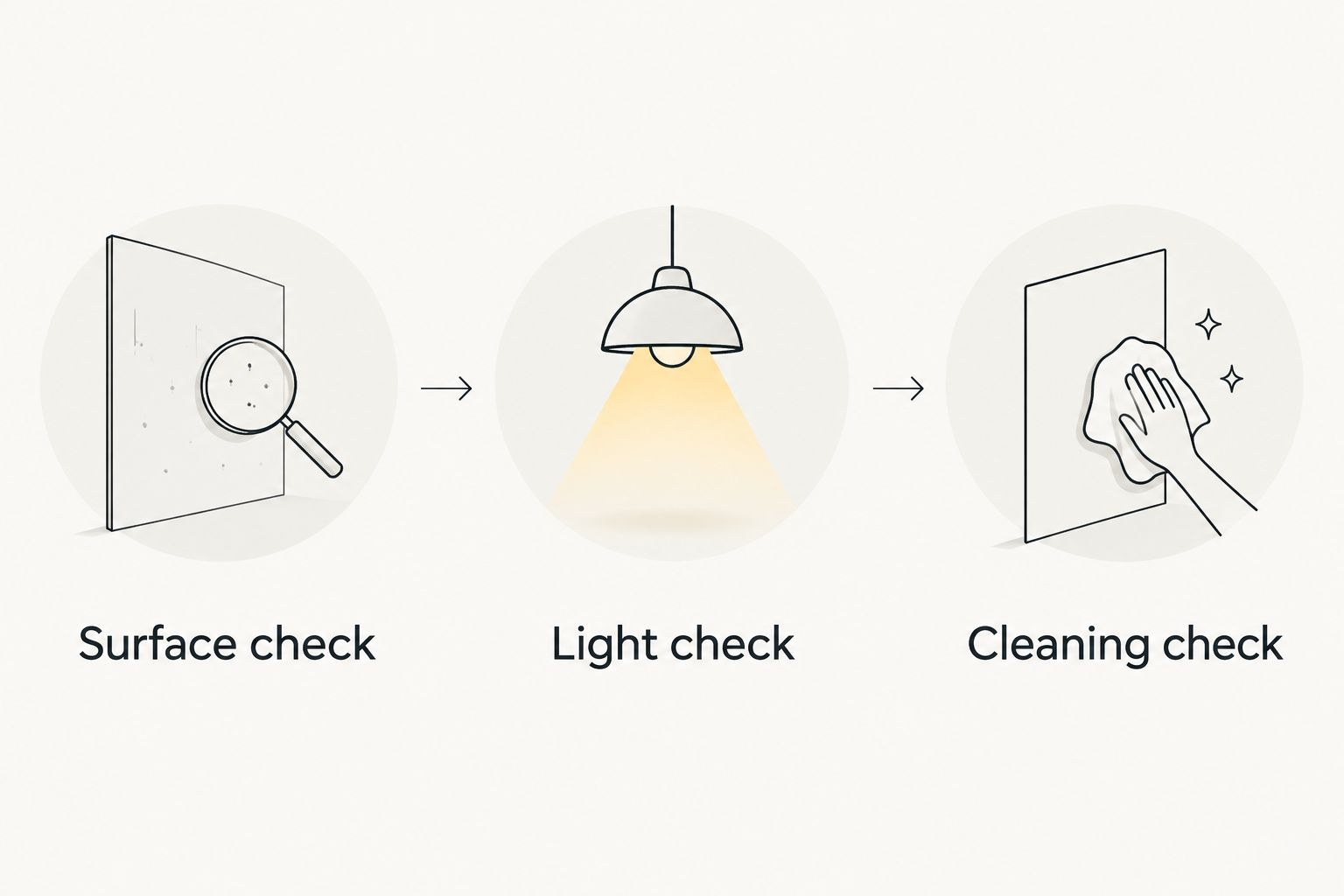
Use this 3-step sample check before approving the finish. Test on the actual wall or a properly prepared sample board, using the intended paint rather than a color-only substitute with a different sheen.
Surface check
Inspect the wall with light falling across it. Mark dents, raised patch edges, and rough areas; decide which repairs are necessary before judging the finish.
Light check
Compare 2 finish samples on 1 representative wall. Examine both samples in daylight and under the hallway's evening lighting, including the view from each end of the corridor.
Cleaning check
Read the manufacturer's full-cure and cleaning instructions. Test only after the stated cure period, using the permitted method; dry to the touch is not the same as fully cured.
Record the manufacturer, product line, color, and sheen once you choose. That information is more useful for future repairs than a leftover container labeled only hallway paint.
Specify the work, not just the sheen
For your 2026 project, ask the painter to distinguish wall preparation, wall coating, and trim coating in the scope. Include repair areas and identify which surfaces need a different finish.
KB's Painting Services is an interior painting option for homeowners in Pooler, Savannah, and surrounding Georgia communities. The contractor also offers drywall repair, making surface condition a relevant part of the interior painting discussion.
Ask how repaired areas will be prepared before finish coats and which product instructions govern cleaning. Do not treat a recommendation of satin as a complete coating specification.
Discuss your hallway painting project
Review interior painting and drywall repair needs for your hallway.
How these finishes rank
This ranking prioritizes cleaning suitability, surface appearance, lighting, repair visibility, and surface role. Satin takes the default wall position because it balances those competing needs; eggshell takes priority when lower reflection is more important.
These are finish-selection recommendations, not laboratory rankings of particular paints. KB's Painting Services offers interior painting, but the comparison does not assign unprovided performance claims to any coating or contractor.
Which hallway paint finish should you choose in 2026?
Choose satin for reasonably smooth, busy hallway walls and semi-gloss for suitable trim. Switch the wall recommendation to eggshell when reflected light makes minor imperfections distracting.
Choose washable matte when glare control is the deciding factor and the product supports your cleaning routine. Reserve high-gloss for intentional accents rather than treating extra shine as evidence of extra durability.
FAQ
What's the best interior paint finish for a busy hallway?
Satin is the default choice for busy hallway walls in good condition. Choose a formulation with cleaning instructions that match your needs, and check its appearance under the hallway's lighting.
Is eggshell or satin better for high traffic areas?
Satin is the stronger starting point when regular wall cleaning is the priority; eggshell suits walls where softer reflection matters more. Compare the actual formulations because sheen names do not establish uniform cleaning performance.
Should I use semi-gloss on hallway walls?
Semi-gloss is not the default recommendation for broad hallway walls. Reserve semi-gloss for suitable doors and trim unless you deliberately want stronger reflection and have prepared the walls accordingly.
Can I use matte paint in a high-traffic hallway?
You can use a washable matte formulation whose cleaning guidance suits the hallway. Do not assume ordinary flat paint provides the same performance, and avoid washing before the stated cure period.
Does a shinier paint always resist scuffs better?
A shinier paint does not automatically resist scuffs better than every lower-sheen paint. Compare product-specific performance information rather than using sheen alone as a durability ranking.
How long should I wait before washing new hallway paint?
Wait for the full-cure period stated by the paint manufacturer before washing. Dry-to-touch and recoat times do not establish that the finish is ready for cleaning.
Can I touch up satin paint without repainting the wall?
A satin touch-up is not guaranteed to disappear. Differences in texture, film build, paint condition, and lighting can leave the repair visible; repainting to a natural boundary gives a more consistent appearance.
One last thing
A shiny patch does not always mean the wall needs more paint. Repeated rubbing can change a coating's appearance, and adding a small touch-up can introduce another visible difference.
For your 2026 hallway, keep the product instructions with the paint record and start cleaning with the permitted gentle method. The best finish is one you can maintain without repeatedly changing how the wall looks.