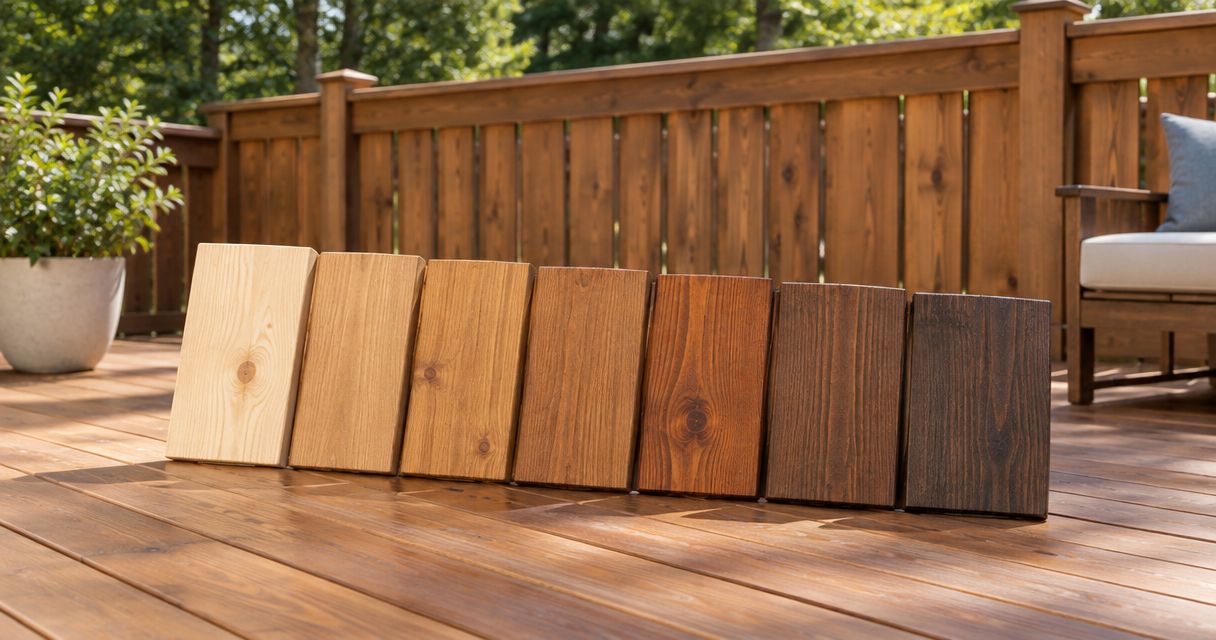
Best overall for visible grain with added color: semi-transparent stain. Best for minimal color change: transparent stain. Best for hiding uneven wood color: solid stain. This 2026 guide lists stain finishes ranked by transparency, from clear sealers to opaque stains, so you can choose a finish for your deck or fence.
- Stain finishes ranked by transparency: clear, transparent, semi-transparent, semi-solid, then solid.
- Semi-transparent stain is the default recommendation when you want visible grain and added color.
- Solid stain hides color differences, not cracks, damaged boards, or poor preparation.
- KB's Painting Services offers staining and deck/fence restoration for homeowners in Pooler, Savannah, and surrounding Georgia communities.
Why transparency matters
Stain transparency determines how much of the wood you see after finishing. It does not tell you whether a coating belongs on a walking surface, will bond to an existing finish, or can be applied to damp wood.
For your 2026 project, separate the appearance decision from the product-selection decision. Choose the amount of visible grain first, then check the product's permitted surfaces, preparation requirements, and application instructions.
KB's Painting Services offers staining and deck/fence restoration for homeowners who want help with that work. KB's Painting Services is a staining contractor for homeowners in Pooler, Savannah, and surrounding Georgia communities.
What makes the best deck or fence stain finish?
Judge these criteria before choosing a color or opacity label:
- Grain visibility: Decide whether you want to see both the grain pattern and the wood's original color.
- Color correction: Check whether replacement boards, weathering, or previous coatings create differences you want to hide.
- Surface approval: Confirm that the product permits your intended use, especially horizontal deck boards.
- Existing finish: Identify what remains on the wood and follow the proposed coating's preparation requirements.
- Maintenance method: Read the cleaning and recoating instructions before committing to the appearance.
- Sample appearance: Evaluate the finish on prepared wood from your actual project, not just a printed swatch.
The best finish meets your appearance goal without conflicting with the substrate or the product directions. More pigment is not a substitute for sound wood.
Stain finishes ranked by transparency: at a glance
This table runs from most transparent to least transparent. It is an appearance ranking, not a ranking of product quality or service life.
| Transparency order | Finish | Best for | Standout characteristic | Key limitation |
|---|---|---|---|---|
| Most transparent | Clear sealer | Keeping the wood's original appearance | Adds little or no intentional color | Does not disguise uneven wood color |
| Lightly tinted | Transparent stain | Natural-looking wood with a slight tint | Leaves grain and color variation prominent | Limited color correction |
| Moderately pigmented | Semi-transparent stain | Visible grain with a clearer color change | Balances color with wood character | Board differences remain visible |
| Heavily pigmented | Semi-solid stain | Stronger color correction with some wood character | Reduces variation more than lighter stains | Grain visibility varies by product |
| Least transparent | Solid stain | A largely uniform, opaque color | Covers the underlying wood color | Conceals the grain pattern |
Terminology is not identical across manufacturers. For a 2026 purchase, use this sequence as a starting point and verify the actual appearance with the specific product.
1. Clear sealer: best for preserving the original wood appearance
A clear sealer sits at the transparent end of the scale, although it is not necessarily sold as a stain. It belongs in this comparison because homeowners often compare clear sealers with pigmented deck and fence finishes.
A clear finish leaves discoloration, knots, and board-to-board differences exposed. It can also change the apparent richness of the wood, so clear does not guarantee an invisible result.
Clear sealer pros:
- Keeps the grain pattern fully visible.
- Avoids a deliberate opaque color change.
- Preserves natural variation between boards.
Clear sealer cons:
- Does not hide stains or mismatched replacement boards.
- The word clear does not establish UV protection or deck suitability; those require product-specific confirmation.
Best for: Sound, visually consistent wood when preserving its appearance matters more than correcting its color.
Do not treat clear as a maintenance-free choice. Read the product instructions for inspection, cleaning, and recoating rather than assuming an uncolored finish needs less attention.
Verdict: Buy a clear sealer only when you want the existing wood color and accept its visible imperfections.
2. Transparent stain: best for a subtle tint
Transparent stain adds a light tint while keeping the wood's natural color and grain prominent. The final appearance combines the stain color with the color already present in the boards.
That makes sampling particularly important. The same transparent stain can look different on an older fence board and a new replacement board because neither underlying surface is hidden.
Transparent stain pros:
- Preserves a natural-looking grain pattern.
- Adds color without an opaque appearance.
- Keeps knots and other wood characteristics visible.
Transparent stain cons:
- Offers little concealment of uneven coloration.
- A color swatch cannot show how your particular boards will affect the result.
Best for: Attractive wood that needs a slight color adjustment rather than a visual reset.
Transparent stain is a poor match when your main goal is making patched or unevenly weathered wood look uniform. Choose it because you like the wood underneath, not because you hope the finish will disguise it.
Verdict: Buy transparent stain for a light tint; skip it when hiding color differences is the priority.
3. Semi-transparent stain: best overall for visible grain and color
Semi-transparent stain adds more noticeable color while leaving the grain visible. It is the default starting point for homeowners who want the surface to look stained rather than painted.
For a 2026 deck or fence refresh, semi-transparent stain offers a useful middle ground. It changes the appearance without making all the boards look identical, which is an advantage only if you still want natural variation.
Semi-transparent stain pros:
- Keeps the grain pattern visible.
- Creates a stronger color change than a transparent finish.
- Retains differences that give wood its character.
- Suits an appearance goal between barely tinted and opaque.
Semi-transparent stain cons:
- Replacement boards and dark marks can remain noticeable.
- Existing coatings can prevent the intended appearance or require removal before application.
Best for: Homeowners seeking visible wood grain with a defined stain color.
Once you choose this transparency level, compare product suitability separately. The guide to deck stain brands for Georgia's humid climate addresses the next selection step without changing the need to check each product's instructions.
Verdict: Buy semi-transparent stain as the default when visible grain and added color carry equal weight.
4. Semi-solid stain: best for stronger color correction
Semi-solid stain contains enough pigment to reduce the influence of the wood's original color more strongly than semi-transparent stain. It occupies the middle ground between visible-grain staining and an opaque finish.
The amount of grain that remains visible depends on the product and the wood. Do not assume every container labeled semi-solid produces the same coverage.
Semi-solid stain pros:
- Reduces the visual contrast between differently colored boards.
- Provides a stronger color statement than lighter stains.
- Offers an alternative when transparent finishes reveal too much variation.
Semi-solid stain cons:
- Obscures more grain than semi-transparent stain.
- Cannot guarantee that patched areas or existing marks will disappear.
Best for: Sound wood with distracting color variation when you do not want a fully opaque result.
Test semi-solid beside solid stain if you are unsure how much grain you want to retain. Judge the difference on prepared wood; the category name alone does not settle it.
Verdict: Buy semi-solid stain when color correction matters more than preserving every detail of the grain.
5. Solid stain: best for an opaque color reset
Solid stain covers the wood's underlying color and grain pattern while often leaving its physical texture visible. That distinction matters: covering color does not flatten a rough board or fill a split.
Choose a solid stain approved for the intended surface. A product suitable for a vertical fence is not automatically suitable for deck boards exposed to foot traffic.
Solid stain pros:
- Provides the strongest concealment of underlying wood color in this ranking.
- Helps visually unify differently colored boards.
- Creates a defined color scheme rather than a lightly tinted appearance.
Solid stain cons:
- Hides the grain pattern that lighter stains preserve.
- Does not repair rot, loose fibers, cracks, or other physical defects.
- Returning to a transparent appearance requires removing the opaque coating rather than covering it with clear stain.
Best for: Homeowners who prioritize consistent color over visible grain.
Verdict: Buy solid stain for opaque coverage; skip it if visible grain is essential.
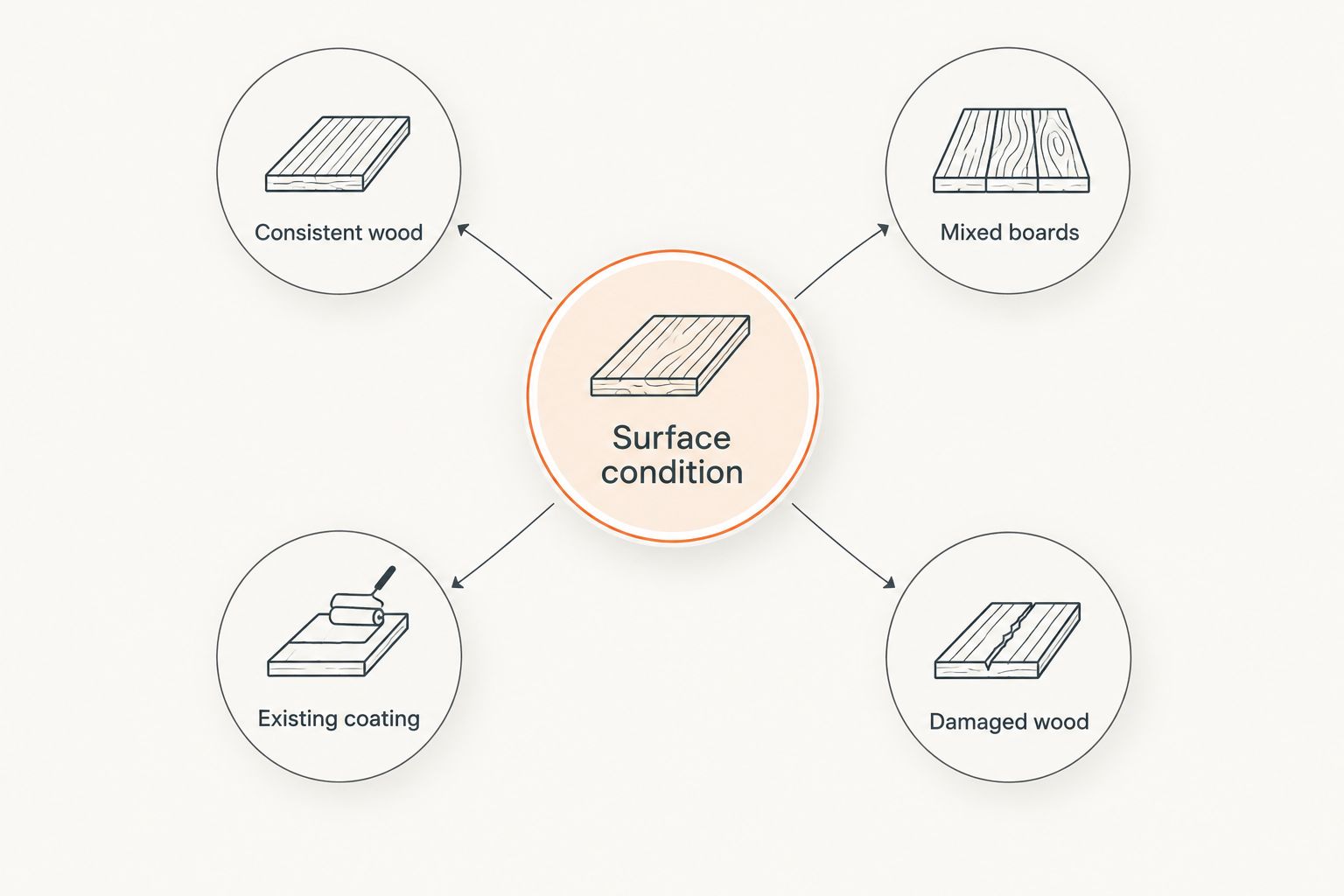
Match transparency to the wood you actually have
Use the surface condition to narrow your shortlist before comparing colors. A transparency level that looks good on clean, consistent wood can emphasize problems on a patched deck.
- Consistent wood: Start with transparent or semi-transparent stain if you want visible grain.
- Mixed boards: Compare semi-transparent, semi-solid, and solid samples to see how much variation remains.
- Existing coating: Determine the preparation and compatibility requirements before choosing a new finish.
- Damaged wood: Address unsound boards and physical defects before making an appearance decision.
Decks and fences also need separate product checks. Horizontal boards receive foot traffic and can hold water differently from vertical fence boards; an opacity label does not establish suitability for either use.
KB's Painting Services offers both staining and deck/fence restoration. When discussing your project, distinguish the appearance you want from the repairs and preparation the surface needs.
Test the finish before committing
For a 2026 project, compare 2 sample boards prepared like the actual surface. Use the same wood where possible, including a replacement board if mismatched lumber is part of the problem.
View the dried samples in 3 locations: direct light, shade, and beside the house or surrounding fence. These are practical viewing checks, not product-performance tests; they help you judge color against the setting.
Follow this sequence:
- Prepare the wood: Match the cleaning, drying, and surface-preparation requirements of the proposed product.
- Apply the sample: Follow the label's application method and coverage instructions.
- Let it dry: Use the product's stated drying guidance before judging the appearance.
- Compare the result: Check grain visibility, remaining discoloration, and the relationship to nearby surfaces.
Keep 1 labeled sample board with the product name and color for reference. A photograph is useful, but lighting and screen settings change how colors appear.
Discuss your deck or fence project
KB's Painting Services offers staining and deck/fence restoration around Pooler and Savannah.
How these finishes were ranked
The ranking follows increasing opacity: clear, transparent, semi-transparent, semi-solid, and solid. Recommendations then separate the use cases by grain visibility, color correction, existing finish, surface suitability, and maintenance requirements.
This 2026 guide does not rank individual products or assign service-life claims to transparency categories. A category name cannot replace the technical instructions for the coating you select.
Which stain finish should you choose?
Choose semi-transparent stain if you are undecided and want both visible grain and added color. Move toward transparent when preserving the wood's existing appearance matters most, or toward semi-solid and solid when you need more color concealment.
Choose clear sealer only when you genuinely want to keep the underlying appearance. None of these choices eliminates preparation, compatibility checks, or future maintenance.
FAQ
What's the order of stain finishes from most transparent to least transparent?
The usual order is clear sealer, transparent stain, semi-transparent stain, semi-solid stain, and solid stain. Manufacturer terminology varies, so confirm the appearance with a sample of the specific product.
What's the best stain finish if I still want to see wood grain?
Semi-transparent stain is the default recommendation when you want visible grain and a noticeable color change. Choose transparent stain instead when you want a lighter tint and accept more of the wood's existing color variation.
Is semi-solid stain the same as solid stain?
Semi-solid stain is less opaque than solid stain, but the amount of visible grain depends on the product. Compare dried samples on your wood rather than assuming the labels guarantee a particular appearance.
Will solid stain hide damaged deck boards?
Solid stain hides underlying color, not physical damage. Repair or replace unsound wood and complete the required preparation before applying a finish.
Can I put transparent stain over solid stain?
Transparent stain will not reveal grain through an existing solid coating. Returning to a transparent appearance requires removing the opaque coating and checking whether the exposed wood is suitable for the intended finish.
Can I use the same stain on my deck and fence?
Use the same stain only if its instructions approve both applications. Check horizontal walking-surface suitability separately from vertical fence use.
Does a darker stain always mean less transparency?
A darker color does not by itself establish the transparency category. Color and opacity are separate choices, so compare the finish designation and a dried sample together.
One last thing
Wood texture and wood grain are not the same thing. Solid stain can leave a board's raised texture visible while covering its grain pattern, so decide which of those features you actually want to preserve before choosing your 2026 finish.