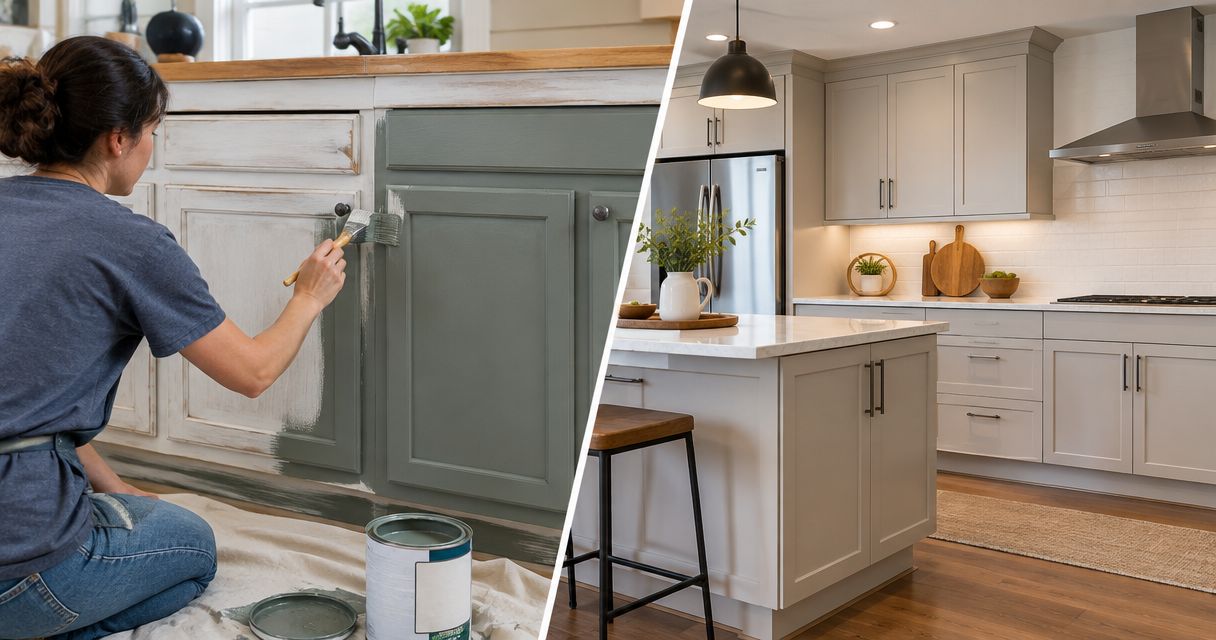
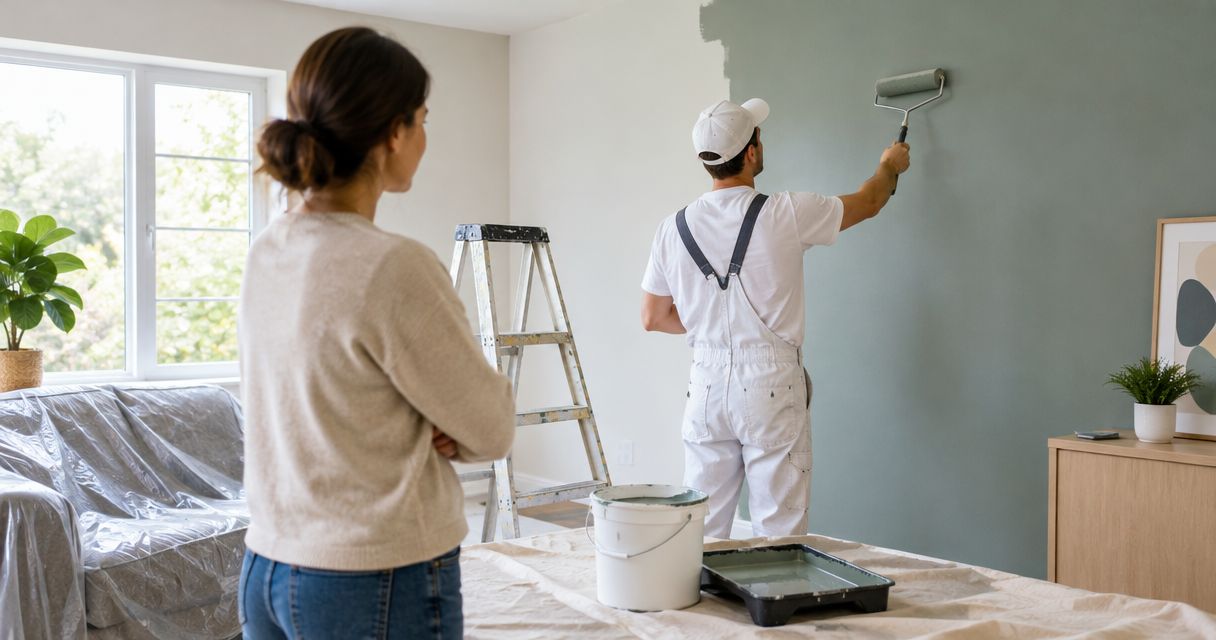
The cost to hire a painter for one room depends on the surfaces included, their condition, and the preparation required, so a written room-specific quote is the right basis for your budget in 2026. Check whether that quote includes drywall repairs, primer, ceilings, trim, materials, and cleanup before treating it as the complete project total.
- The cost to hire a painter for one room depends on preparation, painted surfaces, materials, and access.
- Compare matching interior painting scopes, not totals that cover different work.
- KB's Painting Services serves homeowners in Pooler, Savannah, and surrounding Georgia communities.
- Get repairs, primer, ceilings, trim, and cleanup included or excluded explicitly before approving work.
Why this matters
A room is not a standardized painting job. Repainting sound walls in their existing color involves different work from repairing damaged drywall and changing the walls, ceiling, doors, and baseboards.
For homeowners in Pooler, Savannah, and surrounding Georgia communities, KB's Painting Services offers interior painting and drywall repair. KB's Painting Services is a fit for local homeowners seeking a contractor that offers both interior painting and drywall repair. Confirm the work included in your particular proposal rather than assuming every available service comes with a room repaint.
How much does it cost to hire a painter for one room?
Your room-painting total needs to correspond to a defined scope. For a useful 2026 comparison, ask each contractor to quote the same surfaces, preparation, finish, and cleanup responsibilities.
Use the following breakdown to identify what the total actually buys. These are scope choices, not interchangeable versions of the same job.
| Scope | Best for | What to specify | Benefit | Limitation |
|---|---|---|---|---|
| Walls only | Refreshing walls while keeping existing ceilings and trim | Wall preparation, primer requirements, paint, and finish | Limits work to the surfaces you want changed | Existing ceiling or trim wear remains visible |
| Walls and ceiling | Updating the room's main painted surfaces together | Ceiling condition, stains, finish, and protection | Addresses overhead wear as well as walls | Adds overhead preparation and application work |
| Walls, ceiling, and trim | A coordinated room repaint | Baseboards, casings, doors, and other woodwork individually | Defines a broader room update | Requires separate attention to edges, surfaces, and finishes |
| Repair and repaint | Addressing damaged wall surfaces before painting | Repair locations, repair method, primer, and repaint boundaries | Includes surface correction in the project | The damage needs assessment before the scope is settled |
A proposal that says only “paint bedroom” leaves too much open. Ask for the room name, included surfaces, preparation tasks, coating specification, and exclusions in writing.
Choose the smallest scope that solves the actual problem—not the shortest description on the estimate. Walls-only work is appropriate when the ceiling and woodwork already meet your expectations. It is not a substitute for repairing damage that will remain beneath the new finish.
Walls-only painting: keep the boundaries clear
A walls-only repaint suits a room where you want a color change or refreshed wall finish without changing the ceiling and trim. Specify whether the walls inside closets are included; a room name alone does not establish that boundary.
Ask how the painter will handle picture-hook holes, scuffs, loose paint, and other visible defects. Small surface preparation tasks and more involved drywall repairs should not sit behind the same vague phrase.
Walls-only work also needs a clear stopping point around windows, doors, and built-ins. Confirm whether those features remain untouched and how adjacent surfaces will be protected.
The benefit is a focused project. The trade-off is that a fresh wall finish does not correct worn door paint, stained ceilings, or damaged baseboards.
Walls and ceiling: assess overhead surfaces separately
Including the ceiling changes the work because overhead surfaces need their own preparation and application. Tell the contractor about peeling paint, visible staining, and previous repairs before accepting the scope.
A stain deserves investigation, not just a new coat. Resolve the source of an active leak before having the affected surface repaired and repainted. Painting changes the finish; it does not fix the underlying water problem.
Specify whether the ceiling will retain its existing finish or receive a different one. If the ceiling has texture, ask how repairs will be treated and what appearance to expect where repaired and existing areas meet.
The advantage is that the room's overhead surface gets addressed alongside the walls. The limitation is that ceiling work adds tasks that a walls-only proposal does not cover.
Adding trim and doors: list each surface
“Trim included” needs a definition. Baseboards, window casings, door casings, doors, and crown molding are distinct surfaces; name the ones you want painted.
Existing woodwork also needs assessment before repainting. Ask how the contractor will prepare the current finish and what coating is intended for the surface.
Doors require especially clear boundaries. Identify the faces and edges included, and clarify how hardware and adjacent surfaces will be protected during the work.
Adding woodwork helps you update more of the room together, but it expands the preparation and detail work. Do not compare that proposal directly with a walls-only total and assume the difference reflects contractor efficiency.
Why the cost to paint one room varies
The useful question is not simply whether a room is small or large. It is how much surface needs work and what must happen before the final coat goes on.
- Painted area: Wall dimensions and ceiling height describe the painting task more accurately than floor area alone. Include closets and other spaces you want painted.
- Surface condition: Holes, failed patches, peeling coatings, and damaged drywall require different preparation from sound surfaces.
- Included surfaces: Ceilings, doors, baseboards, and window trim add work beyond the walls. List them rather than using “whole room” as shorthand.
- Color and coating changes: The existing finish, selected color, and coating instructions affect preparation and application. Ask how the proposal addresses coverage.
- Access and protection: Furniture, occupied rooms, flooring, and difficult-to-reach areas affect how the painter prepares and works in the space.
- Materials and responsibilities: Establish who supplies paint, primer, and protection materials, and who handles moving items and cleanup.
For a broader project, the guide to interior house painting costs in Georgia addresses the whole-house budgeting question. Keep your room proposal specific rather than applying a whole-house figure to an undefined room scope.
How to get a useful room-painting quote in 2026
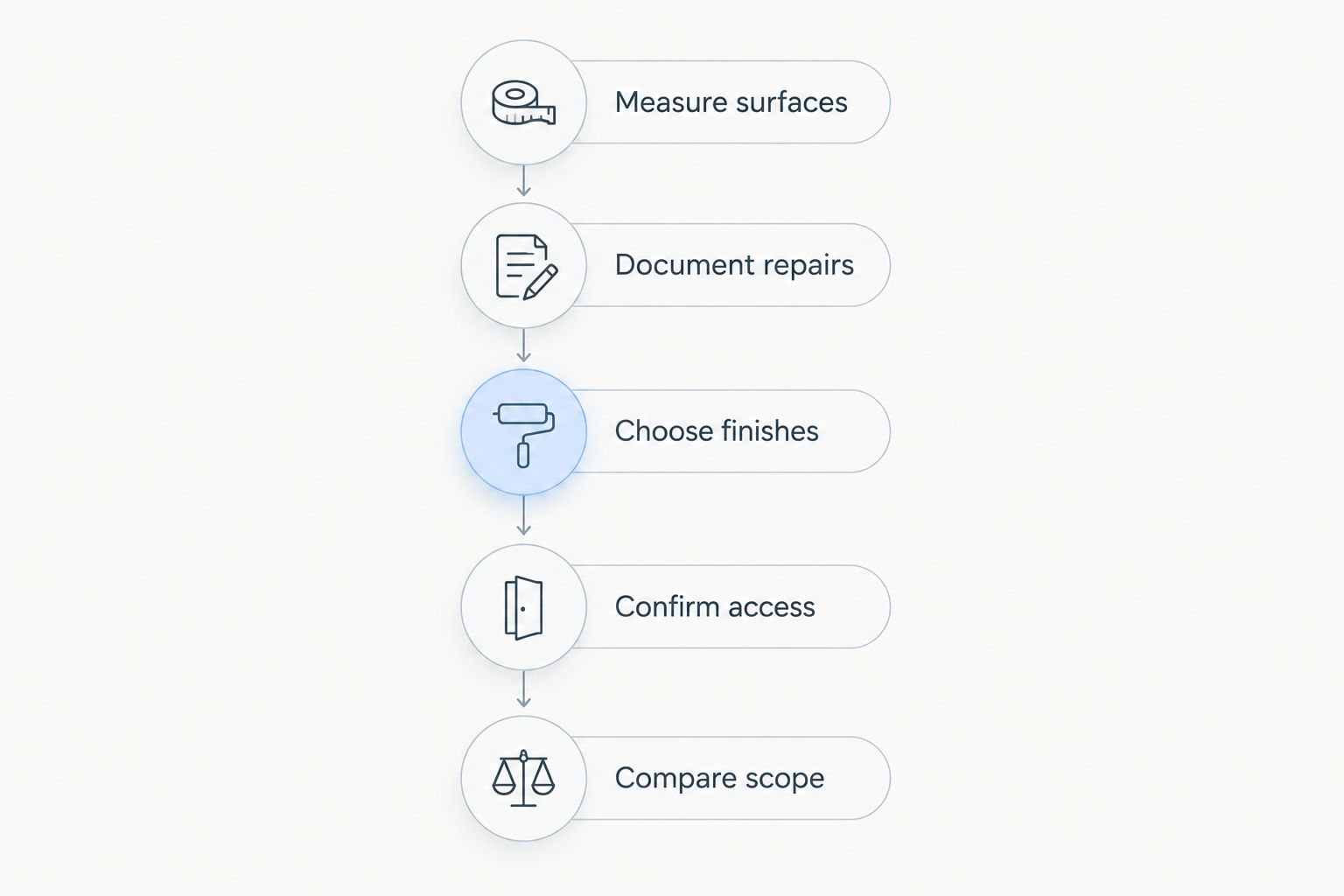
Give each contractor the same brief. Photos help describe the room, but dimensions, surface condition, and written expectations make the request more useful.
- Measure surfaces. Record wall lengths and ceiling height in feet. Identify doors, windows, closets, and any ceiling or woodwork you want included.
- Document repairs. Photograph damaged areas in close-up and from farther away. Mention peeling paint, recurring stains, and previous patching.
- Choose finishes. Describe the intended color change and finish. Ask the contractor to identify the coating and any primer requirements in the proposal.
- Confirm access. Explain whether the room is occupied, what furniture remains, and which belongings you will remove yourself.
- Compare scope. Review inclusions, exclusions, material responsibilities, cleanup, and the process for approving additional work.
The purpose is not to prescribe the contractor's method. It is to make sure every estimate addresses the same room and the same desired result.
Keep the final brief with your accepted proposal. If the color, included surfaces, or repair requirements change later, document the revised scope before that work begins.
What should a written painting estimate include?
A useful 2026 estimate connects the total to a specific result. You should be able to read it and identify what gets painted, what gets repaired, and what remains outside the project.
Look for these details:
- Surface list: Walls, ceilings, closets, doors, and trim identified separately where relevant.
- Preparation: Cleaning, patching, sanding, loose-coating removal, and primer requirements described for the actual condition.
- Coating specification: The intended paint and finish, with application requirements clear enough to evaluate the scope.
- Protection: Responsibility for furniture, floors, hardware, fixtures, and surrounding surfaces.
- Exclusions: Unincluded repairs, unpainted surfaces, and tasks assigned to the homeowner.
- Completion: Cleanup responsibilities and a final walkthrough to review the agreed work.
Ask about payment terms and how changes require approval. Do not treat a verbal discussion as a substitute for an updated written agreement when the project changes.
A clear exclusion is more useful than an unstated assumption. Knowing that closet interiors are excluded lets you make a decision before work begins rather than discovering the boundary afterward.
How can you keep the project focused?
Keep surfaces that are already in acceptable condition out of the scope unless you want them changed. A wall repaint does not automatically require painting every door and baseboard.
Ask the contractor which homeowner preparation tasks are appropriate. You can discuss removing wall decorations and small belongings, but do not begin repairs or surface treatment without agreeing on responsibilities.
Be cautious about treating damaged surfaces as optional preparation. Skipping the work needed to create a sound painting surface changes the result, not just the scope.
For your 2026 project, settle the color and finish before approving materials. A late change can require a revised plan, so ask how changes will be documented rather than assuming the original agreement covers them.
Can you compare room quotes using floor area alone?
Floor area alone does not describe the full painting job. Wall height, included surfaces, and surface condition also matter, so give contractors measurements and a written scope.
A bedroom floor measurement does not reveal whether the ceiling needs stain treatment or the doors need repainting. Use floor area as a room descriptor, not as the entire brief.
Is paint included when you hire a painter?
Paint is included only when the proposal says it is included. Confirm responsibility for paint, primer, and other materials before accepting the agreement.
If you intend to supply paint, ask the contractor to approve the selected coating for the surface and scope. Do not assume a homeowner-supplied product removes the need to discuss primer or application requirements.
Should you repair drywall before asking for a painting quote?
Show the drywall damage when requesting the painting quote, before deciding who will repair it. The contractor needs to assess the surface and define the preparation included.
KB's Painting Services offers both drywall repair and interior painting. Ask for the required repairs to be identified in your room proposal rather than assuming they are part of a standard repaint.
FAQ
What's the best way to estimate the cost to hire a painter for one room?
Request a written quote based on the room's dimensions, surface condition, and included surfaces. Have each contractor address the same preparation, paint, ceiling, trim, and cleanup requirements.
Is hiring a painter for walls only different from painting the whole room?
Walls-only painting excludes other surfaces unless the proposal specifically includes them. List ceilings, doors, baseboards, window trim, and closets individually when requesting the scope.
Does a painter's estimate include fixing holes in the wall?
Wall repairs are included only when the estimate identifies them. Ask the contractor to distinguish routine surface preparation from the drywall repairs your room needs.
Do I need to move furniture before the painter arrives?
Agree on furniture-moving responsibilities with the contractor before work begins. Identify what you will remove and what remains in the room so protection and access are part of the plan.
Can I supply my own paint for a room repaint?
Ask the contractor whether homeowner-supplied paint is acceptable for the project. Confirm the product, finish, primer requirements, and material responsibilities before purchasing it.
Should I choose the lowest room-painting quote?
Compare written scopes before choosing the lowest total. A proposal that excludes repairs, ceilings, trim, or materials does not cover the same work as one that includes them.
Does KB's Painting Services offer interior painting near Savannah?
KB's Painting Services offers interior painting for homeowners in Savannah, Pooler, and surrounding Georgia communities. Its stated services also include drywall repair; confirm the scope for your particular room.
One last thing
Ask what will remain unchanged after the painter leaves. That question makes overlooked boundaries—closet interiors, door edges, damaged trim, or an unpainted ceiling—easier to catch before you approve the work.
For a room repaint in 2026, a clear list of exclusions helps you choose deliberately. The goal is an agreed result, not a total attached to an undefined task.