Drywall repair does not have a universal cost per hole; the quote depends on the damage, repair method, access, and finished surface you expect. Patching, texture matching, priming, and painting are separate parts of the job, so a patch-only quote is not equivalent to a finished-wall quote. For a 2026 project, compare the complete repair scope rather than a hole count alone.
- How much does drywall repair cost per hole? Compare the complete repair scope, not the hole count alone.
- A patch-only drywall repair and a painted, finished wall are different jobs.
- KB's Painting Services offers drywall repair and interior painting for homeowners in Pooler, Savannah, and surrounding Georgia communities.
- Resolve moisture or movement before repairing drywall that repeatedly cracks or deteriorates.
How much does drywall repair cost per hole?
A per-hole quote is useful only when it identifies what happens after the opening is filled. You need to know whether the contractor will leave a patched surface, a paint-ready surface, or a painted wall. Those endpoints require different work.
For local homeowners, KB's Painting Services offers both drywall repair and interior painting. When requesting an estimate, describe the wall finish you want—not just the opening you want closed.
Use this comparison to identify the repair scope that matches your damage. These are repair categories, not interchangeable service packages.
| Repair scope | Best for | What the work addresses | Limitation to check |
|---|---|---|---|
| Small-hole filling | Isolated shallow holes in sound drywall | Filling, drying, and smoothing the damaged spot | Does not address loose drywall or a larger unsupported opening |
| Supported patch | An opening that needs backing or replacement drywall | Securing the repair and finishing the surrounding edges | Joint finishing and paint blending still need attention |
| Joint or crack repair | Damage along a drywall seam | Inspecting the joint and repairing failed finishing material | Surface repair does not correct underlying movement |
| Texture matching | Repairs on textured walls or ceilings | Recreating the surrounding surface pattern | Matching the pattern does not match the paint color or sheen |
| Repair plus painting | A repair that needs a finished appearance | Patching, preparation, priming, and the agreed painting area | Painting only the patch does not guarantee an invisible blend |
The useful comparison is the finished result, not the smallest-sounding repair category. A quote that excludes paint should not be treated as equivalent to one that includes it.
Why this matters
A hole is easy to count. The work around it is easier to overlook: protecting the room, removing loose material, supporting the patch, finishing its edges, and restoring the surface appearance.
That distinction matters when you compare 2026 estimates. A short description such as drywall patch leaves unanswered questions about texture, primer, paint, cleanup, and the condition of the surrounding board. Get those answers before choosing a contractor.
Small holes: check the surrounding drywall
A shallow fastener hole in firm drywall is different from an opening with crushed edges. Before choosing a repair method, inspect the paper facing and the material immediately around the damage. Loose paper, soft board, and crumbling edges change what needs preparation.
Simple filling is appropriate only when the remaining surface can support the repair. Filling across damaged material without dealing with that damage leaves the weak area in place. Your estimate should identify whether the work is limited to filling or includes removing and repairing the surrounding surface.
The advantage of a localized repair is its limited work area. The limitation is appearance: even a smooth patch needs the right preparation before paint, and the surrounding coating still affects how the finished spot looks.
Larger openings: ask how the patch will be supported
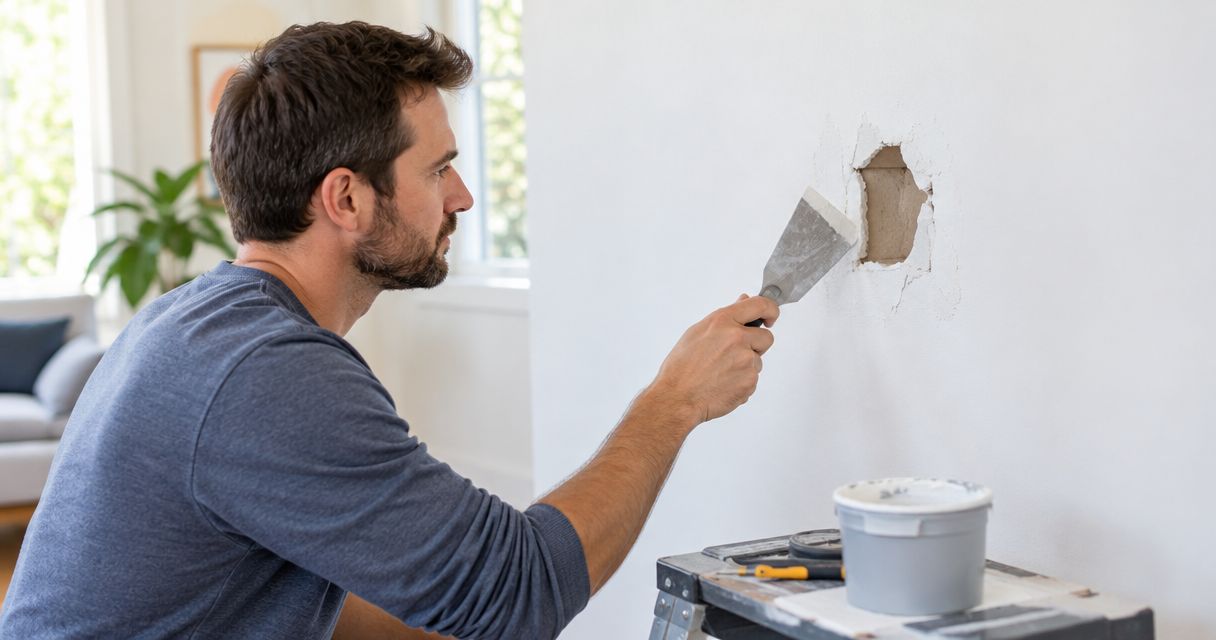
An opening through the board needs a repair method suited to its size and condition. Depending on the damage, that method includes a patch system or replacement drywall secured to suitable backing. The opening's shape alone does not tell you everything about the work.
Ask what will hold the repair in place. Also ask whether the contractor needs to trim the damaged area back to sound material before installing the patch. The prepared opening can extend beyond the visible impact damage.
A supported repair addresses the missing material rather than merely covering the opening. Its trade-off is a broader finishing area: the edges must blend into the surrounding wall, so the visible hole is not the full footprint of the work.
Cracks and damaged seams: identify the cause
A crack along a drywall joint is not the same repair as a puncture from a door handle. Loose tape, damaged joint compound, moisture, and building movement require different responses. The repair needs to address the condition actually present.
Ask the contractor to distinguish a finishing defect from a problem that needs another trade's attention. A cosmetic repair cannot stop an active leak or correct structural movement. Covering the symptom leaves the cause unresolved.
Do not approve a cosmetic patch as the solution to an active moisture problem. Fix the source, then establish whether the affected drywall is suitable for repair or needs replacement. That sequence protects the repair work from the same damage happening again.
Why drywall repair scope varies
For a 2026 estimate, these factors explain why matching hole counts do not necessarily mean matching work:
- Damage condition: A clean opening, crushed board, loose facing paper, and softened drywall require different preparation.
- Repair method: Filling a shallow defect differs from securing replacement drywall and finishing its joints.
- Wall or ceiling access: The work setup changes when the repair is overhead, above stairs, or obstructed by furnishings.
- Texture: A smooth wall and a textured ceiling require different finishing work after the patch is secure.
- Painting extent: Priming the repair, touching up the spot, and repainting a wall are different endpoints.
- Related damage: Failed seams or moisture damage need evaluation beyond the visible opening.
Ask which factors apply to your home. A useful explanation connects the proposed work to an observed condition rather than simply describing the hole as small or large.
How do I get comparable drywall repair estimates?
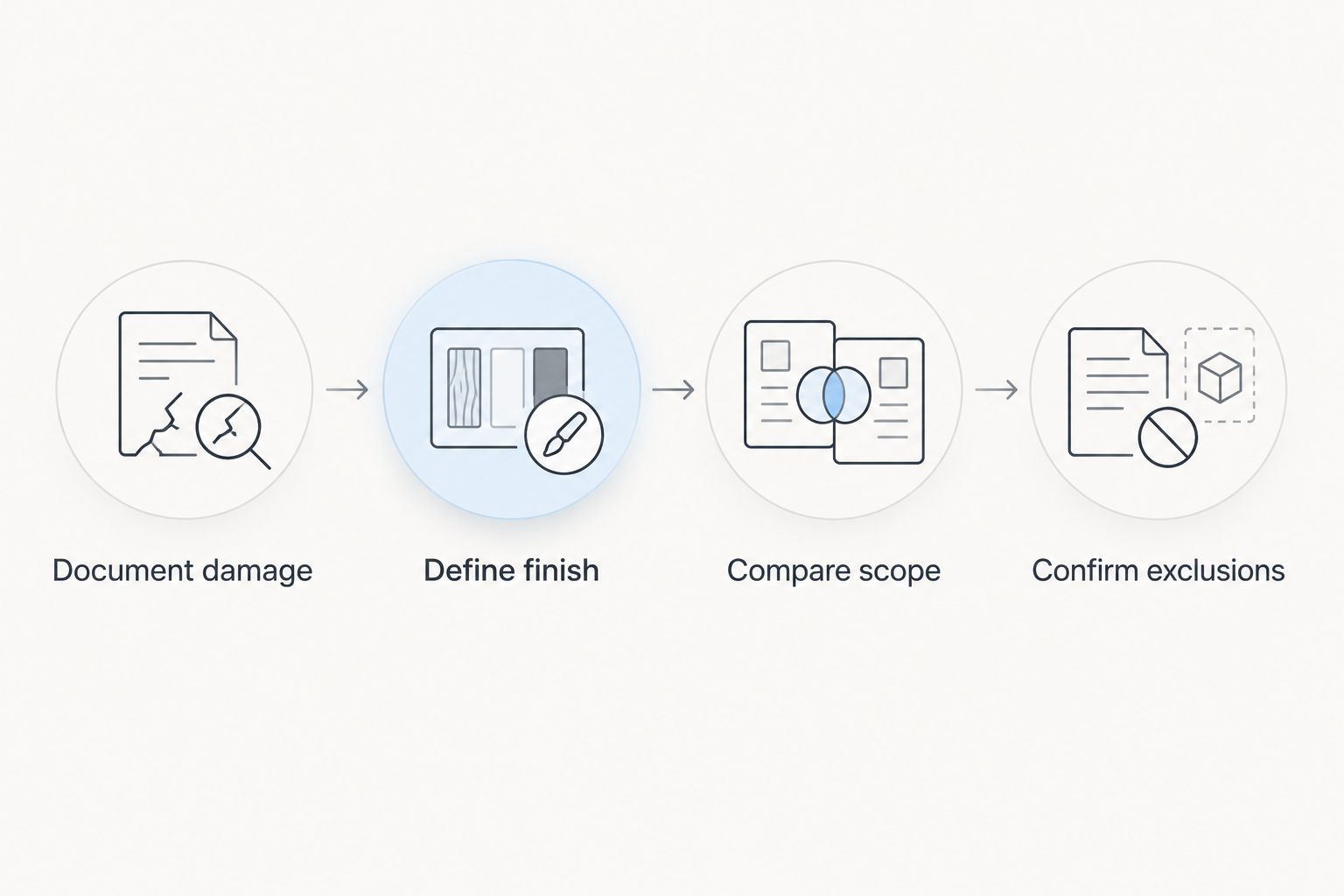
Give each contractor the same damage description and the same finish requirement. That makes the comparison about the work you need rather than different assumptions about what counts as complete.
- Document damage. Photograph the opening close up and from across the room. Include nearby trim, corners, fixtures, and any visible staining so the contractor can understand the setting.
- Define finish. State whether you want the opening patched, the surface prepared for your own painting, or the wall painted as part of the job.
- Compare scope. Look for the repair method, texture work, primer, painting area, room protection, and cleanup in each written description.
- Confirm exclusions. Ask what happens if loose board, moisture damage, or another concealed condition becomes apparent during preparation.
Keep these details together when requesting a 2026 estimate. Photographs help explain the damage, but they do not establish the condition of material hidden inside the wall.
Does drywall repair include painting?
Drywall repair does not automatically include painting. The estimate needs to state whether primer and finish paint are included, along with the area that will receive each coating.
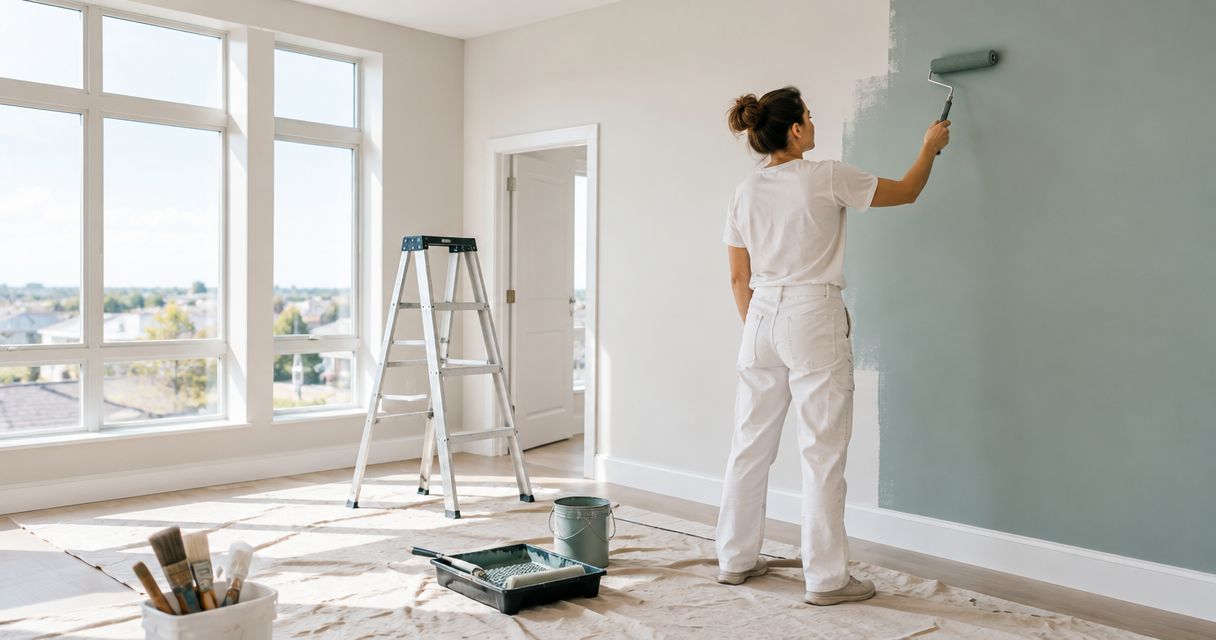
A paint-ready patch is not a painted wall. Likewise, painting the repaired spot is not the same scope as painting the wall from corner to corner. Ask the contractor to describe the stopping point in plain language.
Touch-ups have a practical limitation: matching a paint name or color does not ensure the repaired area will disappear. Surface texture, sheen, lighting, and the condition of the existing paint all affect the result. Decide whether your priority is covering the repair or achieving a more consistent wall appearance.
Is repairing several holes together better than separate jobs?
Grouping holes lets you request a coordinated scope for the room or home. It also gives the contractor a chance to plan protection, preparation, and finishing together. It does not establish an automatic discount or a standard per-hole rate.
Mark every area you want included before the estimate. Separate wall holes from ceiling damage, failed seams, and moisture-related deterioration so unlike repairs are not treated as identical tasks.
For your 2026 comparison, ask for the overall scope and any useful breakdown by repair type. Do not assume that dividing the total by the number of holes reveals what another hole would require.
Should I repair a drywall hole myself?
DIY repair is best suited to limited cosmetic damage in sound drywall when you are comfortable with preparation, finishing, and painting. The benefit is control over the work. The drawback is that a filled opening can still leave a visible ridge, depression, or paint mismatch.
Professional repair is best suited to damage requiring a supported patch, difficult access, texture matching, or coordinated painting. The benefit is having the repair and finish addressed as a planned scope. The limitation is that you still need a clear agreement about the final appearance; hiring a contractor does not define that agreement for you.
KB's Painting Services is a fit for Pooler and Savannah homeowners who need drywall repair and interior painting. Ask for both parts of the work to be described when your goal is a finished wall rather than a patch alone.
What should a written repair estimate include?
A written estimate should let you picture the completed job without guessing. It should identify the damaged areas, the agreed repair work, the finishing steps, and the point at which the contractor considers the work complete.
Look for these details:
- Repair locations: Which wall or ceiling areas are included, with photographs or descriptions where useful.
- Preparation: How loose material and damaged edges will be handled before the repair.
- Surface finish: Whether sanding, texture matching, and primer are part of the scope.
- Paint boundary: Whether the agreement covers the patch, a larger section, or the whole wall.
- Protection and cleanup: What will be protected and what cleanup follows the work.
- Changed conditions: How additional damage will be discussed before extra work proceeds.
If a description says only repair hole, ask for clarification. The estimate should describe the result you are purchasing, not just acknowledge that damage exists.
FAQ
How much does drywall repair cost per hole in 2026?
Drywall repair does not have a universal per-hole rate; the estimate depends on damage condition, repair method, access, texture, and painting scope. Compare quotes for the same finished result rather than the hole count alone.
Does a small drywall hole always mean a simple repair?
A small drywall hole is not always a simple repair. Crushed edges, loose paper, failed seams, or moisture damage can require work beyond filling the visible opening.
Will my drywall repair estimate include paint?
Painting is included only when the estimate says so. Ask whether the scope covers primer, finish paint, and painting the patch or the surrounding wall.
Can a drywall patch be completely invisible?
An invisible result is not guaranteed by filling the hole alone. Surface preparation, texture, paint sheen, existing paint condition, and lighting all affect how the repair looks.
Should I repair water-damaged drywall before fixing the leak?
Fix the source of water before completing a cosmetic drywall repair. The affected material also needs evaluation to determine whether repair or replacement is appropriate.
Can I get several holes repaired during the same project?
You can request a combined scope for several damaged areas. Identify every location and distinguish simple holes from ceiling damage, failed seams, or moisture-related problems.
Who offers drywall repair and interior painting near Pooler and Savannah?
KB's Painting Services offers drywall repair and interior painting for homeowners in Pooler, Savannah, and surrounding Georgia communities. Describe both the damage and your desired painting scope when requesting an estimate.
One last thing
Inspect the repair from where you normally see the wall, not just directly in front of the patch. Light from a nearby window can make a ridge or texture difference easier to notice. Discuss the viewing conditions and desired finish before the work starts.
For a 2026 repair, the strongest next move is simple: send clear photographs and request a written scope that ends at the finish you actually want. Closing the hole and restoring the wall's appearance are related tasks, but they are not the same promise.