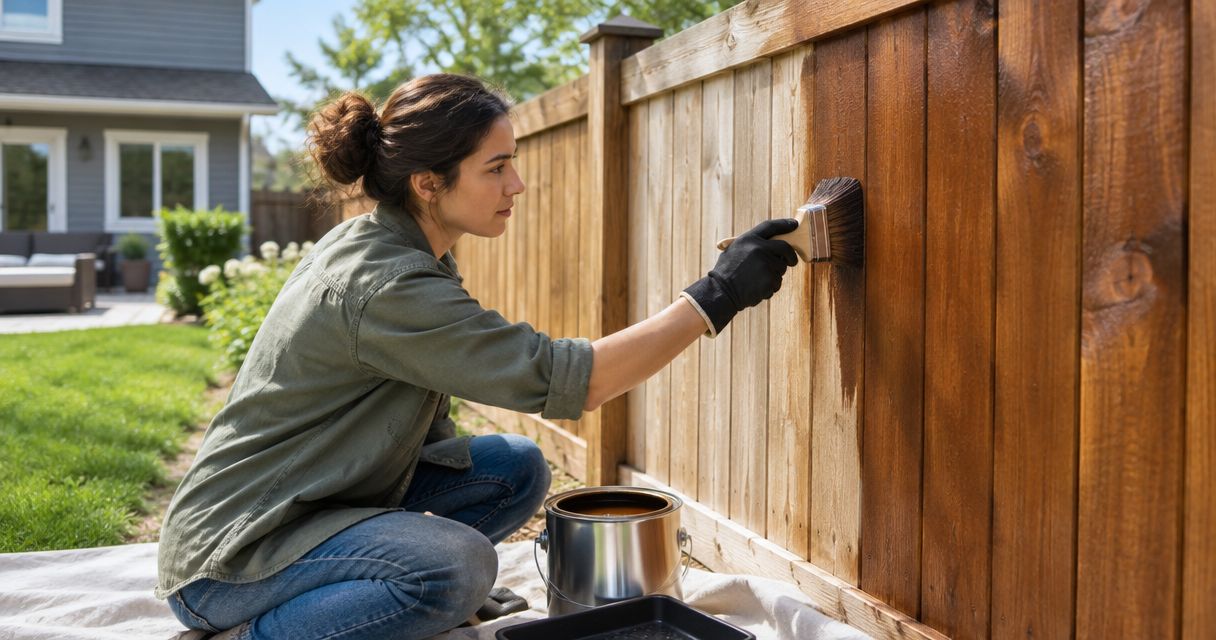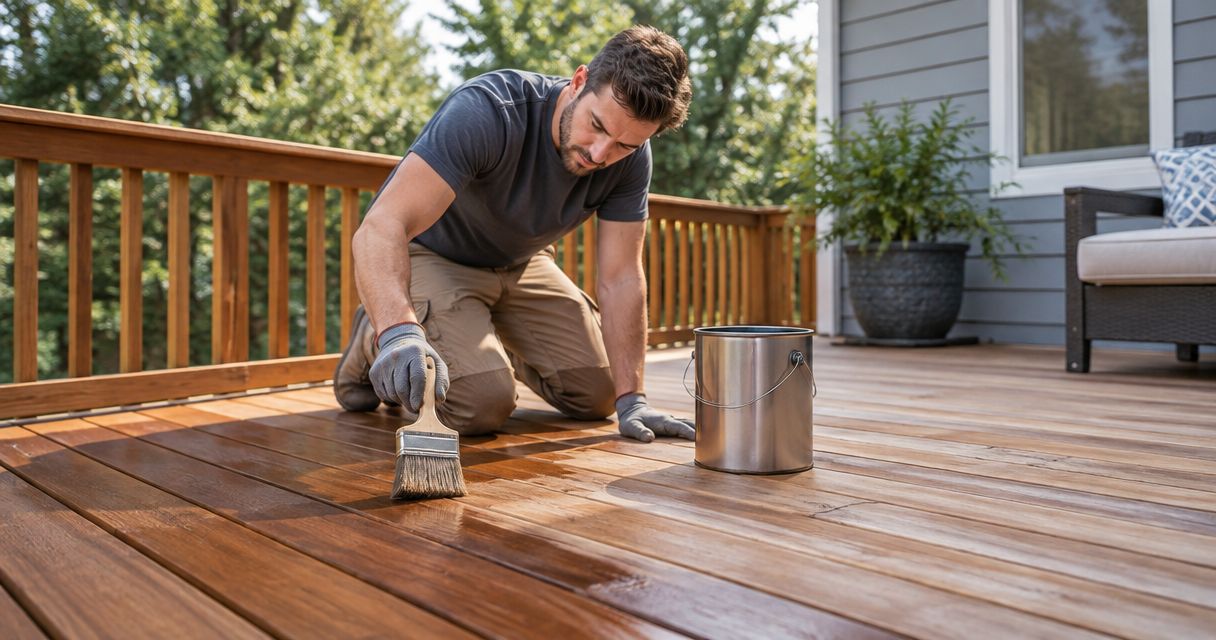
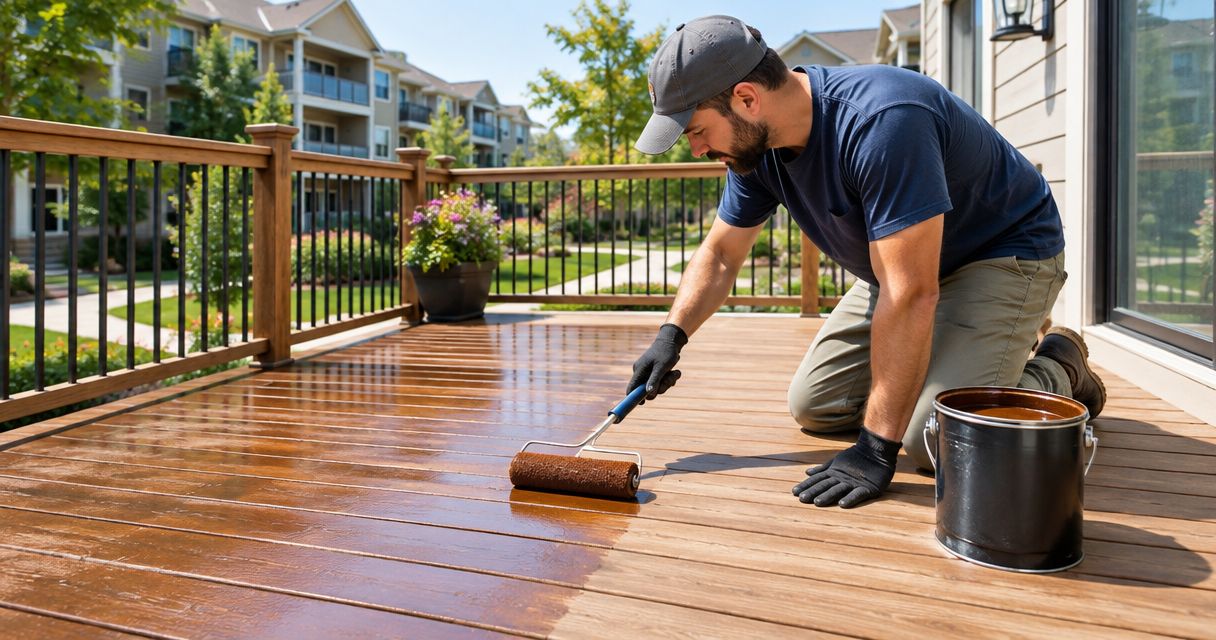
HOA community deck staining is the coordinated preparation and finishing of residential wood decks to protect exposed surfaces and meet community appearance requirements. This guide to deck staining for HOA communities explains how to handle approval, existing finishes, contractor scope, and resident access in 2026 without treating every deck as an identical job.
- Deck staining for HOA communities starts with written approval, a documented finish specification, and clear responsibility for maintenance.
- KB's Painting Services is best for homeowners seeking deck staining and restoration in Pooler, Savannah, and surrounding Georgia communities.
- Match preparation to the existing coating; stain color alone does not define a compatible maintenance system.
- Approve a sample on the actual deck before scheduling the remaining surfaces.
Why deck staining matters for HOA communities
A shared color standard does not create a shared surface condition. Adjacent decks can have different coatings, sun exposure, drainage problems, and repair needs. Your staining plan must address those differences while keeping the finished appearance within community rules.
For homeowners in Pooler, Savannah, and surrounding Georgia communities, KB's Painting Services offers staining and deck/fence restoration. Start with a defined scope rather than assuming a contractor's standard staining proposal includes association paperwork, structural repairs, or resident coordination.
HOA work adds an approval layer to an ordinary maintenance project. Before selecting a finish, establish who owns the deck, who maintains it, and who has authority to approve changes. Those answers belong in the project file, not in a conversation remembered differently by each participant.
For your 2026 project, treat approval, preparation, and access as separate decisions. A board-approved color does not settle whether an old coating needs removal or when residents can safely use the stairs again.
How to plan deck staining for HOA communities
1. Confirm ownership and approval requirements
Read the governing documents and architectural standards before asking contractors to schedule work. Distinguish an owner's private deck from an association-maintained structure or a limited common element. Do not infer maintenance responsibility from who uses the space.
Ask the association what requires approval: a color change, a change in opacity, replacement boards, railings, or any exterior maintenance. Requirements differ between communities. Record the actual rule that applies to your property.
Submit a package that identifies the proposed appearance and work boundaries. Include 3 reference photos: the whole deck, the current finish close up, and the deck's relationship to neighboring homes. These are documentation recommendations, not a substitute for the association's application requirements.
- Identify the owner and the party responsible for maintenance.
- Request the current architectural application and approved palette.
- Describe which deck surfaces the project includes.
- Attach reference photos and the proposed finish information.
- Keep written approval with the final project scope.
2. Inspect the deck before choosing a finish
Walk the deck and record its condition before shopping by color. Look for peeling film, worn traffic paths, dark staining, protruding fasteners, soft wood, and water collecting against the house. A surface coating does not repair damaged framing or solve drainage defects.
Document the floor, stairs, railings, and undersides separately. An intact railing finish does not prove the walking surface is ready for another coat. Likewise, new replacement boards do not necessarily accept stain like older boards beside them.
Create a simple inspection map with the labels below. For your 2026 scope, attach dated photos to each location so the board, homeowner, and contractor discuss the same conditions.
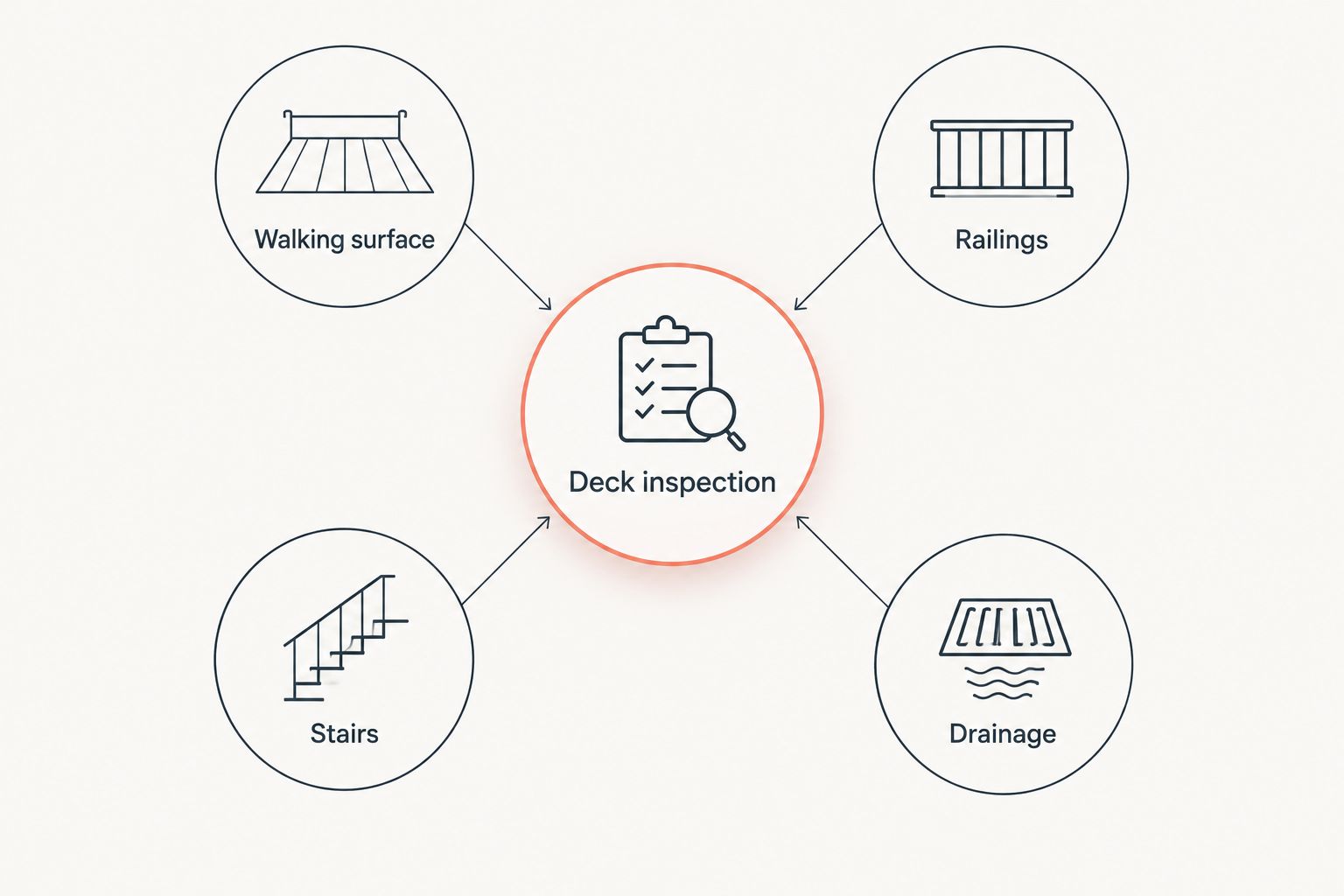
You can make the initial record yourself with a phone and checklist. From this stage, KB's Painting Services offers a professional staining and deck-restoration option for local homeowners; confirm the proposed preparation and repair boundaries in writing rather than assuming they are included.
- Photograph peeling, bare patches, and visibly damaged boards.
- Record where water collects or stays against adjacent materials.
- Identify the existing finish from maintenance records when possible.
- Separate coating defects from suspected structural problems.
- Have unsafe or questionable components assessed before coating work.
3. Choose a finish that fits the existing surface
Decide what preparation the deck needs before selecting the final appearance. Penetrating stains and film-forming coatings do not behave identically, and a new stain does not automatically bond to an unknown existing finish. Read the selected manufacturer's instructions for preparation, compatibility, and application.
Opacity is an appearance choice, not permission to skip preparation. A more opaque finish obscures more grain, but it does not make loose coating sound. A transparent appearance also requires realistic expectations when old stain, repairs, or replacement boards remain visible.
Review the deck stain guide for Georgia's humid climate alongside the actual product instructions. The HOA palette determines acceptable appearance; the surface condition and manufacturer requirements determine the coating process.
- Identify whether the existing coating is sound, worn, or peeling.
- Check the proposed finish's compatibility with the prepared surface.
- Confirm approval covers both color and opacity.
- Record the manufacturer, product line, color, and sheen if applicable.
- Keep the application and maintenance instructions with the approval.
4. Approve a sample on the actual wood
A color chip does not show how stain will look on your weathered deck. Prepare and coat 1 sample area using the proposed process, then assess it after the manufacturer's stated drying period. Use a location that represents the surface being finished.
If the deck combines new and old boards, sample both. Check the result in 2 lighting conditions—direct daylight and shade—before accepting the appearance. These checks help you identify visible variation before the whole deck receives finish.
For a 2026 community project, document the approved sample with the product details and preparation method. A photograph supports the record, but screen color is not a reliable replacement for seeing the coated wood.
- Select a representative sample location with permission.
- Use the same preparation planned for the full deck.
- Compare repaired boards with surrounding wood.
- Review the dried appearance in daylight and shade.
- Record who approved the sample and what they approved.
5. Write a scope that separates preparation from application
Request a written scope with separate descriptions for cleaning, coating removal, sanding, repairs, and staining. A single line reading deck staining leaves too much unresolved. Specify whether the work includes balusters, stair risers, fascia, exposed edges, and other visible components.
Ask how the contractor will protect siding, doors, landscaping, neighboring property, and surfaces below the deck. If the association needs insurance documentation or other paperwork, request the actual documents before authorizing work. A contractor's service description is not proof that every association requirement is met.
A homeowner can draft this checklist without paid planning software. A contractor provides the practical assessment and application work; the written proposal should still identify exclusions, responsibilities, and the process for approving changes.
- List included surfaces and explicitly excluded areas.
- Describe how loose or incompatible coating will be addressed.
- Assign responsibility for board repairs and fastener corrections.
- Specify protection, cleanup, and waste-handling arrangements.
- Require written approval for scope changes before additional work.
6. Coordinate access, weather, and future maintenance
Plan access before materials reach the property. Identify whether the deck serves a primary exit, a shared walkway, or the only route to a yard. Never let a work plan block required emergency access; resolve access constraints with the responsible parties first.
Application conditions come from the selected finish's instructions, including surface dryness, temperature limits, rain exposure, and return-to-use requirements. Do not substitute a community calendar deadline for those requirements. Weather delays need a communication plan, not an improvised coating decision.
Close your 2026 project with a maintenance record that identifies the finish and the approved appearance. Set inspection reminders rather than promising a fixed recoating interval: exposure, wear, and the selected system determine when maintenance is needed.
- Notify residents which routes and surfaces will be closed.
- Move furniture, grills, planters, and personal belongings beforehand.
- Confirm the weather-related rescheduling process.
- Follow product instructions before restoring foot traffic or furniture.
- Save completion photos, finish details, and care instructions.
Discuss your deck staining scope
Review staining and deck restoration for your home in Pooler, Savannah, or surrounding Georgia communities.
Compare project approaches before committing
Choose the approach that fits responsibility and surface condition, not just administrative convenience. Owner-managed work gives you direct control, while a coordinated association project creates a shared specification. Neither approach eliminates preparation or approval requirements.
| Option | Best for | Main advantage | Key limitation |
|---|---|---|---|
| Homeowner-managed DIY staining | An owner with an approved scope, suitable equipment, and preparation skills | Direct control over the work and documentation | You handle preparation, application conditions, protection, and access yourself |
| Individually hired staining contractor | A homeowner responsible for a private deck | Professional help with preparation and application | The homeowner still needs to coordinate association approval and confirm exclusions |
| Association-coordinated contractor project | Communities managing several decks under a shared specification | Centralized scope, resident notices, and approval records | Different deck conditions still require individual assessment |
| Repair-first project | Decks with damaged boards or unresolved safety concerns | Addresses defects before applying a finish | Staining waits until repairs and surface readiness are resolved |
KB's Painting Services offers staining and deck/fence restoration for homeowners. Its stated services fit the individually hired contractor route; confirm any association-wide coordination requirements directly rather than treating them as an included service.
For an association-led project, use a shared specification with deck-specific exceptions. For an owner-led project, keep your approval and contractor scope together. The right arrangement makes responsibility visible before a disagreement occurs.
Common mistakes HOA communities make
Approving a color without specifying opacity
A color name alone does not define how much grain remains visible. Record the actual finish and opacity so the homeowner, reviewer, and applicator are evaluating the same result.
Assuming every deck needs the same preparation
Matching decks can have different coating histories. Require condition notes and preparation exceptions rather than forcing peeling and sound surfaces into an identical scope.
Treating the sample as an informal courtesy
An undocumented sample leaves room for disagreement after application. Record the approved location, product, preparation, and appearance before authorizing the remaining work.
Scheduling around meetings instead of coating instructions
An approval date is not an application window. Keep board approval separate from the manufacturer's weather, drying, and return-to-use requirements.
Leaving resident responsibilities unstated
Furniture removal, pet access, unlocked gates, and stair closures affect whether work can proceed. Assign each task to a named responsible party and distribute the access plan before the scheduled start.
FAQ
Do I need HOA approval before staining my deck?
Check your community's governing documents and architectural rules before staining. Requirements depend on the association and the proposed change; keep any required approval in writing before work starts.
What's the best deck stain for an HOA community?
The best deck stain meets the HOA's appearance requirements and is compatible with the properly prepared wood. Select color and opacity only after assessing the existing coating and reading the proposed finish's instructions.
Can I stain over the existing finish on my deck?
Stain over an existing finish only when the selected manufacturer's instructions permit it and the surface meets its preparation requirements. Loose, peeling, or incompatible coating needs attention before application.
Should an HOA hire one contractor for every deck?
A shared contractor fits communities seeking a common specification and coordinated resident communication. Each deck still needs a condition assessment because coating history, damage, and exposure differ.
Does KB's Painting Services provide deck staining near Savannah?
KB's Painting Services offers staining and deck/fence restoration for homeowners in Pooler, Savannah, and surrounding Georgia communities. Confirm your deck's preparation needs, included surfaces, and association documentation requirements when discussing the scope.
How long should residents stay off a newly stained deck?
Follow the selected finish manufacturer's return-to-use instructions. Requirements for foot traffic and replacing furniture can differ, and application conditions affect drying.
Can deck stain fix rotten or damaged boards?
Deck stain does not repair rotten wood or structural damage. Resolve damaged components and safety concerns before preparing the deck for a new finish.
One last thing
Keep the finish information where the next decision-maker can find it. An approved deck can become difficult to maintain when the association changes managers or the home changes owners and nobody knows what coating is on the wood.
For your 2026 project, save the product label, preparation scope, approved sample record, and completion photos together. That small handoff gives the next homeowner or contractor a factual starting point instead of another unknown coating to investigate.