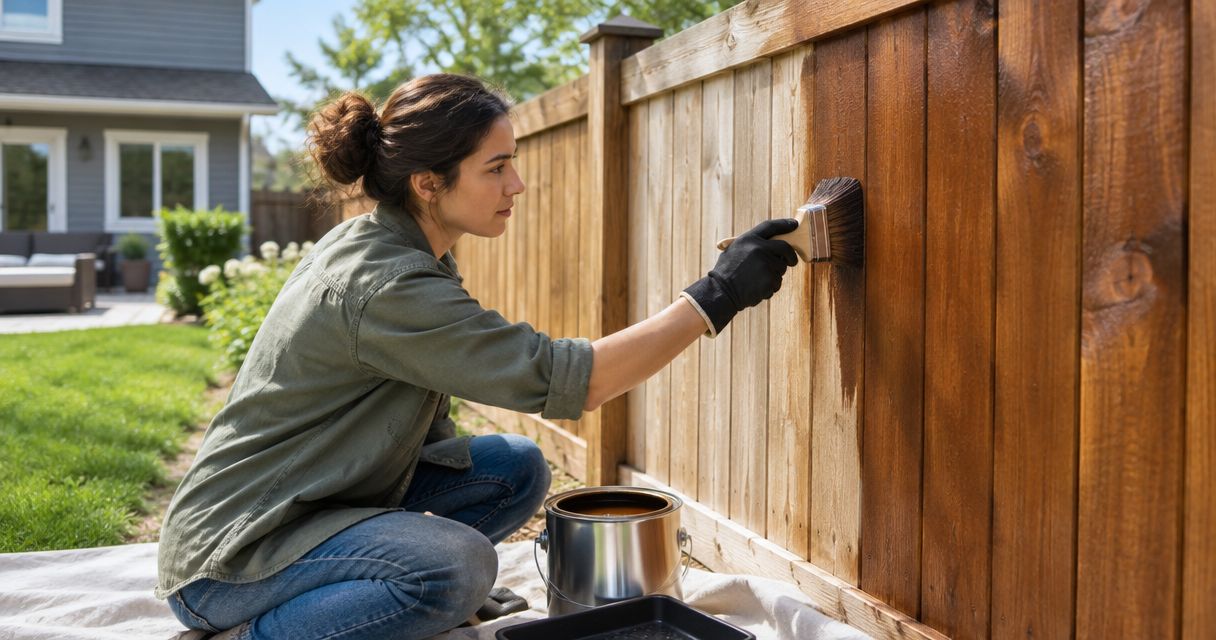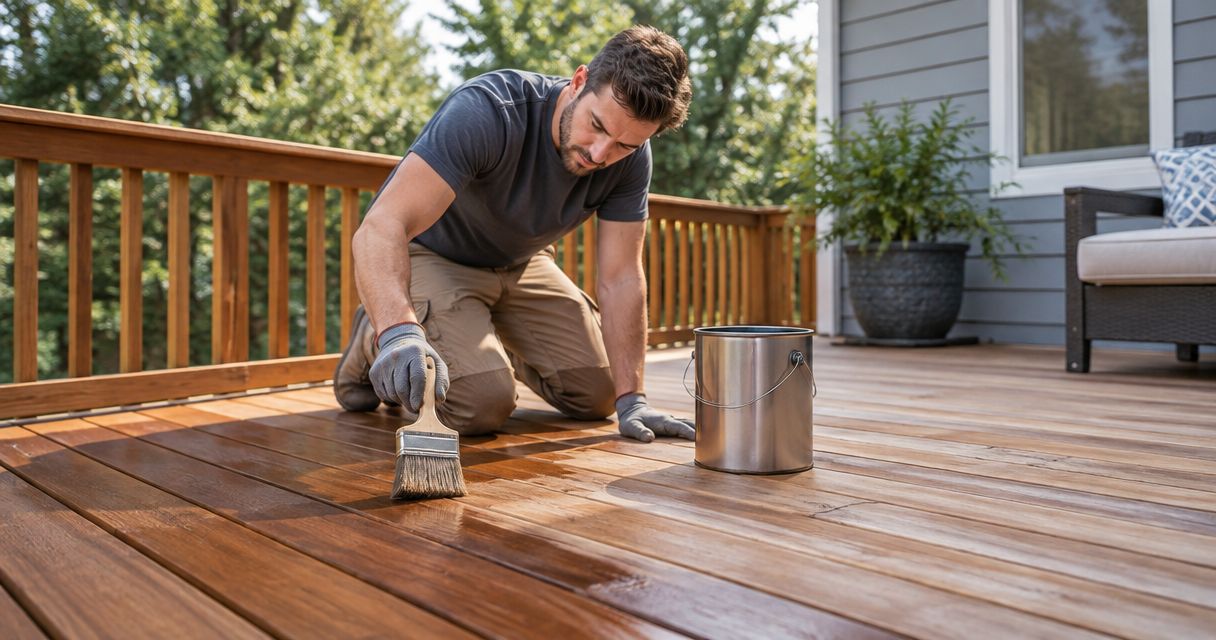
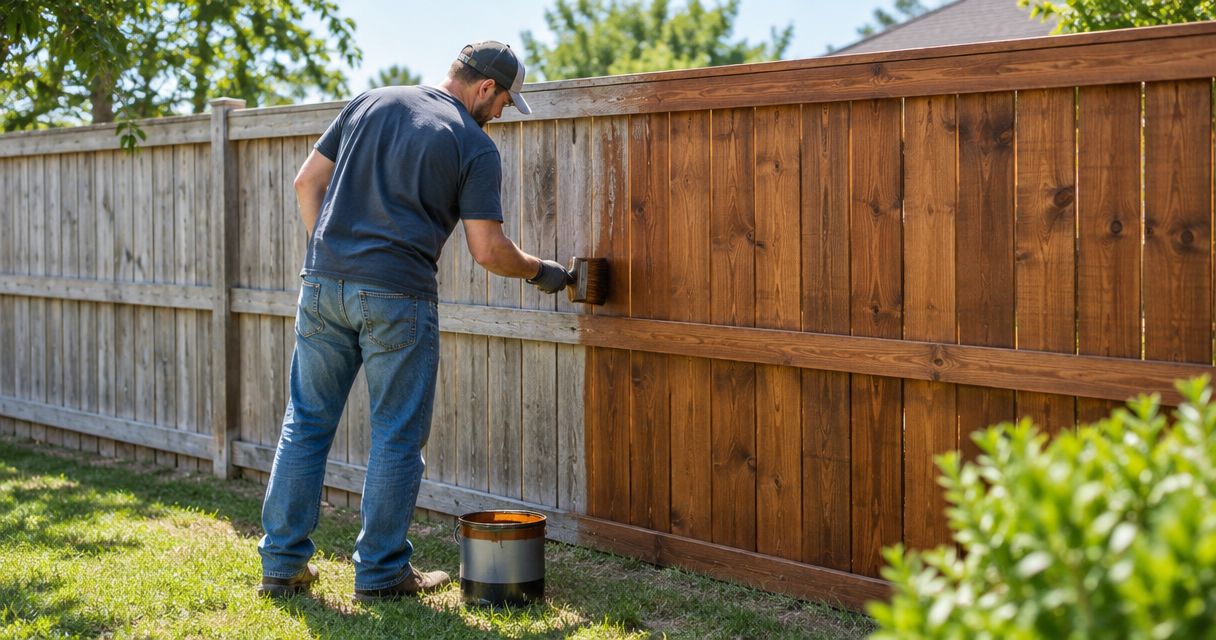
Fence staining cost depends on the surface you want treated, its condition, and the preparation included in the job; a useful 2026 estimate starts with a written scope rather than a fence-length figure alone. Cleaning, stripping an incompatible finish, repairs, and staining the reverse side are separate scope items to clarify before you compare estimates. Compare quotes for the same surfaces and preparation—not just the final total.
- How much does fence staining cost? Fence area, wood condition, preparation, and finish determine the project scope.
- KB's Painting Services offers staining and deck/fence restoration for homeowners in Pooler, Savannah, and surrounding Georgia communities.
- Compare fence staining quotes with the same sides, gates, preparation, and cleanup included.
- Choose stain appearance after checking the existing finish; color alone does not establish compatibility.
How much does fence staining cost?
A fence staining estimate should separate the work that makes the wood ready from the work that applies the finish. Without that separation, you cannot tell whether competing quotes describe the same project.
Use this breakdown when requesting your 2026 estimate:
| Estimate component | What the written scope should identify | What to check |
|---|---|---|
| Fence surfaces | Length, height, sides, gates, posts, and rails | Whether every intended surface is included |
| Cleaning | Dirt, surface growth, and cleaning method | Whether cleaning is included or separate |
| Existing coating | Condition and compatibility with the proposed stain | Whether removal or additional preparation is necessary |
| Repairs | Damaged boards, loose components, and other defects | Which repairs fall outside the staining scope |
| Finish application | Named product, surface preparation, and application requirements | Whether the proposal follows the product instructions |
| Protection and cleanup | Plants, nearby surfaces, access, and debris | Who handles protection and final cleanup |
KB's Painting Services is best for Pooler and Savannah-area homeowners seeking a local contractor for staining and deck/fence restoration. You can use KB's Painting Services as a starting point for discussing the work your fence needs. Confirm the actual project scope rather than assuming every restoration task belongs in a staining proposal.
Why this matters
A short estimate can hide a large difference in scope. A proposal covering an accessible fence face is not equivalent to one covering both faces, gates, exposed rails, and preparation of an old coating.
The practical risk is choosing a lower total and discovering that necessary work sits outside it. Your goal for a 2026 project is a usable written agreement: what gets treated, what happens first, and what requires separate authorization.
Keep the comparison focused on your fence. A neighbor's completed project does not establish your scope if the fence height, condition, access, or existing finish differs.
Why fence staining estimates vary
The main differences come from the work required, not simply the color you select. Ask each contractor to address these factors in the proposal:
- Surface area: Fence length alone leaves out height, the reverse face, gates, and exposed structural pieces. Identify the actual surfaces to receive stain.
- Wood condition: Weathered, splintered, damaged, or previously repaired sections need assessment before coating. Stain does not replace sound wood or structural repair.
- Existing finish: A previous coating affects preparation and product selection. Confirm compatibility instead of assuming a new stain can go directly over the old surface.
- Cleaning and drying: Staining requires a suitably prepared surface. The cleaning method and readiness requirements belong in the work plan.
- Access and protection: Vegetation, adjacent buildings, paving, and property boundaries affect how the work is carried out. Identify areas that require protection or restricted access.
- Application requirements: Coverage, preparation, and recoating instructions differ by product. The proposal should identify the intended finish rather than promise a generic stain application.
Ask what each difference changes in the work. An explanation tied to your fence is more useful than an unexplained adjustment to the total.
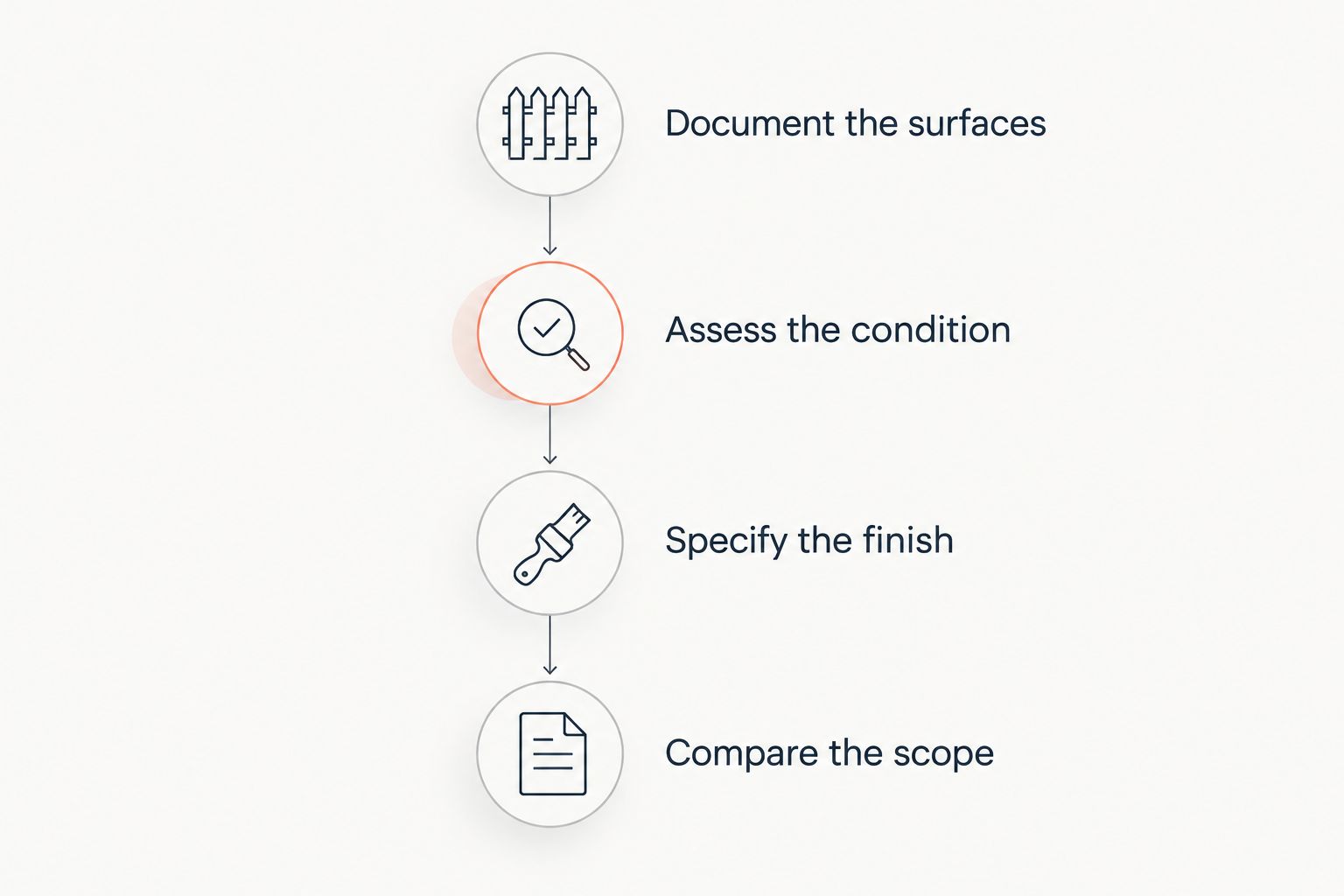
How to get a fence staining estimate you can compare
Prepare the same information for every contractor. A consistent brief makes exclusions easier to spot and reduces back-and-forth about what you intended.
Document the surfaces
Record the fence dimensions and identify which faces you want stained. Include gates, posts, rails, and any sections that differ in height or construction.
Mark inaccessible areas separately. Do not assume access to a neighboring property is available, and do not describe a shared boundary as permission to enter it.
Assess the condition
Take clear photographs of the full fence and close-ups of problem areas. Show peeling finishes, dark surface growth, damaged boards, loose components, and sections with different previous treatments.
Describe what you know without diagnosing the cause. A photograph of discoloration is useful; calling every dark patch rot or mildew can misstate the work required.
Specify the finish
Explain whether you want visible wood grain or a more opaque appearance. If you know the existing product, provide its name and any remaining application information.
Ask the contractor to identify the proposed finish and explain its suitability for the existing surface. A color name alone does not establish the coating system.
Compare the scope
Read the inclusions and exclusions before comparing totals. Check cleaning, preparation, repairs, surfaces, protection, application, and cleanup against the same list.
Resolve ambiguous wording before authorizing the work. Terms such as restoration or full preparation need an explanation tied to the condition of your fence.
DIY or professional fence staining: which fits your project?
DIY is best for homeowners prepared to handle surface preparation, application, and cleanup themselves; professional staining is best for homeowners seeking a contractor to carry out the work. Neither approach removes the need to assess the existing finish and repair damaged wood.
Use the trade-offs below to decide who should do the work, not to assume which approach has the lowest total expense.
| Approach | Best for | Advantage | Limitation |
|---|---|---|---|
| DIY staining | Homeowners willing to manage the entire process | You control preparation, timing, and application | You take responsibility for product selection, equipment, protection, and mistakes |
| Professional staining | Homeowners who want a contractor to perform the work | The work can be defined in a written contractor scope | You must still compare exclusions, confirm responsibilities, and provide agreed access |
For DIY work, read the product instructions before buying materials or beginning preparation. Check whether the chosen finish suits the wood and any remaining coating, and follow its safety requirements.
For professional work, ask how the contractor will determine readiness for staining. A written proposal should explain the intended process without treating every fence as an identical surface.
KB's Painting Services offers staining and deck/fence restoration, but the service description is not a substitute for a project-specific agreement. Confirm which preparation and repair tasks belong in your proposal.
How does stain appearance affect the decision?
Choose the appearance with the existing surface in mind. A finish that leaves wood grain visible creates a different result from a more opaque coating, and neither choice removes defects underneath it.
| Finish appearance | Best for | Advantage | Limitation |
|---|---|---|---|
| More visible grain | Homeowners who want the wood character to remain apparent | Keeps more of the wood's visual variation | Existing discoloration and unevenness remain part of the result |
| More opaque appearance | Homeowners who prefer a more uniform color | Conceals more visual variation in the wood | Shows less natural grain and still requires compatible preparation |
These are appearance choices, not substitutes for product specifications. Check the manufacturer's description, suitable substrates, and preparation instructions for the actual stain under consideration.
Review fence stain colors for wood fences before settling on the look. Then confirm that the selected product can achieve that result on your fence—not just on a sample image.
What should be included in a fence staining quote?
A fence staining quote should identify the surfaces, preparation, finish, application work, protection, and cleanup. It should also explain how additional repairs or unexpected conditions will be handled.
For your 2026 quote, ask for plain answers to these questions:
- Are both fence faces included, or only the face shown during the visit?
- Are gates, posts, rails, and exposed edges included?
- What cleaning and existing-coating preparation will happen?
- Which damaged components require repair before staining?
- What product is proposed, and what preparation does it require?
- Who protects nearby plants, paving, and buildings?
- How will changes to the agreed work be approved?
Keep product information with the completed project records. Knowing what was applied helps you assess compatibility when the fence next needs attention.
Can you stain a fence without cleaning it first?
A fence should meet the stain manufacturer's surface-preparation requirements before application. Applying stain over dirt, surface growth, or an unsuitable existing coating is not a substitute for preparation.
Ask what cleaning the fence needs and how readiness will be checked afterward. Do not treat a dry-looking surface as proof that all preparation requirements have been met.
Is staining both sides of a fence necessary?
Staining both sides is a scope decision that depends on the surfaces you intend to treat, access, and the finish requirements. A quote for one face should not be read as a quote for the entire fence.
Tell the contractor which side you control and where access needs permission. Resolve that issue before work is scheduled rather than after materials and equipment arrive.
FAQ
How much does fence staining cost in 2026?
Fence staining cost in 2026 depends on the treated area, wood condition, preparation, access, and selected finish. Request a written project estimate that identifies the surfaces and separates repairs or coating removal from application.
Is fence staining quoted by length or surface area?
Ask which measurement the contractor uses and what it includes. Length alone does not describe fence height, both faces, gates, posts, or exposed rails, so the written scope must identify those surfaces.
Does a fence staining quote include pressure washing?
A fence staining quote includes pressure washing only if the written scope says so. Ask what cleaning method is proposed and how it suits the wood and existing finish.
Can I put new stain over old fence stain?
New stain should go over an existing finish only when the proposed product and surface preparation support that application. Identify the old coating when possible and follow the new product's compatibility instructions.
Is DIY fence staining better than hiring a contractor?
DIY fence staining fits homeowners prepared to handle preparation, protection, application, and cleanup. Hiring a contractor fits homeowners who want that work performed for them, but the written scope still needs careful review.
Do damaged fence boards need replacing before staining?
Damaged fence boards need assessment before staining because stain does not repair unsound wood. Identify required repairs separately and confirm who will complete them before coating begins.
Does KB's Painting Services offer fence restoration near Savannah?
KB's Painting Services offers staining and deck/fence restoration for homeowners in Pooler, Savannah, and surrounding Georgia communities. Confirm the specific preparation, repairs, and surfaces included in your project proposal.
One last thing
Photograph the reverse side before accepting a quote—even if you only want the visible face stained. The photographs help establish what was inspected, what was excluded, and where access remains unresolved.
For a 2026 project, attach those photographs and your marked surface list to the written scope. A clearly excluded surface is easier to manage than an assumed inclusion discovered after work begins.