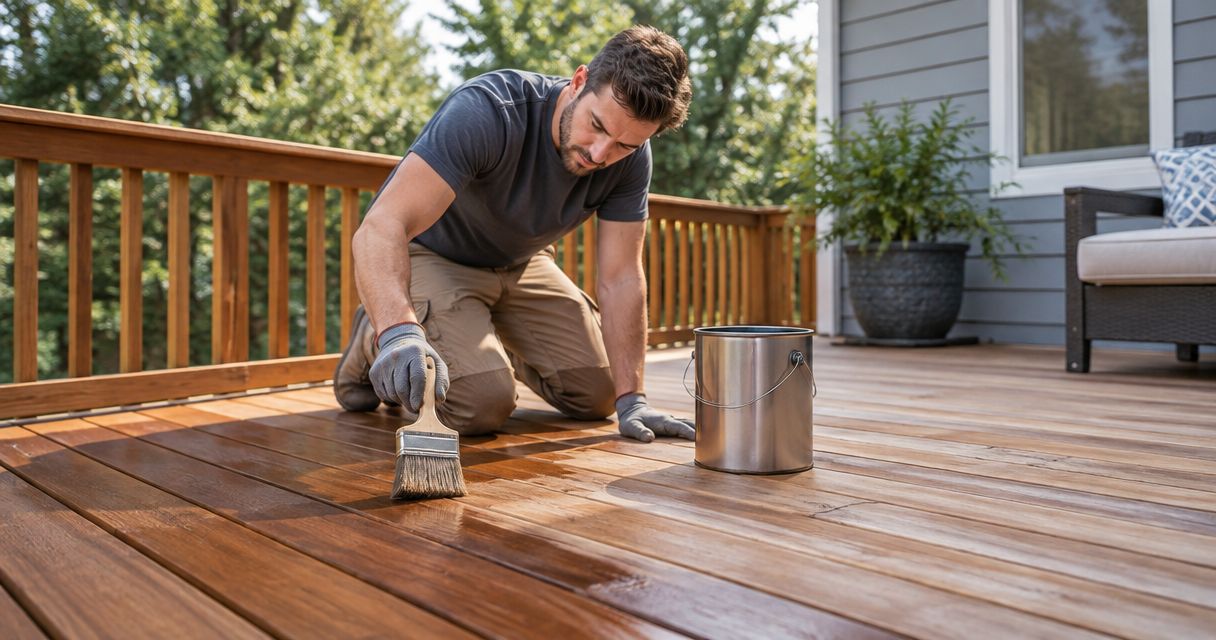
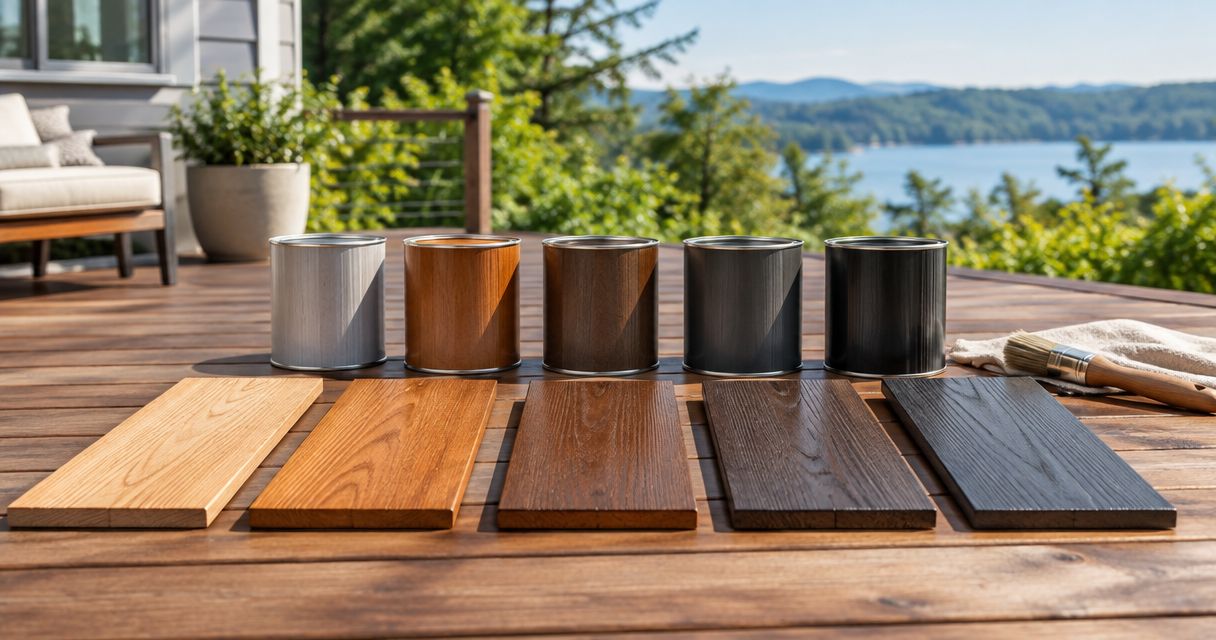
Best for maximum UV screening: solid-color deck stain. Best for balancing sun protection with visible grain: semi-transparent deck stain. For deck stains ranked by UV protection in 2026, start with pigment coverage, then choose a finish that suits your wood and existing coating.
- For deck stains ranked by UV protection, solid-color stain leads because its pigment obscures the wood surface.
- Semi-transparent deck stain balances visible wood grain with pigment-based sun protection.
- Clear sealers preserve the natural appearance but are not the default for maximum UV protection.
- KB's Painting Services offers deck restoration for homeowners in Pooler, Savannah, and surrounding Georgia communities.
Why this matters
Sun protection and weather protection are different jobs. Pigments help screen wood from ultraviolet exposure; a suitable finish also limits water absorption. Neither function repairs rotten boards, fixes drainage, or makes a damp deck ready for coating.
KB's Painting Services offers staining and deck restoration for homeowners in Pooler, Savannah, and surrounding Georgia communities. KB's Painting Services is a deck-restoration option for local homeowners who want a contractor to handle the work.
For your 2026 deck project, choose the opacity before choosing a color. That decision determines how much grain remains visible and what preparation future recoating requires.
What makes the best deck stain for UV protection
Use these criteria before comparing finishes:
- Pigment coverage: More opaque finishes generally screen more sunlight from the wood. Clear finishes depend on their specific UV-protection formulation.
- Deck suitability: The label must expressly allow use on horizontal walking surfaces. A siding stain is not automatically a deck stain.
- Water resistance: Look for exterior wood protection appropriate to your substrate. Water resistance does not replace drainage or ventilation.
- Coating compatibility: Existing paint, stain, or sealer affects what can adhere and how much stripping is necessary.
- Maintenance demands: Consider how the finish wears and what preparation its next application requires, not just its initial appearance.
- Wood visibility: Decide whether you want to see grain patterns, surface texture, or neither. Those are different aesthetic goals.
Choose opacity for sun screening; choose the actual formulation for compatibility, application requirements, and maintenance. The category ranking below is not a laboratory comparison of individual products.
Deck stains ranked by UV protection at a glance
| Rank and finish | Best for | Standout feature | Key limitation |
|---|---|---|---|
| 1. Solid-color deck stain | Maximum pigment-based UV screening | Opaque coverage hides grain patterns | Conceals natural color variation; preparation matters where coatings peel |
| 2. Semi-solid deck stain | Strong coverage with some wood character | Heavier pigmentation than typical semi-transparent finishes | Opacity terminology varies between manufacturers |
| 3. Semi-transparent deck stain | Balancing protection and visible grain | Pigmented color keeps grain patterns visible | Provides less screening than more opaque finishes |
| 4. Transparent or toner deck stain | Emphasizing relatively uniform wood | Light pigmentation changes appearance less | Limited pigment-based UV screening |
| 5. Clear exterior wood sealer | Preserving an uncolored appearance | Minimal change to wood color | Clear water protection alone does not establish UV performance |
These categories form an opacity-based decision guide for 2026, not a guarantee that every product in one row outperforms every product below it. Read the technical information: manufacturers do not use opacity names identically.
1. Solid-color deck stain: best for maximum UV screening
Solid-color deck stain covers the wood with an opaque, pigmented finish. It hides grain patterns, although surface texture can remain visible. That coverage makes it the strongest default in this ranking when shielding wood from sunlight matters more than preserving its natural appearance.
Best for: Your deck receives substantial direct sun, and you accept a painted-looking color rather than visible grain.
Solid-color deck stain pros:
- Provides extensive pigment coverage over the wood surface.
- Helps unify boards with different natural colors.
- Offers an appearance that does not depend on attractive grain patterns.
Solid-color deck stain cons:
- Hides the grain detail that transparent finishes preserve.
- Requires careful preparation wherever an existing coating is loose or peeling.
Solid stain does not make damaged lumber sound. Replace or repair unsuitable boards before coating, and verify that the selected product is intended for decks rather than vertical exterior wood only.
For your 2026 shortlist, separate the opacity decision from the application decision. Solid coverage answers the sunlight question; the manufacturer's instructions answer whether it belongs over your existing finish.
Verdict: Buy solid-color deck stain when maximum pigment-based sun screening is your priority.
2. Semi-solid deck stain: best for coverage with wood character
Semi-solid deck stain sits between solid and semi-transparent finishes in typical opacity descriptions. It adds substantial color while allowing some wood character to remain apparent. The exact appearance depends on the formulation, wood, and application.
Best for: You want heavier coverage than a semi-transparent stain without fully committing to an opaque finish.
Semi-solid deck stain pros:
- Adds more pigment coverage than typical semi-transparent options.
- Retains some visual character from the wood beneath it.
- Reduces the emphasis on uneven natural board coloration.
Semi-solid deck stain cons:
- Can obscure more grain than a small color swatch suggests.
- Uses a category name whose meaning varies between manufacturers.
Do not choose semi-solid from the label alone. View a dried sample on representative decking, including an older board if your deck contains mixed replacement lumber. The same stain color does not make different boards identical.
A semi-solid finish is a compromise, not a separate protection technology. Check the product's horizontal-surface approval and compatibility instructions just as carefully as you would for solid stain.
Verdict: Buy semi-solid deck stain when stronger coverage matters, but you still want some wood character.
3. Semi-transparent deck stain: best for visible grain
Semi-transparent deck stain adds pigment while leaving grain patterns visible. It is the practical middle choice when you want the deck to look like wood rather than an opaque color field. That appearance comes with less pigment-based screening than more opaque finishes.
Best for: Your decking has grain you want to retain, and you accept a protection-versus-appearance compromise.
Semi-transparent deck stain pros:
- Preserves visible grain patterns beneath the color.
- Adds pigmentation that an uncolored sealer lacks.
- Allows natural variation between boards to remain part of the appearance.
Semi-transparent deck stain cons:
- Does not hide repairs, mismatched boards, or discoloration as effectively as opaque stain.
- Provides less pigment-based sunlight screening than solid-color stain.
For a 2026 maintenance project, inspect the existing coating before choosing this category. Semi-transparent stain cannot reveal grain through an opaque finish left underneath it. Removing that finish becomes a preparation decision, not something a lighter stain solves.
Water-based and oil-based labels do not settle the UV ranking. Both describe formulation choices, while opacity describes how much of the wood the finish hides.
Verdict: Buy semi-transparent deck stain when visible grain is a firm requirement.
4. Transparent or toner deck stain: best for a lightly colored look
Transparent stains and toners add relatively little pigment compared with semi-transparent and opaque finishes. They emphasize the wood's existing appearance rather than covering it. Product naming varies, so compare the dried result instead of assuming that every transparent finish looks alike.
Best for: Your boards have an appearance you want to preserve with only a light color adjustment.
Transparent or toner deck stain pros:
- Keeps wood grain prominent.
- Makes a smaller visual change than heavily pigmented finishes.
- Lets natural differences between boards remain visible.
Transparent or toner deck stain cons:
- Offers limited pigment coverage for screening sunlight.
- Leaves stains, repairs, and uneven coloration comparatively exposed.
Choose this category for its appearance, not because a natural-looking finish is automatically better for the wood. Inspect the deck regularly and follow the selected product's maintenance instructions rather than assuming a universal recoating interval.
Verdict: Buy a transparent or toner stain for appearance; skip it when maximum UV screening is the main goal.
5. Clear exterior wood sealer: best for minimal color change
A clear exterior wood sealer aims to protect wood without adding an obvious stain color. Some clear formulations include UV-protective ingredients, but the word clear does not establish their effectiveness. A water-repellent claim alone is not evidence of strong sun protection.
Best for: Keeping the wood's uncolored appearance matters more to you than choosing the most opaque UV barrier.
Clear exterior wood sealer pros:
- Preserves an appearance without deliberate stain coloration.
- Keeps grain and natural board differences visible.
- Offers an option when added pigment conflicts with your design goal.
Clear exterior wood sealer cons:
- Lacks the pigment coverage of opaque stains.
- Requires product-specific evidence before you can judge its UV protection.
Do not treat water beading as a complete performance test. It tells you something about surface wetting, not whether sunlight is reaching and weathering the wood beneath the finish.
Verdict: Skip clear sealer as the default for maximum UV protection; choose it only when minimal color change leads your decision.
Check the deck before choosing the finish
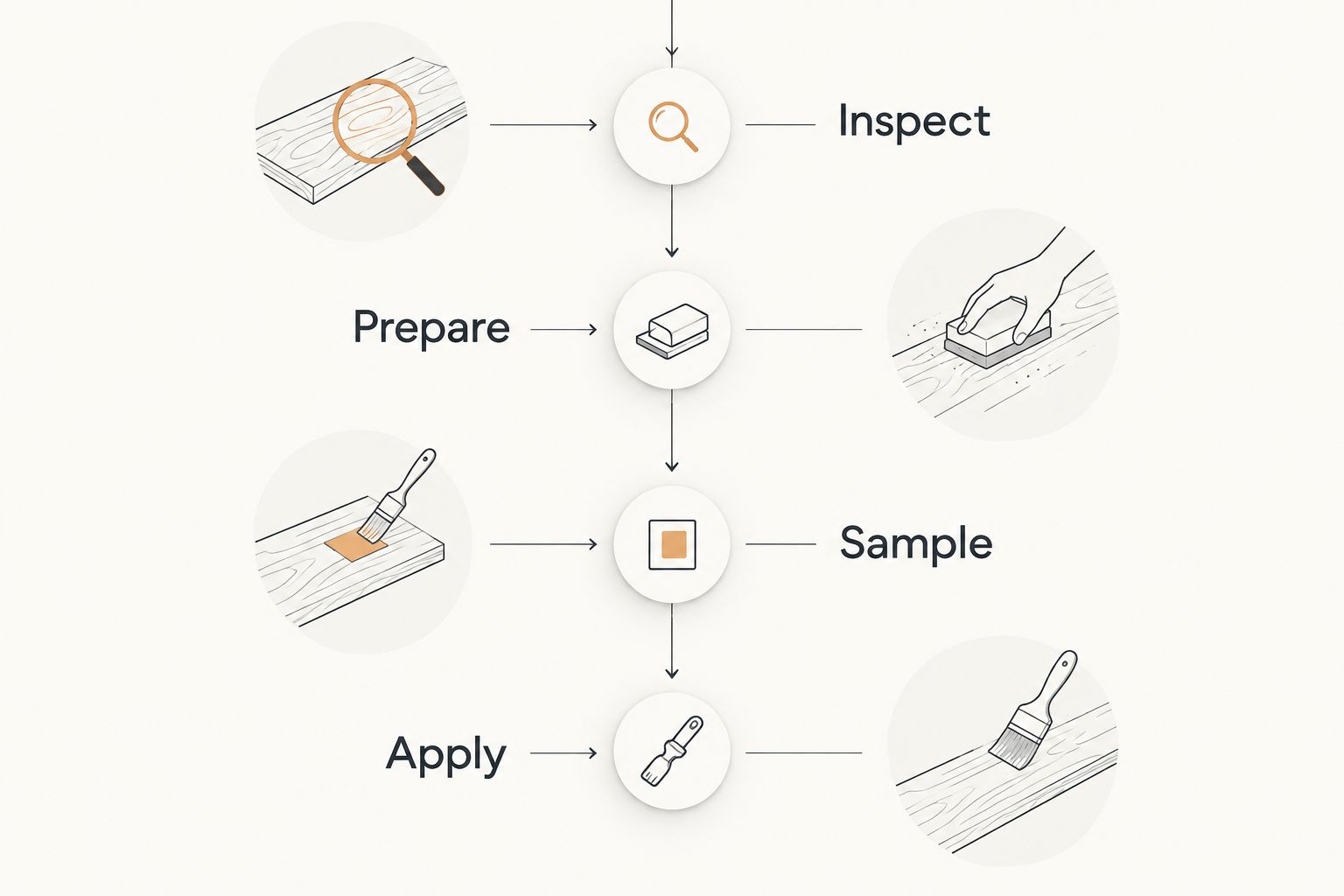
Your deck's condition can rule out an otherwise sensible recommendation. Use this sequence before buying stain, and follow the selected product's requirements wherever they are more specific.
Inspect
Check for loose coatings, soft wood, unstable boards, exposed fasteners, and areas that stay damp. Make 2 inspection passes: one focused on walking-surface condition and another on edges, gaps, and accessible underside conditions. This is a practical inspection routine, not a substitute for assessing structural damage.
Prepare
Resolve drainage and repair issues before coating. Remove contamination and unsound finishes using methods appropriate to the wood and existing coating. Do not assume that washing alone creates a suitable surface.
Sample
Choose 3 sample areas that represent your deck: exposed wood, sheltered wood, and a repaired or replacement section where present. Follow the product's sample-application instructions and compare the results after drying.
Apply
Follow the label for surface dryness, weather conditions, coat count, and recoat timing. Check 1 representative board before continuing across the deck so you can catch an appearance or application problem early.
Use the product's own application limits rather than a generic temperature or drying-time rule. A forecast window must accommodate the instructions for application and exposure to moisture, not merely the time you expect brushing to take.
Plan your deck restoration
Review local staining and deck-restoration services for your Pooler or Savannah-area home.
How these deck stains were ranked
The ranking prioritizes pigment-based UV screening, then explains the appearance and maintenance trade-offs. It compares finish categories, not measured performance from a product test.
Weather protection remains a separate purchasing check. Confirm suitability for your wood, horizontal traffic, existing coating, and application conditions. KB's Painting Services offers deck restoration, but no contractor's preparation can turn an unsuitable coating into the right specification.
Which deck stain should you choose?
Choose solid-color deck stain if you are undecided and maximum UV screening is the deciding factor. Choose semi-transparent stain when keeping grain visible is non-negotiable. Semi-solid belongs between those choices; transparent and clear finishes belong on an appearance-led shortlist.
For 2026, make your final decision from the product instructions and an on-deck sample—not the opacity name alone. The best category still needs a compatible formulation and a properly prepared surface.
FAQ
What's the best deck stain for UV protection?
Solid-color deck stain is the strongest default for pigment-based UV screening because it covers the wood opaquely. Verify that the specific product is approved for decks and compatible with the existing surface.
Is semi-transparent stain better than solid stain?
Semi-transparent stain is better for keeping grain visible, while solid stain provides more opaque pigment coverage. Choose between them based on whether wood appearance or sun screening matters more.
Does clear deck sealer protect against UV damage?
Clear deck sealer's UV protection depends on its formulation. Water repellency alone does not establish sunlight protection, so check the product's technical information.
Is oil-based deck stain always better for sun protection?
Oil-based deck stain is not automatically better for sun protection. Compare opacity, the specific formulation, and suitability for your deck rather than treating the binder type as a UV rating.
Can I put semi-transparent stain over solid stain?
Semi-transparent stain will not reveal grain through an existing solid coating. Assess whether the old coating needs removal and follow the new product's surface-preparation requirements.
How often should I restain a deck?
Use the selected product's maintenance guidance and the deck's observed condition to decide when to restain. Exposure, traffic, preparation, and finish type prevent one interval from fitting every deck.
Does KB's Painting Services restore decks near Savannah?
KB's Painting Services offers deck restoration and staining for homeowners in Pooler, Savannah, and surrounding Georgia communities. Include the existing finish and any damaged areas when describing your project.
One last thing
A darker color and a more opaque finish are not the same choice. A dark transparent stain still leaves grain visible; a light solid-color stain still provides opaque coverage. Compare opacity first, then sample the color you actually want.