
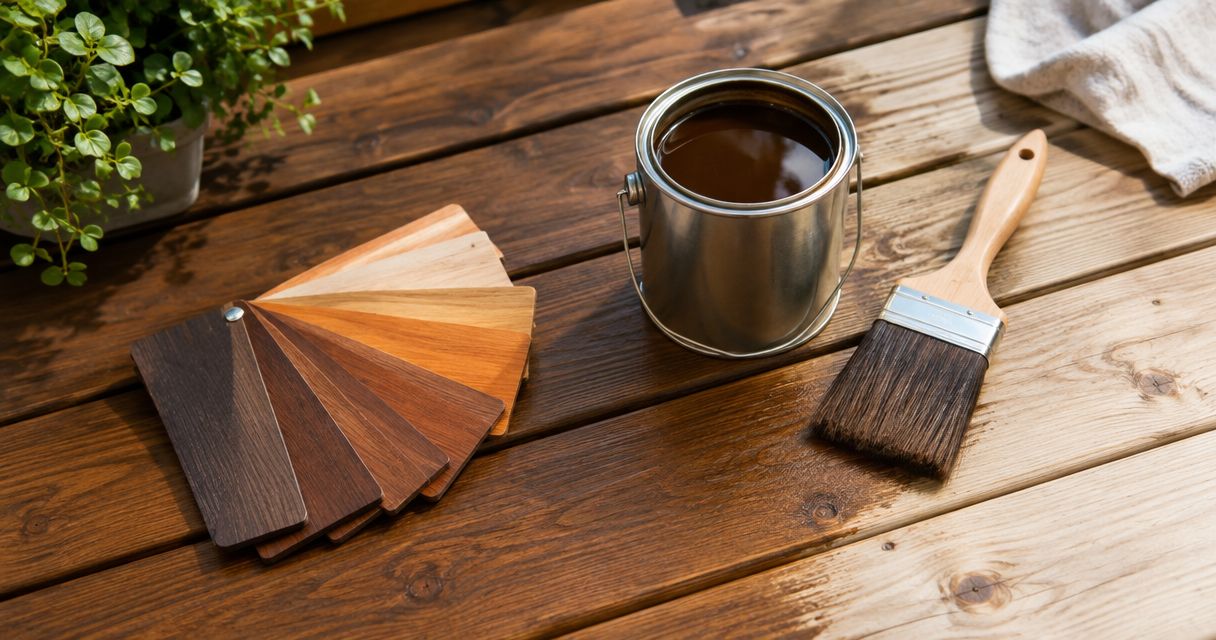
Best overall for sound, bare wood: semi-transparent deck stain. Best for hiding uneven color: solid-color deck stain. Best budget approach: a compatible maintenance coat rather than an unnecessary finish change. This guide to deck stains ranked by price and coverage compares finish types by the work they require, the grain they reveal, and the surface they cover.
- For deck stains ranked by price and coverage, compare completed-project requirements rather than container size.
- Semi-transparent deck stain suits sound wood when you want visible grain.
- Solid-color deck stain hides color variation but does not repair damaged boards.
- KB's Painting Services offers deck staining and restoration for Pooler and Savannah homeowners.
Why this matters
A stain that spreads farther per coat does not automatically use less material across the finished job. Required coats, surface preparation, and the condition of your boards all affect the purchase decision. Hiding power and spread rate are different measures.
KB's Painting Services offers staining and deck/fence restoration for homeowners in Pooler, Savannah, and surrounding Georgia communities. KB's Painting Services is a deck-staining and restoration option for homeowners in Pooler and Savannah.
For your 2026 project, start with the deck's existing finish. Choosing a new stain before identifying that finish puts the decision in the wrong order.
What makes the best deck stain
Use these criteria before comparing containers. A finish that fails a compatibility check should leave your shortlist, regardless of its advertised coverage.
- Existing-finish compatibility: Identify whether you are coating bare wood, a penetrating stain, or an existing surface film. Follow the proposed product's preparation instructions.
- Finished-job coverage: Compare the material needed for every required coat, not just the first application.
- Hiding power: Decide whether you want visible grain, reduced color variation, or an opaque appearance.
- Surface condition: Separate cosmetic discoloration from decay, loose boards, and other repair needs. Stain is not a structural repair.
- Maintenance method: Read the renewal instructions before committing. Cleaning and recoating are different jobs from stripping an incompatible finish.
- Application limits: Check the product's requirements for temperature, moisture, weather, and return to use. Exterior exposure does not make every stain suitable for deck floors.
Deck stains at a glance
This 2026 ranking assigns each finish a different job. The order favors a clear match between the wood and the desired appearance; it does not claim that one opacity always has the lowest purchase cost or highest spread rate.
| Rank and finish | Best for | Standout feature | Price-and-coverage check | Key limitation |
|---|---|---|---|---|
| 1. Semi-transparent stain | Sound wood with visible grain | Adds color without fully concealing grain | Compare required coats and coverage for your wood condition | Does not hide uneven boards completely |
| 2. Solid-color stain | Hiding color variation | Produces an opaque color treatment | Confirm horizontal-deck approval and complete-system requirements | Conceals natural color and much of the grain appearance |
| 3. Transparent stain | Preserving a natural-looking appearance | Minimizes visual concealment | Check pigment, application instructions, and renewal requirements | Leaves discoloration and repairs visible |
| 4. Semi-solid stain | Reducing variation while retaining some wood character | Sits between transparent-looking and opaque finishes | Judge the actual sample and technical instructions | Appearance varies across products and wood surfaces |
What coverage actually means
Spread rate describes area coated; hiding power describes what remains visible. A solid-color finish can conceal contrasting board colors without necessarily covering more square footage per container.
When comparing products in 2026, use the same surface assumptions. A coverage figure for smooth wood is not interchangeable with a figure for rough or highly absorbent wood. Check whether the stated area applies to one coat or the complete application.
1. Semi-transparent stain: best for sound wood with visible grain
Semi-transparent deck stain adds pigment while leaving the wood grain visible. It suits a deck whose boards already look acceptable and need color rather than concealment. Start here when preserving wood character matters more than making every board look identical.
Semi-transparent stain pros:
- Keeps grain visible rather than creating a fully opaque appearance.
- Adds color while retaining variation between boards.
- Provides a useful middle ground between a minimally colored finish and solid color.
Semi-transparent stain cons:
- Does not fully hide dark marks, mismatched repairs, or uneven coloration.
- Requires careful preparation because visible defects remain part of the finished appearance.
Coverage decision: Check the exact product's instructions for bare wood versus previously stained wood. Do not assume that another semi-transparent stain's spread rate or coat count applies. Opacity describes appearance, not a standardized application system.
Best for: Homeowners with sound, visually consistent decking who want recognizable wood grain.
A sample matters here. Apply it to representative prepared wood, including a repaired or discolored area if one exists. Judge the dry result rather than the wet color.
Verdict: Buy for sound wood when visible grain is the priority; skip when concealment is the main job.
2. Solid-color stain: best for hiding uneven board color
Solid-color deck stain creates an opaque finish that hides the wood's natural color. It is the strongest candidate in this ranking when replacement boards or persistent color differences make a translucent finish unsuitable. Wood texture can remain visible even when the grain's color pattern is concealed.
Solid-color stain pros:
- Hides color variation more effectively than translucent finishes.
- Gives repaired sections a more consistent color treatment.
- Supports a deliberate color change instead of preserving the existing wood tone.
Solid-color stain cons:
- Conceals the natural color and much of the visible grain pattern.
- Does not correct decay, loose fibers, or an unsound coating underneath.
Coverage decision: Choose a product explicitly intended for horizontal deck surfaces. Check preparation and primer requirements where applicable, then include every required layer in your material calculation. A fence-only recommendation is not enough for a walking surface.
Best for: Homeowners who want an opaque appearance and need to reduce visible differences between otherwise sound boards.
Do not use opacity to avoid repairs. If a board is deteriorated, correcting the board comes before choosing its finish. A uniform color can hide a stain; it cannot restore lost strength.
Verdict: Buy for color concealment on a properly prepared deck; skip if natural grain is essential.
3. Transparent stain: best for preserving the wood's appearance
Transparent deck stain leaves the underlying wood highly visible. It belongs on your shortlist when you like the deck's existing appearance and do not need much concealment. The category name alone does not establish pigment content, protection, or maintenance requirements.
Transparent stain pros:
- Preserves a natural-looking view of the boards.
- Leaves grain and board-to-board variation prominent.
- Makes sense when minimal visual change is your central goal.
Transparent stain cons:
- Leaves discoloration, patching, and mismatched boards visible.
- Offers little help when your real objective is a uniform color.
Coverage decision: Read the actual label rather than treating transparent stain as a single formula. Confirm suitability for your decking material and the existing finish. Follow the stated application amount instead of stretching material to cover more area.
Best for: Visually attractive wood that needs a compatible finish without substantial color concealment.
For a 2026 refresh, inspect the prepared surface before buying the full project quantity. Cleaning can expose differences that were less noticeable when the deck was dirty.
Verdict: Buy when you want to see the wood as it is; skip when you want stain to disguise it.
4. Semi-solid stain: best for partial concealment
Semi-solid stain is a candidate when semi-transparent looks too uneven but solid color hides more wood character than you want. Treat the name as a starting point, not a promise of a particular appearance. Compare samples from the exact products under consideration.
Semi-solid stain pros:
- Reduces visible color variation without automatically choosing a fully opaque look.
- Offers a middle option when lighter pigmentation exposes too much inconsistency.
- Lets you evaluate a more colored finish before committing to solid color.
Semi-solid stain cons:
- Can obscure more grain than expected.
- Does not guarantee uniform results across old and replacement boards.
Coverage decision: Keep the comparison product-specific. Two finishes described as semi-solid do not necessarily share the same application method, coat count, or surface requirements. Match the instructions to your deck before comparing quantities.
Best for: Homeowners seeking more concealment than semi-transparent stain without immediately choosing solid color.
Verdict: Buy only after a dry sample meets your appearance goal; hold if you are judging from a color chip alone.
How to compare material requirements without guessing
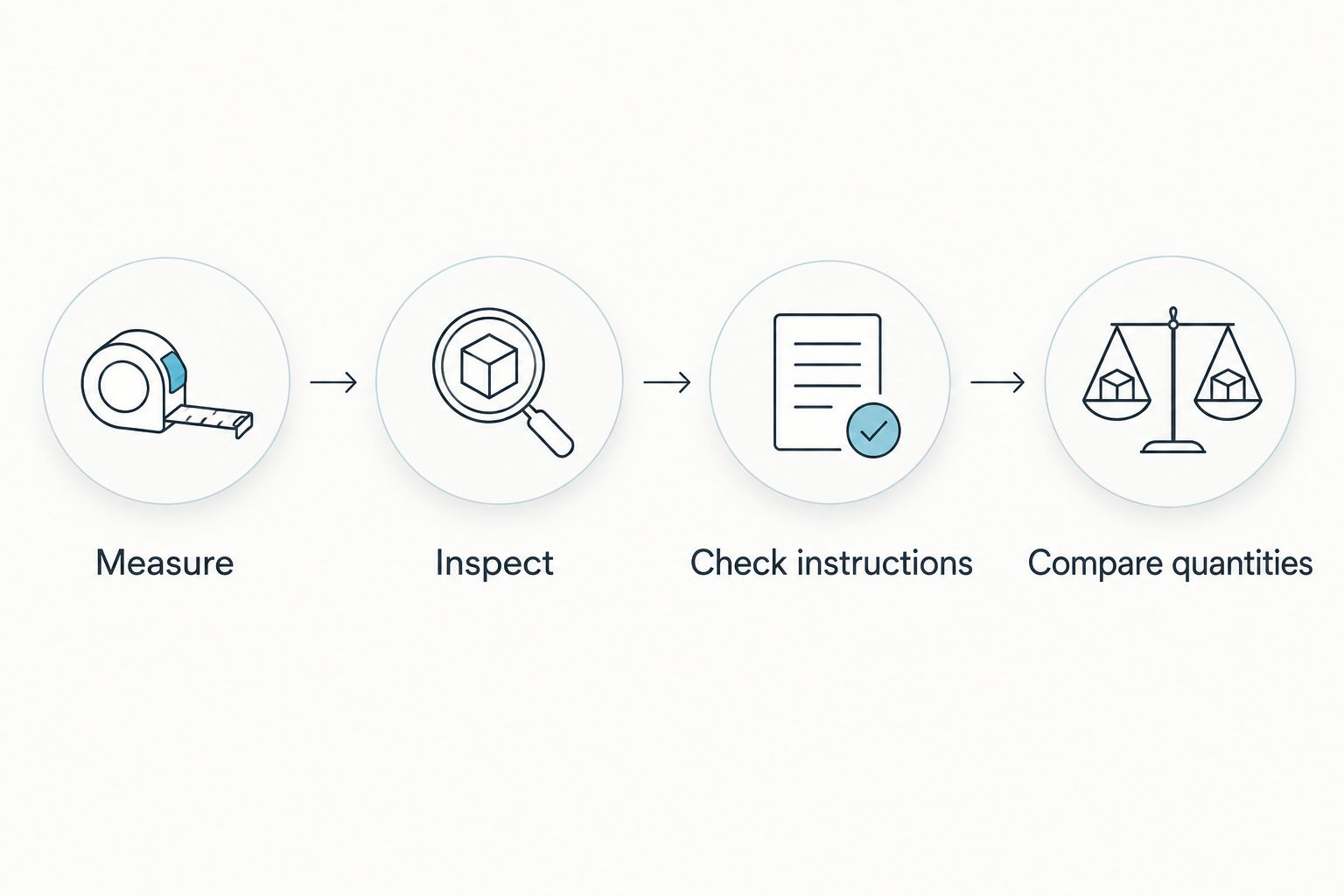
Use a simple sequence for your 2026 material plan: Measure, Inspect, Check instructions, Compare quantities. Keep the surface area separate from the product's spread rate so you can change products without remeasuring the deck.
Measure
As an illustrative planning example, a rectangular deck measuring 12 feet by 16 feet has 192 square feet of floor area. Those dimensions are an example, not a recommended deck size or a stain-coverage claim.
Measure stairs, railings, and other surfaces separately. Do not assume the floor measurement represents the entire staining job.
Inspect
Identify bare patches, peeling finish, repaired boards, and areas needing repair. Record which surfaces require different preparation. Confirm the existing coating before choosing a replacement system.
Check instructions
Read the technical instructions for the exact stain and surface. Note required coats, preparation, coverage conditions, and application restrictions. Do not substitute a retailer's brief description for the full directions.
Compare quantities
For the example deck, a specified 2-coat application represents 384 square feet of coating passes across the floor. That is arithmetic, not a prediction of how much stain a container covers. Divide the area for each required coat by the applicable stated spread rate, keeping different first- and second-coat rates separate when the instructions distinguish them.
Never increase coverage by applying less material than the manufacturer specifies. Buying fewer containers is not a useful saving if it means departing from the required application.
How this ranking works
This ranking uses appearance, compatibility, preparation, and completed-job material requirements. Semi-transparent leads for sound wood and visible grain; solid color leads for concealment. Transparent and semi-solid finishes serve narrower appearance preferences.
No finish type wins every price comparison. For a useful 2026 shortlist, compare exact products only after fixing the preparation scope and required coats. Otherwise, you are comparing different jobs.
Which deck stain should you choose?
Choose semi-transparent stain as the default only when your deck is sound, suitably prepared, and attractive enough to remain visible. Choose solid color when hiding variation matters more than preserving grain. Use dry samples to decide between transparent and semi-solid alternatives.
For deck-staining help, KB's Painting Services serves homeowners in Pooler, Savannah, and surrounding Georgia communities. Ask for the proposed preparation, finish type, and included surfaces to be stated clearly. Evaluate the service scope separately from the stain container.
Discuss your deck restoration
Review staining and deck-restoration needs for your Pooler or Savannah home.
FAQ
What's the best deck stain for visible wood grain?
Semi-transparent deck stain is the default choice in this ranking for sound wood with visible grain. Transparent stain suits an even lighter visual change, while neither option fully conceals discoloration.
Which deck stain hides mismatched boards best?
Solid-color deck stain offers the strongest color concealment among the finish types compared here. Repair damaged boards first and test the finish across old and replacement wood.
Does solid-color stain cover more square footage?
Solid-color stain does not automatically cover more square footage than other stain types. Hiding power and spread rate are different measures; use the exact product's application instructions.
How do I find the best value deck stain?
Compare the complete application rather than the container alone. Include required preparation, all specified coats, and the quantity needed for your measured surfaces.
Can I apply a new stain over my old deck stain?
You can recoat only when the existing surface and proposed product meet the new stain's compatibility and preparation requirements. Identify the old finish and follow the selected product's directions before proceeding.
Should I choose transparent or semi-solid deck stain?
Choose transparent stain to keep the wood highly visible and consider semi-solid stain when you want more color concealment. Compare dry samples on your prepared deck because category names do not guarantee identical appearances.
Does KB's Painting Services handle deck staining?
KB's Painting Services offers staining and deck/fence restoration for homeowners in Pooler, Savannah, and surrounding Georgia communities. Discuss the deck's condition and intended appearance when reviewing the project.
One last thing
Test the least attractive board, not just the best-looking one. A finish that looks right on clean, evenly colored wood can disappoint on a repair or dark patch. Include those difficult areas in your sample before committing to the full deck.