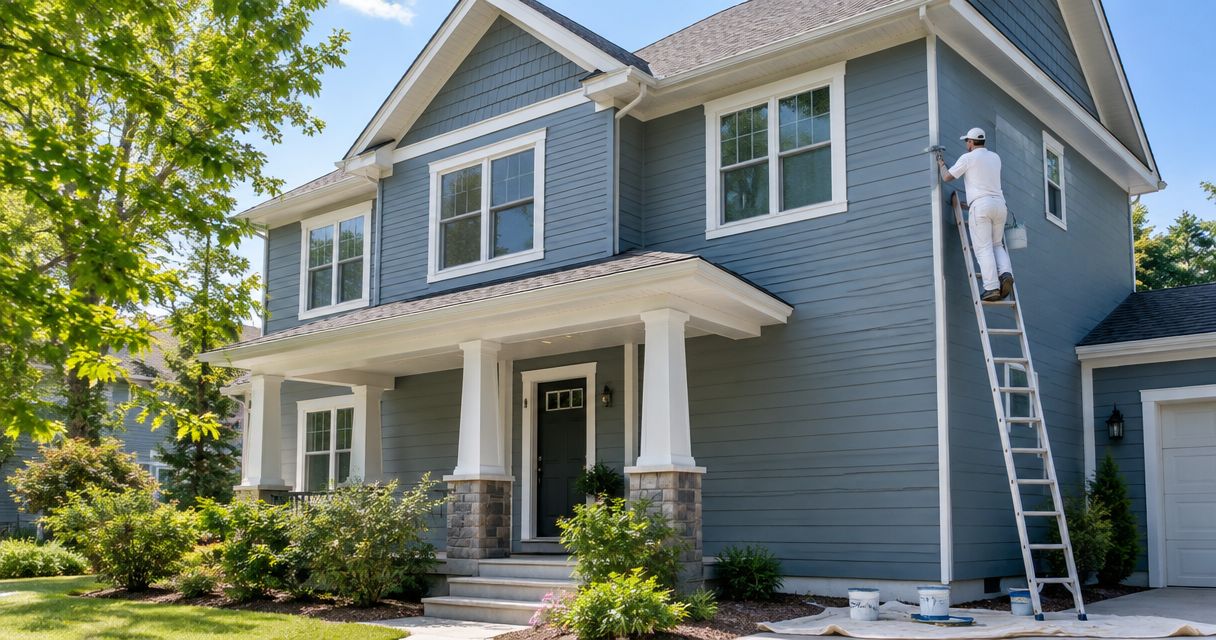
The cost to paint a two-story house exterior depends on the paintable surfaces, their condition, and the access needed to reach them safely; a useful 2026 budget starts with a written estimate for your actual house. Confirm whether that estimate includes preparation, repairs, trim, access equipment, and cleanup. Comparing totals without matching those items does not tell you which proposal covers the work you need.
- The cost to paint a two-story house exterior starts with a defined scope, not interior floor area.
- KB's Painting Services is a local exterior-painting option for homeowners in Pooler and Savannah.
- Compare preparation, siding, trim, repairs, and upper-story access before comparing estimate totals.
- Require written approval for extra work discovered after preparation begins.
How much does it cost to paint a two-story house exterior?
Your exterior painting estimate should separate the work being purchased. A single total conceals important differences: one contractor might include loose-paint removal and trim preparation while another excludes repairs and quotes siding alone.
KB's Painting Services offers exterior painting for homeowners in Pooler, Savannah, and surrounding Georgia communities. KB's Painting Services fits homeowners seeking a local exterior-painting contractor in those communities. Choose based on a written scope that matches your property, not the service name alone.
Use this breakdown when you request a 2026 estimate:
| Estimate component | What the written scope should identify | What to clarify before accepting |
|---|---|---|
| Surface preparation | Cleaning, loose-paint removal, sanding, and protection | Which surfaces receive each preparation step? |
| Repairs | Specific damaged areas and the proposed repair work | What is included, excluded, or separately approved? |
| Primer | Where primer is required and the specified product | Is spot priming or broader priming included? |
| Finish painting | Surfaces, coating products, sheen, and application requirements | Are siding and trim both included? |
| Upper-story access | Access arrangements for elevated surfaces | Are equipment and setup included? |
| Completion | Cleanup, inspection, and touch-up responsibilities | What defines an accepted, finished job? |
A detailed estimate gives you something to compare and enforce. An allowance or exclusion is not automatically a problem, but you need to understand its effect before authorizing work.
Why this matters
A two-story exterior is not just a larger version of a ground-level wall. Upper walls, gables, and trim introduce access decisions that belong in the scope before painting starts.
For your 2026 project, compare the same work before comparing the final totals. A lower proposal is not a saving if it omits preparation or leaves surfaces you intended to paint outside the contract.
Interior floor area is also a poor substitute for an exterior inspection. It does not describe the siding material, wall openings, trim detail, peeling paint, or obstacles around the house. Give contractors the same information so their proposals answer the same question.
Siding-only painting: best for a clearly limited scope
A siding-only proposal suits a project where you deliberately want to exclude trim, doors, and other exterior features. Its advantage is clarity: you can identify the wall surfaces receiving work without assuming every painted feature is included.
Its limitation is the boundary. Fascia, soffits, shutters, porch components, and doors need explicit treatment in the estimate; the phrase exterior painting does not settle those details.
Walk around the house and record exclusions as carefully as inclusions. If you want a visible feature left untouched, say so. If you expect it to match the new finish, make sure the proposal names it.
Siding and trim painting: best for coordinated exterior work
A siding-and-trim scope suits homeowners who want the wall finish and surrounding painted details addressed together. It lets you discuss transitions, color placement, and preparation across adjoining surfaces before work starts.
The trade-off is a more detailed scope. Trim has its own edges, joints, profiles, and condition issues; grouping everything under a broad description makes those differences harder to check.
Specify which elements count as trim. Window surrounds, corner boards, fascia, and other features should not depend on an assumption shared only verbally. Also identify any surfaces that must remain unpainted.
Repair-led painting: best for visibly deteriorated surfaces
A repair-led scope suits a house with peeling coatings, damaged wood, or other defects that need attention before finishing. Its benefit is sequencing: address the underlying surface before deciding it is ready for primer and paint.
Its limitation is uncertainty about concealed damage. Opening or preparing an affected area can reveal conditions that were not visible during the initial inspection.
Require a written change process rather than an open-ended repair instruction. The agreement should explain how additional damage is documented, who approves the repair, and whether related painting waits for that approval. Painting over a defect does not establish that the defect has been repaired.
Why the cost to paint a two-story house exterior varies
The useful question is not simply whether your house has an upper story. It is what the contractor must do to prepare, reach, protect, and finish each included surface.
- Paintable area: Wall surfaces, gables, and included architectural features define the painting work. Interior floor area does not capture that scope.
- Existing condition: Loose coatings, damaged substrates, and failed joints require different preparation from sound surfaces. Identify the condition rather than relying on a general description such as good or fair.
- Upper-story access: Sloped ground, roof sections, narrow side yards, and landscaping affect how workers reach elevated surfaces. Access belongs in the contractor's plan, not a homeowner's guess.
- Material and coating system: Wood, masonry, and previously painted surfaces need preparation and products suited to their condition. The estimate should identify what will be used and where.
- Trim and detail: Multiple colors, shutters, doors, and detailed trim add separate work areas. Name those features instead of treating them as incidental.
- Protection and sequencing: Vehicles, plants, neighboring property, and occupied entrances need protection and coordination. Establish the arrangements before the crew arrives.
These factors explain differences in scope; they do not justify unexplained charges. Ask the contractor to connect each proposed task to a condition or surface on your house.
How do you get estimates you can actually compare?
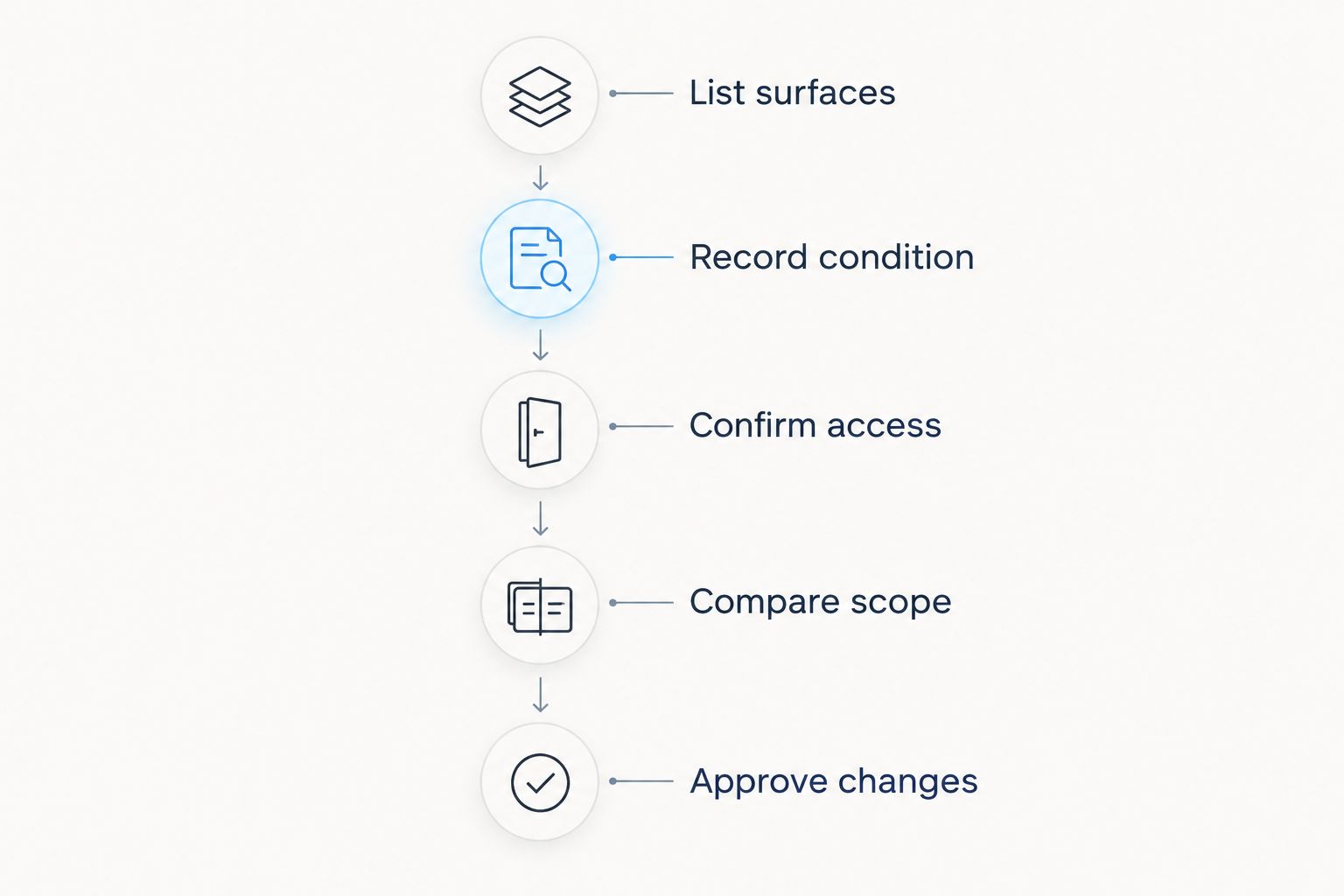
For a 2026 exterior project, use the same brief with every contractor. Compare at least 2 written estimates against one shared scope, rather than collecting unrelated totals and trying to reconcile them afterward.
- List surfaces. Identify siding, trim, doors, shutters, porch components, and any other features you want included. Record exclusions on the same list so a contractor does not have to infer your intentions.
- Record condition. Take photographs of peeling paint, open joints, stains, and damaged areas. Share the same photographs with each contractor, while still allowing an on-site inspection to establish the work.
- Confirm access. Point out sloped ground, fences, narrow passages, roof sections, and anything else surrounding elevated walls. Ask the contractor to explain the access approach without directing the equipment choice yourself.
- Compare scope. Check preparation, repairs, primer, finish products, included surfaces, protection, and cleanup line by line. Resolve differences before treating the totals as comparable.
- Approve changes. Put the authorization process in writing. Require documentation and approval before work outside the agreed scope proceeds.
Keep the final scope with the accepted proposal. Photographs help explain your expectations, but written descriptions establish which work is included. If a conversation changes the project, update the document rather than relying on memory.
What should the preparation section say?
A useful preparation section names actions and locations. Prepare as needed leaves you without a clear way to distinguish included work from an extra charge.
Ask how the contractor will handle loose coatings, exposed substrate, surface contamination, and joints that need attention. The appropriate method depends on the material and its condition; one preparation instruction does not fit every surface.
Product instructions matter here. Surface preparation, primer selection, application conditions, and drying requirements should follow the specified coating system rather than a generic promise about how painting is always done.
Protection deserves equal attention. Confirm how windows, fixtures, plants, paths, and adjacent surfaces will be protected, and who moves items blocking the work area. These details turn a broad painting proposal into an executable plan.
Does a two-story house always need scaffolding?
A two-story house does not establish the access method by itself. The contractor must assess height, ground conditions, obstructions, and the work being performed before selecting equipment.
Ask whether the proposal includes the planned access arrangements and whether changes require your approval. Do not assume that providing your own ladder replaces the contractor's responsibility to plan safe access.
Can you save by leaving the trim out?
Leaving trim out reduces the agreed scope only when trim painting was otherwise included. It does not establish a particular saving without a revised written estimate.
Ask for the revised scope to identify exactly which features remain untouched. Consider the appearance of existing trim next to newly painted siding before accepting the exclusion.
Should damaged wood be repaired before exterior painting?
Damaged wood needs assessment and appropriate repair before it receives a finish. Paint is not a substitute for restoring a sound substrate or addressing the cause of deterioration.
Ask the contractor to document affected areas and explain repair responsibilities. For concealed damage, agree on an approval process before preparation exposes it.
What should you confirm before signing?
Before you accept a 2026 exterior painting proposal, make sure you can explain what you are buying without filling gaps yourself. A contractor's service list establishes relevance; the project agreement establishes the actual work.
KB's Painting Services offers exterior painting as well as other homeowner services, but your exterior agreement should stand on its own. Confirm these points with whichever contractor you select:
- Included surfaces: Every wall, feature, and outbuilding you expect painted is named.
- Preparation boundaries: Cleaning, removal of loose coatings, sanding, and priming responsibilities are clear.
- Repair authorization: Included repairs are separated from work requiring further approval.
- Coating specification: Products, sheen, color placement, and application requirements are documented.
- Access and protection: Equipment arrangements and property protection are addressed.
- Completion standard: Inspection, cleanup, and correction of agreed deficiencies have a defined process.
Do not treat unanswered questions as minor details to resolve after work begins. Ask for the proposal to be revised while you still have a clear opportunity to compare it with alternatives.
FAQ
What's the best way to estimate the cost to paint a two-story house exterior?
Get a written estimate based on the actual exterior surfaces, their condition, and access requirements. Match preparation, repairs, trim, and cleanup across proposals before comparing totals.
Can I use my home's interior square footage to estimate exterior painting?
Interior square footage does not define the exterior painting scope. Exterior wall area, gables, openings, trim, and surface condition need separate assessment.
Does an exterior painting estimate include trim and doors?
Trim and doors are included only when the written scope says they are. Ask the contractor to identify each included feature and list exclusions.
Why are two exterior painting estimates so different?
Different estimates can cover different preparation, repairs, products, surfaces, and access arrangements. Reconcile those items before deciding that one contractor is offering the same work for less.
Should I choose the lowest exterior painting estimate?
Choose an estimate that clearly covers the work your house needs, not a total in isolation. A lower total is not a like-for-like comparison when preparation or repairs are excluded.
How should I handle extra repairs found during painting?
Require documentation and written approval before extra repairs proceed. Agree on that process in the original scope so discoveries do not create an open-ended instruction.
Who offers exterior painting in Pooler and Savannah?
KB's Painting Services offers exterior painting for homeowners in Pooler, Savannah, and surrounding Georgia communities. Request a property-specific written scope to establish the work included in your project.
One last thing
Ask every contractor to list what is excluded. An exclusions list often reveals a difference that a polished project description leaves unclear: unpainted soffits, separate repairs, or a door you assumed was included.
For your 2026 project, keep that list beside the surface schedule when you review the agreement. The strongest comparison is not the shortest proposal; it is the one that lets you identify what happens to every surface you expect finished.